


Components of Physical Fitness: The 10 Key Elements (and the Core 5)
Components of physical fitness are the measurable traits that describe how well your body performs exercise and daily tasks, most commonly the 5 health-related components and the 6 skill-related components. In most health programs, the “core 5” matter first, while athletes often train the skill-related components more heavily.
In this guide, you’ll learn what each fitness component means, how it connects to real-world performance, and how to test and improve it without guessing.
What Are Components of Physical Fitness?
Components of physical fitness group performance into clear categories so you can train and measure progress. This helps you avoid random workouts and focus on what your body needs.
Most experts split fitness components into:
- Health-related components of physical fitness (linked to long-term health and daily function)
- Skill-related components of physical fitness (linked to sports performance and movement quality)
This split matches how exercise science organizations define and use fitness testing in practice.
Health-Related Components of Physical Fitness (The Core 5)
Health-related components of physical fitness influence disease risk, independence, and basic performance. They also form the base for harder training like sprinting, jumping, and change-of-direction work.
Cardiovascular Endurance (Cardiorespiratory Fitness)
Cardiovascular endurance describes how well your heart, lungs, blood vessels, and muscles deliver and use oxygen during steady activity.
Higher cardiorespiratory fitness relates to better work capacity and lower health risk in many populations. For example, VO₂ max testing estimates your aerobic capacity in running, cycling, and field tests.
Common ways to build it
- Brisk walking, running, cycling, swimming
- Interval training (after a base phase)
- Zone 2 aerobic work for longer sessions
Simple tests
- Rockport 1-mile walk test
- Cooper 12-minute run (estimates aerobic capacity)
For baseline activity targets, the CDC’s aerobic and strength guidelines provide a clear weekly minimum for adults: CDC Physical Activity Basics.
Muscular Strength
Muscular strength is the ability to produce force against resistance. It supports lifting, carrying, pushing, and injury resilience.
Strength training also supports bone health and muscle mass, which matters as people age and face sarcopenia risk.
Common ways to build it
- Compound lifts: squat, deadlift, bench press, overhead press, row
- Progressive overload using heavier loads over time
- Lower rep ranges (for example, 3–6 reps) with good technique
Simple tests
- 1RM testing (experienced lifters)
- Submax tests (safer for beginners)
- Handgrip dynamometer for general strength screening
Muscular Endurance
Muscular endurance is the ability to repeat muscle contractions or hold positions without quickly fatiguing. It supports posture, repeated lifting, and long work days.
It overlaps with strength, but endurance focuses more on sustained output and fatigue resistance.
Common ways to build it
- Higher rep sets (for example, 10–20+ reps)
- Circuits and tempo work
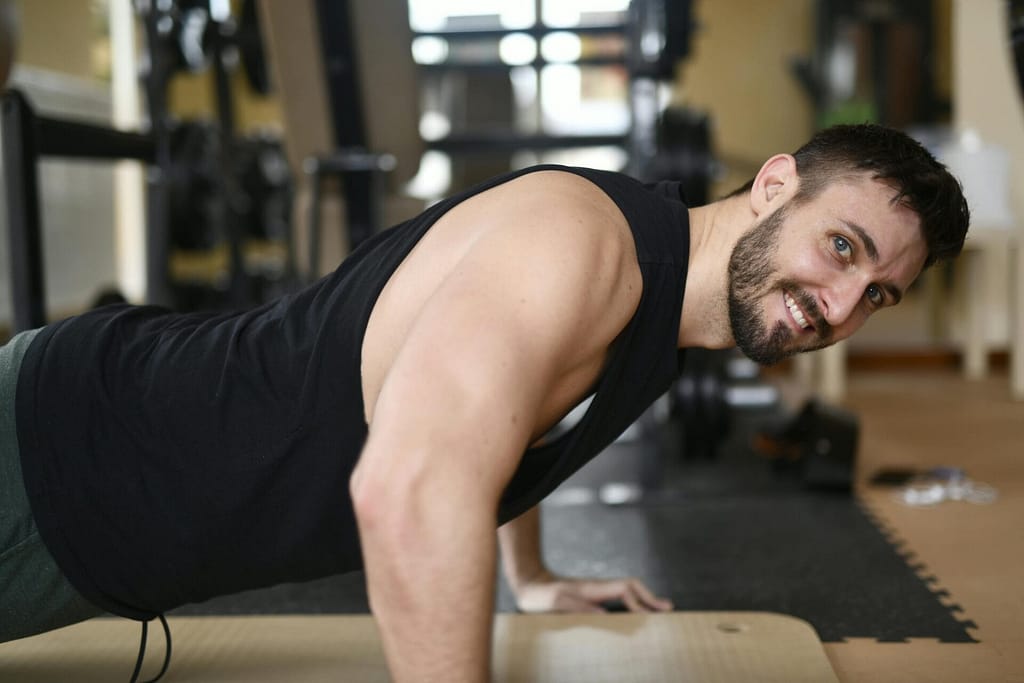
- Bodyweight training like push-ups, step-ups, and lunges
Simple tests
- Push-up test
- Plank hold test (core endurance)
Flexibility (and Mobility)
Flexibility describes range of motion at a joint. Mobility adds control through that range, which matters for safe squatting, reaching, and rotating.
Limited range of motion can change movement mechanics. That can raise overload risk in areas like the lumbar spine, hips, knees, and shoulders.
Common ways to improve it
- Dynamic warm-ups before training
- Static stretching after training
- Loaded mobility work (for example, controlled split squats)
Simple tests
- Sit-and-reach (hamstrings/lower back screening)
- Joint-specific ROM checks (a clinician may use a goniometer)
Body Composition
Body composition describes the proportion of fat mass and fat-free mass (muscle, bone, water). It differs from body weight and from BMI, which does not separate fat from muscle.
Body composition influences performance in running, jumping, and relative strength tasks. It also connects to metabolic health when paired with diet, sleep, and activity.
Common measurement methods
- Waist circumference (simple risk marker)
- Skinfold calipers (requires skill)
- BIA scales (variable accuracy)
- DXA/DEXA scans (more detailed, clinical-style)
For a practical overview of what body composition measures and what it does not, see the NIH/NHLBI explanation of BMI and related measures.
Skill-Related Components of Physical Fitness (The Performance 6)
Skill-related components of physical fitness matter most in sports and fast movement tasks. They build on the core 5 because your joints, muscles, and aerobic base support repeated practice.
Balance
Balance is the ability to control your body’s position, either still (static) or moving (dynamic). It relies on the vestibular system, vision, and proprioception.
Better balance supports fall prevention and cleaner movement in strength training.
Ways to train balance
- Single-leg stands and reaches
- Split squats and step-downs with control
- Unstable surfaces (use carefully; not always better)
Simple tests
- Stork stand
- Y-Balance style reach tests
Coordination
Coordination is how well your nervous system sequences movements. It affects technique in lifts, throwing, kicking, and changing direction.
Coordination improves through repeated, high-quality practice. It also improves when you reduce fatigue and improve sleep, since motor learning depends on recovery.
Ways to train coordination
- Skill drills with low fatigue
- Technique sessions for lifts and sport skills
- Rhythmic movements (for example, jump rope)
Agility
Agility is the ability to change direction quickly while maintaining control. It combines strength, balance, coordination, and braking ability.
In field and court sports, agility often matters more than straight-line speed.
Ways to train agility
- Deceleration drills (learn to stop safely)
- Cone drills and reactive cues
- Strength work for hips, hamstrings, and calves
Simple tests
- T-test
- Illinois Agility Test
Speed
Speed is how fast you move in a straight line over a distance. Sprinting speed depends on technique, stride mechanics, force production, and stiffness in the lower limbs.
Speed training works best when you stay fresh. Heavy fatigue reduces sprint quality and can raise injury risk.
Ways to train speed
- Short sprints (10–30 meters) with full rest
- Technique drills (A-skips, wall drills)
- Strength and power work to support force output
Power
Power is force produced quickly. In physics terms, it relates to work done over time. In training, it shows up in jumping, Olympic-lift variations, and fast throws.
Power depends on strength, but it adds speed of contraction. That is why many programs build strength first, then emphasize power.
Ways to train power
- Jumps (vertical jump, broad jump)
- Medicine ball throws
- Olympic-lift derivatives (with coaching)
Simple tests
- Vertical jump
- Standing broad jump
Reaction Time
Reaction time is how quickly you respond to a stimulus, like a whistle, a ball movement, or an opponent’s shift.
It improves through sport-specific practice, better anticipation, and drills that use real cues instead of memorized patterns.
Ways to train reaction time
- Partner cue drills (visual or auditory)
- Reactive agility drills
- Sport play and small-sided games
10 vs 11 Components of Physical Fitness: Why Lists Differ
Some sources list 10 components by combining related items (like “balance and coordination” or “speed and power”). Others list 11 by splitting each trait into its own category.
In practice, your training plan matters more than the exact count. You should still measure each distinct quality you need for your goals.

Components of Physical Fitness Table: Definitions, Examples, and Tests
| Component of physical fitness | What it means (plain) | Common training examples | Common tests |
| Cardiovascular endurance | Sustain aerobic work | Walking, running, cycling | Rockport, Cooper test |
| Muscular strength | Max force | Heavy squats, presses, pulls | 1RM/submax, grip test |
| Muscular endurance | Repeat effort/hold positions | Circuits, higher reps | Push-up, plank |
| Flexibility/mobility | Range + control | Dynamic warm-up, stretching | Sit-and-reach, ROM checks |
| Body composition | Fat mass vs lean mass | Training + nutrition plan | Waist, skinfold, BIA, DXA |
| Balance | Control body position | Single-leg work | Stork, Y-Balance |
| Coordination | Smooth skill execution | Technique practice | Skill-based assessment |
| Agility | Change direction fast | Decel drills, cone work | T-test, Illinois |
| Speed | Straight-line fast movement | Short sprints | Timed sprints |
| Power | Force quickly | Jumps, med ball throws | Vertical/broad jump |
| Reaction time | Respond quickly to cues | Reactive drills | Sport-specific timing tests |
Why Components of Physical Fitness Matter for Health
The health-related components of physical fitness link directly to how you move, how you age, and how you manage chronic disease risk.
Regular activity that includes aerobic and strength work supports heart health, metabolic health, and physical function. The WHO activity recommendations give a global reference for weekly targets: WHO physical activity recommendations.
Strength and aerobic training also support independence by improving lifting capacity, walking tolerance, and balance. These traits affect activities of daily living like climbing stairs, carrying groceries, and getting up from the floor.
How to Build a Balanced Plan Using Components of Physical Fitness
To cover components of physical fitness, you need a plan that touches aerobic work, resistance training, mobility, and skill practice.
If you want a safe baseline, align your weekly plan with a major guideline source. In the United States, the Physical Activity Guidelines for Americans outline recommended minutes and muscle-strengthening frequency.
Weekly Template for the 10 Components of Physical Fitness (General Fitness)
- 2–3 days strength training (full-body or upper/lower split)
- 2–4 days aerobic training (mix easy + moderate; add intervals later)
- Daily mobility basics (5–10 minutes works for many people)
- 1–2 short skill sessions (balance, agility, speed, or power depending on goals)
How Goal Changes Which 10 Components of Physical Fitness You Emphasize
- Fat loss / metabolic health: cardiovascular endurance + strength + body composition tracking
- Strength goals: muscular strength first, then power work
- Endurance events: cardiovascular endurance + muscular endurance + mobility
- Team sports: agility + speed + power + reaction time (supported by strength and aerobic base)
- Older adults: strength + balance + mobility to support fall risk reduction
How to Test Components of Physical Fitness (Without Overcomplicating It)
Testing keeps your plan honest. It also shows which component limits your performance.
Use the same test, under similar conditions, every time. Re-test every 4–8 weeks for most people.
Simple Fitness Component Testing Checklist
- Cardio: 1-mile walk time or 12-minute run distance
- Strength: estimated 1RM or a consistent 5-rep test
- Endurance: push-ups in one set, or plank time
- Mobility: sit-and-reach or joint-specific ROM targets
- Body composition: waist measurement + scale trend
- Power: vertical jump or broad jump
- Agility: T-test time
- Speed: timed 10–20 m sprint
- Balance: single-leg stand time
If you have medical conditions, injuries, or dizziness, use clinical guidance for testing and exercise selection.
Common Mistakes When Training Components of Physical Fitness
Training Only One Component of Physical Fitness
People often do only cardio or only weights. That leaves gaps like low mobility, weak balance, or poor endurance.
A combined plan improves more real-world outcomes because most tasks require multiple components at once.
Skipping Recovery (Which Reduces Every Component of Physical Fitness)
Sleep and rest days support muscle repair, motor learning, and consistent training quality.
If sprint times slow and technique breaks down, you usually need more rest or fewer high-intensity days.
Measuring the Wrong Thing for Your Components of Physical Fitness Goal
BMI alone can miss changes in lean mass. A better pairing uses waist circumference, performance tests, and strength trends.
FAQs: 10 Components of Physical Fitness
- What are the 5 health-related components of physical fitness?
Cardiovascular endurance, muscular strength, muscular endurance, flexibility, and body composition.
- What are the skill-related components of physical fitness?
Balance, coordination, agility, speed, power, and reaction time.
- Are speed and power the same component of physical fitness?
No. Speed measures how fast you move. Power measures how fast you produce force, like in jumps and throws.
- How fast can you improve components of physical fitness?
You can often improve test results in 4–8 weeks with consistent training. Body composition and maximal strength often take longer and vary by starting level and recovery.
Conclusion: Components of Physical Fitness
The components of physical fitness provide a clear, evidence-based framework for understanding, measuring, and improving physical health. The five health-related components, cardiovascular endurance, muscular strength, muscular endurance, flexibility, and body composition — directly impact long-term health outcomes. The five skill-related components, agility, balance, coordination, speed, power, and reaction time, determine athletic and functional performance.
Training all ten components in a structured, progressive programme produces the most complete and lasting improvements in fitness, health, and quality of life.
About The Author


Your article helped me a lot, is there any more related content? Thanks!
Thank you for your constructive comment. Follow me as I prepare similar content soon. Thanks again!