TL;DR: Crypto mining is the process where specialized computers compete to solve complex math puzzles, validate transactions, and add them to a permanent blockchain record. Miners who win earn cryptocurrency as a reward. But mining is also a serious business with real costs: hardware, electricity, and market risk. This guide follows one transaction from wallet to block reward and shows you exactly what makes the entire system work, and whether it’s worth pursuing in 2026.
Every day, billions of dollars move through crypto networks. No bank approves a single transaction. No company flips a switch. And no manager signs off on anything. So who keeps the entire system honest? The answer is miners, and understanding how crypto mining works is one of the most important things anyone serious about the digital economy can learn.
The global crypto mining market is projected to reach $62.29 billion by 2035 (Precedence Research). That’s not a niche hobby. That’s an industry. And yet most beginners still picture crypto mining as something mysterious happening on a supercomputer somewhere, run by people who understand things they never will.
That changes today.
This guide follows the complete journey of one transaction, from the moment it leaves a wallet to the second a miner earns a reward. You’ll understand the technology, the economics, the risks, and the real numbers behind profitability in 2025 and 2026. No jargon left unexplained. No steps skipped.
Let’s get into it.
What Is Crypto Mining? (And Why Does It Exist?)
Crypto mining is the process of using powerful computers to validate cryptocurrency transactions, solve complex mathematical puzzles, and earn newly created coins as a reward. It’s the engine that keeps decentralized blockchains like Bitcoin honest and operational, without needing a bank, government, or any central authority to approve anything.
That definition is worth sitting with for a moment. Think about what it actually means. When you use a bank, the bank keeps the ledger. The bank says what’s in your account. The bank approves or rejects your transfers. You trust the bank because it’s regulated, insured, and legally accountable.
Bitcoin has none of that. No central ledger. No institution in charge. So how does everyone agree on who owns what?
That’s exactly what mining solves.
Satoshi Nakamoto’s original Bitcoin Whitepaper introduced Proof of Work as a mechanism to replace trust in institutions with trust in mathematics. Instead of asking “do you trust this bank?”, the system asks “can you prove you did the work?” If you can, you earn the right to update the ledger. Everyone else checks your work independently and either accepts or rejects it.
Mining is the competitive process where that proof gets produced.
Think of it like a global puzzle competition. Thousands of computers around the world race to solve the same puzzle. The first one to solve it wins the right to add the next page to the world’s most important accounting book. And for that, they get paid in Bitcoin.
That’s crypto mining. Simple concept. Remarkable execution.
Follow One Transaction From Wallet to Block Reward
The clearest way to understand how crypto mining works is to follow a single transaction through every stage of the process. So let’s do exactly that.
Meet Alex. Alex wants to send 0.01 BTC to Sara. Here’s everything that happens next, from the moment Alex hits “send” to the moment a miner collects a reward.
Transaction → Verification → Competition → Block → Consensus → Reward
Step 1: The Transaction Leaves Alex’s Wallet
When Alex hits “send,” his wallet doesn’t call a bank. Instead, it creates a digital message that says: “Alex is sending 0.01 BTC to Sara, signed with Alex’s private key.” That message gets broadcast to thousands of computers on the Bitcoin network simultaneously.
Alex’s private key is a unique cryptographic signature that proves he authorized this transaction. Without it, no one can send funds from his wallet. The network accepts the signed message and adds it to something called the mempool.
The mempool (short for memory pool) is a waiting room for unconfirmed transactions. Think of it as a crowded inbox. Every unconfirmed transaction across the Bitcoin network sits here, waiting for a miner to pick it up.
Step 2: Miners Scan the Mempool
Miners are constantly scanning the mempool, looking for transactions to include in the next block. But they don’t pick transactions randomly.
Miners prioritize transactions that offer higher fees. Alex attached a small transaction fee to his transfer. That fee is his incentive for a miner to include his transaction sooner rather than later. When the network is busy, fees go up. When it’s quiet, fees drop. Transaction fees have become increasingly important post-halving (Blockchair), as miner block subsidies shrink over time.
A miner collects a bundle of transactions from the mempool, including Alex’s 0.01 BTC transfer to Sara, and gets ready to compete.
Step 3: The Competition Begins
Now the real work starts. The miner needs to solve a cryptographic puzzle to earn the right to add this bundle of transactions to the blockchain.
Here’s how that puzzle works.
A hash function is a mathematical process that takes any input (text, numbers, transaction data) and produces a fixed-length string of characters called a hash. Bitcoin uses the SHA-256 hash function. The important thing to know is that it’s a one-way street. You can’t reverse it. You can’t work backward from the output to find the input. But, you just have to keep guessing.
The network sets a “target hash”: a number that the winning hash must be lower than. The miner takes the block of transactions and adds a number called a nonce (which stands for “number used once”). They run it through SHA-256. If the result isn’t low enough, they change the nonce by one and try again.
And again. And again. A modern ASIC miner does this trillions of times per second.
Mining difficulty adjusts automatically every 2,016 blocks (roughly every two weeks) (Investopedia) to make sure a new block is found approximately every 10 minutes, regardless of how much computing power joins or leaves the network. More miners mean a harder puzzle. Fewer miners mean an easier one.
Step 4: A Winner Is Found and a Block Is Born
One miner, somewhere in the world, hits the right nonce. Their hash meets the target. They’ve won the round.
That miner immediately assembles a complete block containing:
- A block header (metadata including the previous block’s hash, a timestamp, and the winning nonce)
- All the transactions they selected from the mempool, including Alex’s payment to Sara
- A special transaction at the top called the coinbase transaction, which creates new Bitcoin and sends it to the winning miner’s wallet
The block gets broadcast to the entire network.
Step 5: The Network Verifies and Accepts the Block
Every full node on the Bitcoin network (there are tens of thousands of them) receives the new block and independently checks it. They verify that:
- The hash is valid and meets the difficulty target
- No Bitcoin was created out of thin air beyond the allowed subsidy
- Every transaction in the block is legitimate and properly signed
- The block correctly references the previous block in the chain
This verification is fast. Solving the puzzle took effort. Checking the answer takes seconds. If the block passes, every node adds it to their copy of the blockchain. Alex’s transaction to Sara is now permanently confirmed.
Step 6: The Miner Collects the Reward
The winning miner earns two things:
- The block subsidy: Newly created Bitcoin. After the April 2024 halving, this dropped from 6.25 BTC to 3.125 BTC per block (CoinDesk).
- Transaction fees: The sum of all fees attached to the transactions included in the block.
That’s it. No middleman. No approval committee. Just math, competition, and reward.
Alex’s payment reaches Sara. The miner gets paid. The blockchain grows by one block. And the whole cycle starts again in about 10 minutes.
Why Does the Network Trust the Block? The “Trust Without a Central Authority” Moment
If no bank or company approves the block, why does everyone accept it?
The network trusts a block because of three interlocking forces: the miner proved real computational work was done through Proof of Work, every node independently verified the block follows the protocol rules, and the longest valid chain wins by consensus. No single person or institution decides. The math and the rules do.
This is the part of crypto mining that most guides gloss over. Let’s slow down and really understand it, because it’s genuinely remarkable.
Proof of Work proves commitment. To fake a block, you’d need to redo the hash computation with a false nonce. That takes real energy and real time. There’s no shortcut. The computational work is the proof that you played by the rules.
Independent verification replaces institutional trust. When a new block arrives, every full node checks it against the same rulebook: the Bitcoin protocol. There’s no central judge. Thousands of independent computers all run the same checks. If the block is valid, they accept it. If not, they reject it. No one can bribe or pressure “the network” because the network is everywhere and no one owns it.
The longest chain wins. In Satoshi Nakamoto’s original design, when there’s a conflict (two miners solve the puzzle simultaneously, for example), the network simply follows whichever chain grows longer first. The chain with more accumulated Proof of Work is considered the real one. This is called the Nakamoto consensus.
What about attacks?
Could someone take over the network? Theoretically, a bad actor who controls more than 50% of the network’s total computing power (called a 51% attack) could rewrite recent transaction history. But the cost of acquiring that much computing power would be astronomical, likely exceeding any potential gain. The economics make it self-defeating. The security comes not from trust in any person or company, but from the cost of dishonesty.
This is the elegant architectural breakthrough of Bitcoin: it replaces “trust me” with “prove it.”
Mining Hardware: From CPUs to ASICs
Crypto mining hardware has evolved from standard computer processors to highly specialized machines called ASICs (Application-Specific Integrated Circuits). For Bitcoin, ASICs are now the only competitive option. For some altcoins, GPUs still work. The hardware you choose determines your hash rate, energy consumption, and ultimately your profitability.
Here’s how the hardware evolution unfolded:
CPU Mining (2009-2010)
In Bitcoin’s earliest days, you could mine on a regular laptop processor. Satoshi himself mined the first blocks this way. Those days are long gone for Bitcoin, but the simplicity of those early days is part of what makes the technology’s growth so remarkable.
GPU Mining (2010-2013)
Graphics cards (GPUs) proved far better at the parallel calculations needed for mining. They were 50 to 100 times more efficient than CPUs. Today, GPUs remain relevant for many altcoins. CryptoCompare’s mining data shows GPU mining is still viable for coins like Ravencoin, Ergo, and Kaspa, which use algorithms specifically designed to resist ASIC dominance.
FPGA Mining (2011-2013)
Field-Programmable Gate Arrays offered another step up. More efficient than GPUs but harder to configure. They occupy a small niche today.
ASIC Mining (2013-present)
Application-Specific Integrated Circuits are built for one job: mining a specific algorithm as fast as possible. For Bitcoin’s SHA-256 algorithm, they’re devastatingly efficient. Bitmain’s Antminer S21 Pro delivers 234 terahashes per second (TH/s) at 3,510 watts of power. That’s 234 trillion hash calculations every second. No CPU or GPU comes close.
| Hardware Type | Hash Rate | Power Use | Best For | Approx. Cost (2025) |
| CPU | Very Low | Low | Not competitive | $0 (existing hardware) |
| GPU | Medium | Medium | Altcoins (Kaspa, Ergo) | $300 to $1,500 |
| FPGA | Medium-High | Medium | Niche algorithms | $500 to $3,000 |
| ASIC (e.g., S21 Pro) | Very High | High | Bitcoin (SHA-256) | $2,000 to $10,000+ |
One important consideration: the used hardware market. Older ASICs sometimes seem like a bargain. An older generation machine that was profitable two years ago may now be operating below profitability after multiple difficulty adjustments. Always check current profitability before buying second-hand equipment.
Understanding how this hardware fits into the broader picture of how blockchain transactions are processed helps you see why hardware choice isn’t just a tech decision. It’s a financial one.
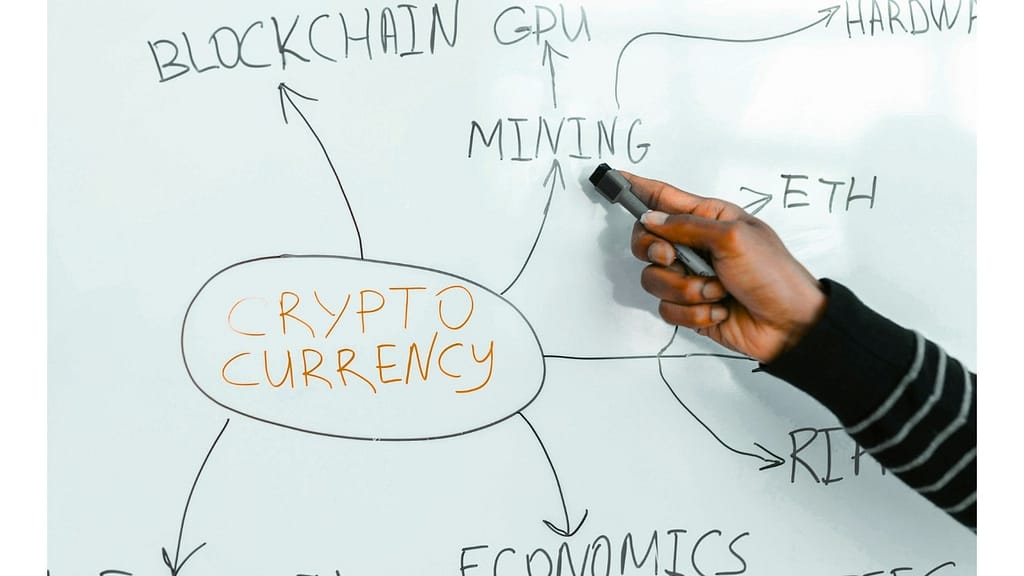
Mining Rewards, Bitcoin Halving, and the Economics of Block Production
Miners earn two types of income: a block subsidy (newly created Bitcoin) and transaction fees from the transactions they include in each block. The block subsidy halves approximately every four years. After the April 2024 halving, miners now earn 3.125 BTC per block. As subsidies shrink over time, transaction fees become an increasingly critical part of total miner revenue.
Let’s break down both income streams.
The Block Subsidy
When a miner wins a block, the protocol creates new Bitcoin out of nothing and sends it directly to the miner’s wallet through the coinbase transaction. This is the only way new Bitcoin enters circulation. It’s hard-coded into the protocol.
Bitcoin has a hard cap of 21 million coins. The supply schedule is controlled entirely by the halving mechanism. Every 210,000 blocks (approximately four years), the block subsidy cuts in half:
| Halving Event | Year | Block Reward |
| Genesis | 2009 | 50 BTC |
| First Halving | 2012 | 25 BTC |
| Second Halving | 2016 | 12.5 BTC |
| Third Halving | 2020 | 6.25 BTC |
| Fourth Halving | 2024 | 3.125 BTC |
| Fifth Halving | ~2028 | 1.5625 BTC |
The last Bitcoin is expected to be mined around the year 2140. After that, miners will rely entirely on transaction fees for revenue.
Transaction Fees
Every transaction on the Bitcoin network includes a fee paid by the sender. Miners collect every fee from every transaction in the blocks they win. Transaction fees have risen significantly in volatility post-halving (Blockchair), spiking during periods of high network activity.
Total Revenue Picture
To understand the scale here: Bitcoin miners earned over $44 billion in total revenue in 2024 (Galaxy Digital Research, 2024). That figure includes both block subsidies and transaction fees. It confirms that despite halving, mining remains a massive industry. But it’s an industry increasingly dominated by large, well-capitalized operations rather than solo home miners.
For a deeper look at understanding Bitcoin’s supply mechanics, the fundamentals covered in our cryptocurrency beginner’s guide will give you the broader context you need.
Is Crypto Mining Profitable in 2026?
Crypto mining profitability depends on four variables: your hardware’s hash rate, your electricity cost, the current price of the coin you’re mining, and network difficulty. In most of the U.S., where electricity averages $0.16 per kWh (U.S. EIA, 2024), home Bitcoin mining is rarely profitable. Miners in regions with electricity costs below $0.07 per kWh have a significant and real competitive advantage.
This is where most beginner guides fall short. They explain the concept of mining but skip the math that determines whether it actually makes sense. Let’s run real numbers.
The Four Profitability Variables
- Hash rate: Your machine’s computing power. Higher hash rate means more chances to win blocks.
- Electricity cost: The single most important variable. This is your primary ongoing expense.
- Coin price: Revenue is denominated in crypto. If the price drops, so does your dollar income.
- Network difficulty: As more miners join, the puzzle gets harder. Your share of rewards shrinks.
A Real Calculation
Let’s use the Antminer S21 Pro as our example:
- Hash rate: 234 TH/s
- Power consumption: 3,510 watts (3.51 kW)
- Daily electricity use: 3.51 kW x 24 hours = 84.24 kWh
At $0.07/kWh (favorable rate): Daily electricity cost = $5.90
At $0.16/kWh (U.S. average per U.S. EIA, 2024): Daily electricity cost = $13.48
If the machine earns $15 per day in Bitcoin at current difficulty and price, here’s what that means:
| Electricity Rate | Daily Revenue | Daily Power Cost | Daily Profit/Loss |
| $0.07/kWh | $15.00 | $5.90 | +$9.10 |
| $0.12/kWh | $15.00 | $10.13 | +$4.87 |
| $0.16/kWh | $15.00 | $13.48 | +$1.52 |
| $0.20/kWh | $15.00 | $16.87 | -$1.87 |
At $0.16/kWh, you’re barely breaking even before accounting for hardware cost, pool fees, maintenance, and taxes. At $0.20/kWh, you’re losing money daily.
I’ve seen beginners spend $3,000 on an ASIC and never once calculate their electricity bill until the first invoice arrived. That invoice is a brutal teacher. Run the numbers first. Always.
Use the NiceHash profitability calculator to model your specific hardware, electricity rate, and current network conditions before spending a dollar on equipment.
Break-Even Timeline
If the S21 Pro costs $5,000 and you net $9.10 per day at $0.07/kWh, your break-even point is approximately 550 days (about 18 months). That assumes Bitcoin’s price and network difficulty stay constant, which they never do.
Cloud Mining as an Alternative
Cloud mining lets you rent hashing power from a remote data center instead of buying hardware. It lowers the barrier to entry but comes with serious caveats. Many cloud mining platforms are outright scams. If a platform promises guaranteed returns regardless of Bitcoin price or difficulty, walk away. Legitimate cloud mining is lower-margin and lower-control than running your own hardware.
When comparing mining to traditional investment returns, mining carries higher operational complexity and risk. Understanding that distinction early matters. And if you’re exploring mining as a path toward financial independence, it’s worth reading how evaluating mining as a passive income strategy compares to other approaches before you commit significant capital.
Solo Mining vs. Mining Pools: The Decision Tree
For the vast majority of individual miners, joining a mining pool is the only practical choice. Here’s why, and how to decide which path makes sense for your situation.
What Is Solo Mining?
Solo mining means your hardware competes against the entire network alone. If you win a block, you keep the entire reward (currently 3.125 BTC plus fees). If you don’t win, you earn nothing. Given that the Bitcoin network’s total hash rate runs in the hundreds of hashes per second, a single home miner has roughly the same odds as buying one lottery ticket when millions are in play.
Solo mining can make sense for very large operations with industrial-scale hardware, or for mining smaller altcoins where total network hash rate is low enough to make solo victories realistic.
What Is a Mining Pool?
A mining pool combines the computing power of thousands of miners. When the pool wins a block, the reward gets distributed among all members based on how much hash rate each contributed. Lower variance, smaller but more consistent payouts.
Top Bitcoin mining pools currently control over 60% of the network’s total hash rate (BTC.com Pool Stats). The major players include Foundry USA, AntPool, F2Pool, and ViaBTC.
Pool Reward Models
| Model | What It Means | Best For |
| PPS (Pay Per Share) | Flat rate per share submitted, regardless of blocks found | Predictable income, risk-averse miners |
| PPLNS (Pay Per Last N Shares) | Payout based on your shares in recent rounds | Higher ceiling, more variance |
| FPPS (Full Pay Per Share) | PPS plus a share of transaction fees | Most comprehensive, increasingly common |
Pool fees typically run between 1% and 3% of earnings. A reputable pool will be transparent about its fee structure, payout frequency, and historical performance.
The Decision Tree
Are you mining Bitcoin or an altcoin?
│
├── BITCOIN
├── Industrial-scale hardware (multiple ASICs)?
– Solo mining is possible but still high-variance
└── Home or small setup (1-5 ASICs)?
└── Join a Pool
├── Want steady, predictable income?
└── Choose PPS or FPPS model pool
└── Comfortable with variance for potentially higher returns?
– Choose PPLNS model pool
│
└── ALTCOIN
├── New or small network (low total hash rate)?
│ └── Solo mining may be viable
└── Established altcoin with significant hash rate?
└── Join a Pool
For most beginners: join a reputable pool, start with an FPPS model for fee transparency, and track your daily earnings consistently from day one.
Mining vs. Staking: The Decision Map
Mining uses physical hardware and electricity to validate transactions through Proof of Work. Staking locks up cryptocurrency to validate transactions through Proof of Stake. Mining has higher upfront costs and energy demands but offers direct coin creation. Staking is more accessible, energy-efficient, and passive, but requires holding existing coins as collateral to participate.
These are the two dominant ways to earn rewards for supporting a blockchain network. Understanding both helps you decide which fits your resources and goals.
The Big Shift: Ethereum’s Move to Proof of Stake
In September 2022, Ethereum completed “The Merge,” transitioning from Proof of Work to Proof of Stake. This single change reduced Ethereum’s energy consumption by approximately 99.95% (Ethereum Foundation). Miners who had invested in Ethereum GPU rigs overnight found their machines no longer relevant for Ethereum. Many pivoted to other GPU-mineable altcoins.
This event underscores a critical risk in mining: protocol changes can make hardware obsolete overnight.
The Comparison
| Factor | Mining (Proof of Work) | Staking (Proof of Stake) |
| Upfront cost | High (hardware purchase) | Medium (coin purchase) |
| Ongoing cost | High (electricity) | Low (wallet maintenance) |
| Energy use | Very High | Minimal |
| Technical complexity | High | Low to Medium |
| Passive income potential | Moderate | High |
| Decentralization | Historically strong | Varies by protocol |
| Risk of loss | Hardware depreciation, price drop | Price drop, slashing penalties |
| Best for | Tech-savvy, access to cheap electricity | Crypto holders seeking passive yield |
| Example coins | Bitcoin, Kaspa, Ravencoin | Ethereum, Cardano, Solana, Polkadot |
Which Is Better for Beginners in 2026?
If you have access to cheap electricity, technical comfort with hardware, and capital for equipment, mining can generate meaningful income. If you already hold cryptocurrency and want a lower-complexity path to earning yield, staking is generally the more accessible entry point.
Some experienced participants use a hybrid approach: mine a Proof of Work coin, convert a portion of earnings to a Proof of Stake coin, and stake those for additional yield.
Learning how to integrate both strategies into your holdings is covered well in our guide on integrating mining and staking into your crypto strategy.
The 2026 Mining Reality Check: What’s Actually Changed
The crypto mining landscape in 2026 looks meaningfully different from even two years ago. If you’re making decisions based on 2022 or 2023 information, you’re working from an outdated map.
Post-Halving Economics Are Reshaping Margins
The April 2024 halving cut block subsidies from 6.25 BTC to 3.125 BTC overnight. For miners with electricity costs above $0.10/kWh, this compressed margins significantly. Efficient, well-capitalized operations with cheap power survived and expanded. Marginal operations shut down or sold hardware.
Hash Rate Is at All-Time Highs
Despite the halving, Bitcoin’s total network hash rate has continued climbing. More efficient hardware keeps coming to market. This means the puzzle difficulty keeps adjusting upward, making it harder for any single miner to win blocks relative to the past.
Institutional Miners Now Dominate
Public mining companies like Marathon Digital Holdings and CleanSpark have raised hundreds of millions in capital and operate at scales that individual home miners simply cannot match. The competitive landscape has professionalized dramatically.
AI and Data Center Convergence
One of the most interesting developments is the intersection of mining infrastructure and AI computing. Mining facilities with large power contracts and cooling infrastructure are being repurposed or co-located with AI data centers. This trend is creating new revenue streams for mining operations beyond block rewards alone.
The Regulatory Environment Is Evolving
For the latest on the current regulatory environment for crypto miners, the landscape is shifting fast. In the U.S., mining operations face increasing scrutiny around energy use and environmental reporting. The European Union’s MiCA framework has introduced clearer (though stricter) rules for crypto activities. China’s comprehensive ban on crypto mining remains in effect, redirecting significant hash rate to the U.S., Canada, and Central Asia.
Is Home Mining Still Viable?
Honestly? For Bitcoin, home mining in most developed countries with average electricity costs is marginal at best. The economics favor industrial operators. However, mining certain altcoins with GPU rigs on favorable electricity rates can still produce positive returns. The key is modeling your specific situation with current data, not generalized optimism.
5 Things Beginners Get Wrong About Crypto Mining
After watching how people approach mining for the first time, the same mistakes appear repeatedly. Here are the five that cost people the most money, time, and frustration.
Mistake 1: Treating Mining as Passive Income
Mining is not a savings account. It’s closer to running a small manufacturing business. You have to monitor hardware temperatures, manage software updates, track market prices, optimize power settings, and respond when equipment fails. Machines run 24 hours a day, 7 days a week. Problems don’t wait for convenient times. If you want truly passive crypto income, look at staking instead.
Mistake 2: Calculating Revenue Without Subtracting Electricity
This is the most common and most painful mistake. A machine showing $18 per day in mining revenue sounds profitable. That same machine consuming $20 per day in electricity is a money-losing operation. Always calculate net profit, not gross revenue. Electricity is not optional and it does not pause on weekends.
Mistake 3: Buying Last-Generation Hardware
An ASIC that was profitable in 2022 may be completely underwater today after four rounds of difficulty increases and a halving. Always check the current profitability of a specific machine model at current difficulty and price before purchasing. The NiceHash profitability calculator lets you search specific hardware models and see real numbers.
Mistake 4: Assuming Crypto Price Will Hold
Hardware typically pays for itself over 12 to 24 months. A lot can change in that window. A 50% price drop mid-payback period doesn’t just slow your ROI; it can flip a profitable operation into a loss-making one. Never base your mining business plan on the assumption that today’s price is the floor.
Mistake 5: Ignoring Tax Obligations
In the United States, mined cryptocurrency is treated as ordinary income by the IRS, taxable at fair market value on the day it’s received. If you mine $500 worth of Bitcoin today, that $500 is taxable income this year, regardless of whether you sell it. When Bitcoin later rises to $800 and you sell, the additional $300 is a capital gain. Many beginners discover this at tax time, facing an unexpected bill on income they already spent or reinvested. Track every reward from day one.
How to Start Crypto Mining: A Step-by-Step Beginner’s Roadmap
If you’ve worked through the numbers and decided mining makes sense for your situation, here’s the practical path forward.
Step 1: Choose Your Coin
Bitcoin mining requires ASICs and cheap electricity. Altcoin mining (Kaspa, Ravencoin, Ergo) can be done with GPUs and may offer better returns for smaller operations. Consider the coin’s community health, development activity, and liquidity before committing hardware to it.
Step 2: Run the Profitability Numbers First
Before buying anything, model your specific situation. Use the NiceHash profitability calculator with your hardware specs, local electricity rate, and current network difficulty. If the numbers don’t work today, they may not work tomorrow either.
Step 3: Select and Purchase Hardware
For Bitcoin: research current-generation ASICs. For altcoins: research which GPU algorithm your target coin uses and which cards perform best. Buy from reputable sources. Verify warranty terms.
Step 4: Set Up a Crypto Wallet
You need a non-custodial wallet that you control. This means you hold your private keys, not an exchange. Hardware wallets (like Ledger or Trezor) offer the strongest security for storing mining earnings.
Step 5: Download and Configure Mining Software
Mining software connects your hardware to your chosen pool. Popular options include CGMiner, BFGMiner (for ASICs), and PhoenixMiner or T-Rex (for GPUs). Each pool provides specific configuration instructions when you create an account.
Step 6: Join a Mining Pool
Choose a pool based on size, fee structure, payout model, and reputation. Larger pools offer more consistent payouts. Check BTC.com for current pool rankings and hash rate distribution.
Step 7: Monitor Performance Daily
Track your hash rate, hardware temperatures, uptime, and daily earnings. Most pools provide dashboards with real-time data. Set up alerts for hardware failures or significant drops in hash rate.
Step 8: Track Income, Expenses, and Tax from Day One
Use a spreadsheet or dedicated crypto tax software (like Koinly or CoinTracking) to log every reward received, its value in USD at receipt, and every electricity payment made. This saves enormous pain at tax time.
The Environmental and Regulatory Reality of Crypto Mining
Bitcoin mining consumes an estimated 120 to 150 terawatt-hours of electricity annually, comparable to the energy use of some mid-sized countries (Cambridge Centre for Alternative Finance, 2024). This energy use is both mining’s biggest criticism and its most significant opportunity, as miners increasingly shift toward renewable energy sources to cut costs and reduce environmental impact.
Putting the Numbers in Context
The Cambridge Bitcoin Electricity Consumption Index (CCAF, 2024) provides the most cited ongoing estimate of Bitcoin’s energy use. Critics point to the total number as evidence of wastefulness. Supporters note that a growing share of that energy comes from renewable sources, including stranded hydroelectric power, flared natural gas (which would otherwise be burned off anyway), and solar installations.
The U.S. EIA’s 2024 electricity data shows average residential rates of $0.16/kWh across the country, which is precisely why many mining operations have relocated to regions with cheaper power: Iceland (geothermal), Paraguay (hydro), and parts of Texas and Kentucky in the U.S.
Ethereum’s Alternative Path
When Ethereum completed The Merge in September 2022 (Ethereum Foundation), it demonstrated that a major blockchain could function without Proof of Work entirely. Its 99.95% reduction in energy use changed the conversation around blockchain sustainability permanently. Bitcoin’s community has not pursued this path, arguing that Proof of Work’s energy cost is precisely what makes it secure and trustworthy.
Regulatory Developments
The regulatory environment for mining varies significantly by geography. China banned crypto mining comprehensively in 2021, pushing operations to other regions. The EU’s MiCA framework has created clearer rules for crypto businesses, including miners. In the U.S., the regulatory picture remains active and evolving, with congressional debates around energy reporting requirements for large mining operations.
Staying current with the latest cryptocurrency regulation updates matters because regulatory changes can affect where you can mine, how you report income, and what equipment qualifies for energy incentives.
Conclusion
Crypto mining is one of the most fascinating intersections of technology, economics, and competition that exists in the digital economy today. Here are the three things worth remembering.
First: Mining is not magic. It’s a transparent, mathematically governed process where computers compete to validate transactions, and the winner earns a reward. Following one transaction from wallet to block reward makes the whole system clear.
Second: The economics are real and they’re unforgiving. Hardware costs, electricity rates, network difficulty, and coin price all move. Profitability is never guaranteed. Run your numbers before you invest a dollar.
Third: Mining is evolving fast. The 2026 landscape favors well-capitalized, efficient operations. That doesn’t mean individuals can’t participate, but it does mean you need accurate, current information to make smart decisions.
At Rejoice Winning, we believe that building wealth in the digital economy takes information, not luck. Whether you decide to mine, stake, invest, or simply understand how the system works, you’re already ahead by asking the right questions.
Start with the numbers. Know your costs. And never stop learning.
Frequently Asked Questions
1. How long does it take to mine 1 Bitcoin in 2025?
No single miner “mines” a full Bitcoin on their own in most practical scenarios. When a miner wins a block, they earn the block reward (currently 3.125 BTC) plus transaction fees. The time it takes to win a block solo depends on your hash rate relative to the entire network. With a single Antminer S21 Pro at 234 TH/s and a network hash rate in the hundreds of hashes per second, a solo miner might statistically wait years between wins. In a mining pool, you receive fractional payouts proportional to your contribution, which accumulate daily.
2. Can I mine cryptocurrency on my laptop or a regular PC?
Technically yes, practically no for any coin worth mining at scale. A standard laptop CPU or even a decent GPU cannot compete with ASIC miners on Bitcoin or most major coins. You’d spend far more on electricity than you’d earn in rewards. Some newer GPU-friendly coins (like Kaspa or Ergo) can be mined with consumer graphics cards at a small profit if electricity is cheap. But your laptop will run hot, wear out faster, and almost certainly lose money. Always run profitability calculations with your specific hardware before starting.
3. What is the easiest cryptocurrency to mine as a beginner in 2026?
For beginners with a gaming GPU and access to reasonably priced electricity, Kaspa (KAS) and Ravencoin (RVN) are frequently cited as more accessible starting points than Bitcoin. These coins use algorithms designed to be GPU-friendly and ASIC-resistant. CryptoCompare’s mining data provides current profitability estimates by coin and hardware. Start with one GPU, learn the process, and scale only after you’ve successfully managed a profitable operation for at least 60 days.
4. How much electricity does Bitcoin mining actually use?
According to the Cambridge Centre for Alternative Finance’s Bitcoin Electricity Consumption Index (CCAF, 2024), Bitcoin mining consumes approximately 120 to 150 terawatt-hours (TWh) of electricity per year. For context, that’s roughly comparable to the annual electricity consumption of a country like Argentina or the Netherlands. The energy source matters enormously: a growing share of this consumption comes from renewable energy as miners chase the cheapest available power, which increasingly means hydro, solar, and wind.
5. Is crypto mining legal in the United States in 2026?
Yes, crypto mining is legal in the United States at the federal level. The IRS treats mining income as ordinary income, taxable at fair market value on the date of receipt. Some states have enacted their own energy-related regulations that affect large mining operations specifically. No federal law currently prohibits individual or commercial mining. However, regulatory oversight is increasing, and reporting requirements for large energy consumers may expand. Staying updated on the current regulatory environment for crypto miners is an important part of running a compliant mining operation in 2026.