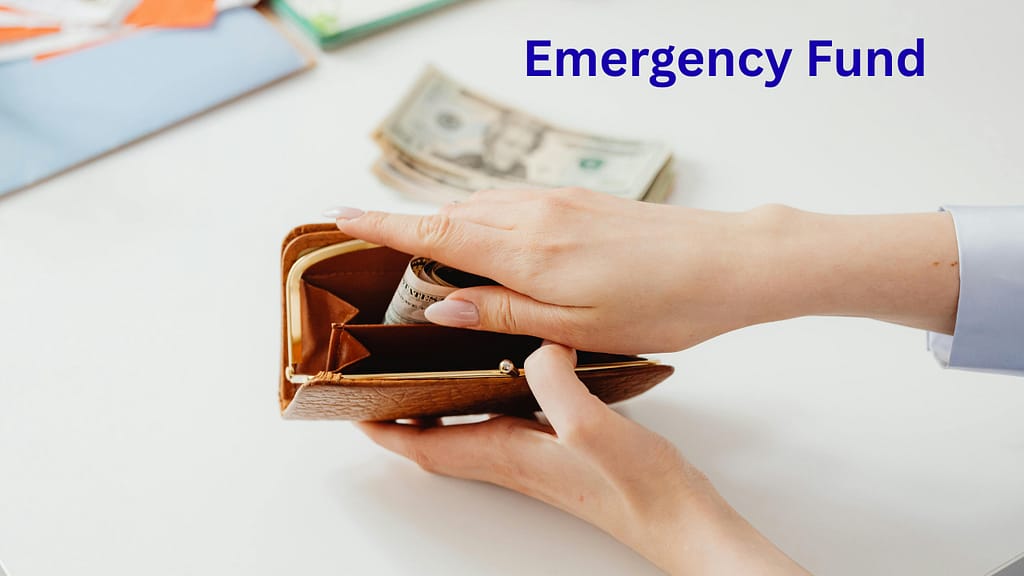
How to Build an Emergency Fund: A Step-by-Step Plan That Works on Any Income
TL;DR: Building an emergency fund is the single most important financial move you can make, regardless of your income. This guide answers every question you have: how much to save, how to start with almost nothing, whether to save or pay off debt first, where to keep the money, what counts as a real emergency, and how to rebuild after you use it. Start small, automate everything, and protect it like your financial life depends on it. Because it does.
You don’t think about your emergency fund until you desperately need one. Then the transmission goes. The hospital bill arrives. The layoff email lands in your inbox at 4:47 on a Friday afternoon.
And suddenly, that $0 savings balance isn’t just a number. It’s a full-blown crisis.
If that scenario feels familiar, you’re not alone. According to the Federal Reserve’s 2023 Report on Economic Well-Being, 37% of Americans couldn’t cover a $400 emergency expense using cash or a cash equivalent. That’s more than one in three people, one bad day away from financial chaos.
Knowing how to build an emergency fund changes that equation entirely. It doesn’t matter how much you earn right now. What matters is having the right system. This guide gives you that system, step by step, with no assumptions about your income and no fluff about what you “should” already be doing.
Let’s get into it.
What Is an Emergency Fund and Why Does It Change Everything?
An emergency fund is a dedicated pool of money set aside exclusively for unexpected financial shocks. Think job loss, medical bills, urgent car repairs, or emergency home expenses. It’s not your travel fund, your holiday shopping budget, or your “treat yourself” account. It’s your financial firewall, and it’s the difference between handling a crisis and being buried by one.
Without one, every unexpected expense becomes a debt event. You reach for a credit card, take out a personal loan, or call a family member for help. Those small emergencies compound quietly over time into major financial setbacks that take years to undo.
With one, the same unexpected expense is an inconvenience. You handle it, you rebuild, and your financial progress stays on track.
According to Bankrate’s 2024 Emergency Savings Report, 56% of Americans say they couldn’t cover three months of expenses from savings alone. That’s the majority of the country walking a financial tightrope, one layoff or one hospital visit away from real trouble.
What separates people who have a fund from those who don’t usually isn’t income. It’s intention, structure, and knowing exactly what the fund is for.
For a broader view of how this fits into your overall financial picture, explore the personal finance strategies we cover at Rejoice Winning.
How Much Should Your Emergency Fund Be?
The standard recommendation is three to six months of essential living expenses. Essential expenses include rent or mortgage, utilities, groceries, transportation, insurance, and minimum debt payments. Calculate your monthly essential total, then multiply by three for your minimum target and by six for your full target.
That range isn’t arbitrary. It reflects how long financial disruptions typically last in the real world. According to Fidelity’s 2024 personal finance guidance, three months covers most short-term emergencies, while six months provides the buffer needed during extended disruptions like a serious illness or a competitive job market.
The CFPB also recommends having at least three months of expenses saved before you shift focus aggressively to other financial goals. It’s foundational, not optional.
But your exact target depends on your specific situation. Here’s how to think about it:
| Your Situation | Recommended Target |
| Stable W-2 job, dual income household | 3 months |
| Single income household | 4 to 5 months |
| Freelancer, gig worker, or self-employed | 6 to 9 months |
| Commission-based income | 6 to 9 months |
| Chronic health condition or dependents | 6 to 12 months |
The FINRA National Financial Capability Study (NFCS, 2025) found that 53% of Americans don’t have emergency savings sufficient to cover three months of expenses. Freelancers and variable-income workers are disproportionately represented in that group, which is exactly why those workers need a larger target.
How to calculate your personal emergency fund target:
- List every essential monthly expense: housing, food, transportation, utilities, insurance, and minimum debt payments.
- Add them up. That’s your monthly essential burn rate.
- Multiply by three. That’s your minimum target.
- Multiply by six. That’s your full target.
For example: If your essential monthly expenses total $2,800, your minimum target is $8,400 and your full target is $16,800.
That number might feel large right now. That’s okay. You don’t save it all at once. You build it in stages, which is exactly what the next section is about.
How Do You Start Building an Emergency Fund With Almost No Money?
If you’re starting with almost nothing, save $500 first. Don’t think about six months of expenses yet. A $500 starter fund covers most small emergencies and breaks the cycle of reaching for debt every time something goes wrong. Start with $5 to $25 per week, automate it, and build the habit before you build the balance.
This is the question most financial guides either ignore or answer badly. They give you the math for people who already have margin in their budget. They don’t talk to the person who is genuinely stretched thin right now.
According to the CNBC/Acorns Money Report (2023), 60% of American workers report living paycheck to paycheck. And research from the Urban Institute (2025) shows that low-income households are disproportionately likely to lack any emergency savings, not because of bad habits, but because the systems around them don’t leave much margin.
So let’s talk about what actually works when the margin is thin.
The Micro-Saving Method
The idea is simple: start with an amount so small it barely registers, then increase it gradually as your income grows or your expenses decrease.
Here’s what that looks like in practice:
| Timeframe | Weekly Savings Target | Monthly Total |
| Month 1 to 2 | $10/week | $40 to $80 |
| Month 3 to 4 | $20/week | $80 to $160 |
| Month 5 to 6 | $25 to $40/week | $100 to $160 |
| Month 6 onward | $50+/week (adjust to income) | $200+ |
Why $500 is the most important milestone
A $500 starter fund doesn’t solve a job loss. But it handles most car repairs, most medical co-pays, and most small household emergencies. That’s the number that stops you from reaching for a credit card at the worst moments.
A Community Bank study found that people who set small, achievable initial savings goals are significantly more likely to maintain consistent saving behavior over 12 months than those who set large targets and fall short early. The momentum matters more than the amount, especially at the start.
Once you hit $500, celebrate it. Set your next milestone at $1,000. Then $2,500. Then work toward your full three-month target.
This milestone-based approach is one of the practical principles behind building financial resilience that we emphasize across Rejoice Winning.
Three ways to find money when the budget feels impossible
You don’t always need to earn more. Sometimes you find it by looking harder at where it’s already going.
- Cancel subscriptions you forgot about. Most households have two to four recurring charges they no longer use. That’s $20 to $60 per month going straight to your fund.
- Sell what you don’t use. A weekend declutter on Facebook Marketplace or eBay can generate $100 to $500 quickly. Put every dollar directly into your starter fund.
- Use one windfall strategically. A tax refund, a side gig payment, or a cash gift goes at least 50% to the fund before you spend anything else.
Should You Save or Pay Off Debt First?
Build a small starter emergency fund of $500 to $1,000 first, then aggressively attack high-interest debt, then finish building your full emergency fund. Skipping the starter fund is the mistake that keeps people stuck. Without any buffer, one unexpected expense sends you straight back into debt the moment you start making progress.
This is one of the most common financial dilemmas people face, and the answer depends on understanding why the order matters.
Here’s the logic: If you put every spare dollar toward debt and keep nothing in savings, you’re one broken appliance or one urgent bill away from needing to borrow again. You pay off $800 in credit card debt over three months. Then your water heater fails. You charge $950 back to the card. You’re behind where you started, and you’ve lost three months of momentum.
The CFPB’s guidance on emergency savings specifically addresses this sequence. Having a small cushion in place before you redirect all spare cash to debt repayment protects you from the debt cycle that traps millions of people.
The recommended order:
| Priority | Action |
| Step 1 | Build a $500 to $1,000 starter emergency fund |
| Step 2 | Pay off high-interest debt aggressively (credit cards, payday loans) |
| Step 3 | Build your full 3-month emergency fund |
| Step 4 | Pay off remaining moderate-interest debt |
| Step 5 | Build toward your 6-month target while investing |
One important nuance: If your debt carries interest above 20% (like most credit cards), the math still favors attacking debt quickly after your starter fund is in place. But if your debt is lower-interest student loans or a car payment, you can build your full emergency fund and pay those down simultaneously.
The goal isn’t perfection. It’s building a system that doesn’t collapse the moment something goes wrong.

The Step-by-Step Plan to Build Your Emergency Fund
This is the core framework. Follow these six steps in order. Don’t skip ahead to the later ones before completing the earlier ones.
Step 1: Calculate Your Monthly Essential Burn Rate
Go through your last two to three months of bank and credit card statements. Separate every expense into two buckets: essential and non-essential.
Essential: Rent or mortgage, groceries, utilities, transportation, insurance, minimum debt payments.
Non-essential: Dining out, streaming subscriptions, entertainment, shopping, and anything else that isn’t required for basic functioning.
Add up your essential expenses. Write that number down. That’s your baseline. Multiply it by three for your minimum target and by six for your full target.
Step 2: Set Your Milestones
Don’t just write down your final target and stare at it. Break it into milestones.
- Milestone 1: $500 (your starter fund)
- Milestone 2: $1,000
- Milestone 3: One month of essential expenses
- Milestone 4: Three months of essential expenses (minimum target)
- Milestone 5: Six months of essential expenses (full target)
Each milestone is a checkpoint to celebrate and then reset from. The psychological momentum this creates is not a soft benefit. It’s a proven driver of sustained saving behavior.
Step 3: Open a Dedicated, Separate Account
This step is non-negotiable. Your emergency fund cannot live in your everyday checking account. If it does, you will spend it.
Open a high-yield savings account at an online bank that is different from your primary bank. We cover exactly where to keep this money in the next section. For now, the key principle is: separate accounts create behavioral separation. The slight friction of transferring money across banks is a feature, not a flaw.
The FDIC’s 2023 survey data consistently shows that Americans with dedicated savings accounts separate from their checking accounts save more, on average, than those who keep funds in a single account.
Step 4: Automate Your Contributions
Set up an automatic transfer from your checking account to your emergency fund account. Schedule it for the day you get paid, or the day after. Even if it’s $15 per paycheck. Automate it and leave it alone.
This is the single most important mechanical step in the entire system. The money moves before you make any spending decisions. There is no willpower required. There is no “I’ll save what’s left over” hoping. The habit runs without you.
According to Vanguard’s 2025 How America Saves report, employees who are automatically enrolled in savings programs contribute at significantly higher rates and maintain those contributions far longer than those who have to actively choose to save each time. The same behavioral principle applies directly to your emergency fund.
Step 5: Protect It Deliberately
Once money is in the fund, create friction around spending it. Choose an account at a different bank than your everyday account. Don’t add it to your banking app’s main dashboard if you can help it. Don’t link it to a debit card.
Rename the account. Most banks and online savings platforms allow you to nickname your accounts. Name it “Emergency Only” or “Do Not Touch” or something equally clear. Seeing that label before initiating a transfer creates a pause that stops impulsive withdrawals more often than people expect.
Write a one-sentence personal rule: “This account is only for expenses that are unplanned, necessary, and would cause financial harm if ignored.” Put it somewhere you’ll see it.
Step 6: Rebuild Immediately After Every Use
If you use your fund for a real emergency, that is exactly what it was built for. No guilt. No shame. You did the right thing.
But the moment the crisis ends, the rebuild starts. Return your automatic transfer to its full amount immediately. If you can afford to temporarily increase it to rebuild faster, do it. Treat the rebuild like the original build: milestone by milestone, one automated transfer at a time.
Where Should You Keep Your Emergency Fund?
Keep your emergency fund in a high-yield savings account at an online bank, separate from your primary checking account. High-yield savings accounts currently earn 4.5% to 5% APY, your money stays fully accessible within one to three business days, and the physical separation from your everyday account protects you from spending it accidentally.
This decision matters more than most people realize. The wrong account costs you money through inflation erosion, or costs you access at the exact moment you need it most.
Here’s a clear breakdown of your options:
| Account Type | Liquidity | Typical Rate (2024) | Recommended? |
| High-Yield Savings Account (HYSA) | 1 to 3 business days | 4.5 to 5% APY | Yes, best option |
| Money Market Account | Same day to 3 days | 4 to 5% APY | Yes, solid alternative |
| Traditional Savings Account | Same day | 0.01 to 0.5% APY | No, rate is too low |
| Checking Account | Immediate | 0 to 0.5% APY | No, too easy to spend |
| Certificate of Deposit (CD) | Locked (penalty to access) | 4.5 to 5.5% APY | No, not liquid enough |
| Investment Account (stocks/ETFs) | 3 to 5 days, market risk | Variable | No, too risky |
According to NerdWallet’s 2024 analysis of high-yield savings accounts, the top HYSAs currently offer rates between 4.5% and 5% APY, compared to the national average savings rate of approximately 0.46% at traditional brick-and-mortar banks.
What that rate difference actually means in dollars:
If your three-month emergency fund target is $8,400:
- In a traditional savings account at 0.46% APY: approximately $39 in annual interest
- In a high-yield savings account at 4.9% APY: approximately $412 in annual interest
- Difference: $373 per year for simply choosing the right account
That’s real money. For doing nothing except moving the fund to the right place.
Why not invest it to earn even more?
This is a common question, especially among readers who are already comfortable with investing. The answer is firm: do not invest your emergency fund.
Markets drop. Recessions happen. And here’s the painful irony: market downturns and economic recessions are the same events that cause job losses and financial emergencies to spike. If your emergency fund is in the stock market and a recession hits, your fund could be down 25 to 35% at the exact moment you need it most. That’s not a safety net. That’s a trap.
Keep the fund liquid, stable, and accessible. For everything else you want to do with money to build long-term wealth, explore the growing wealth strategies we cover across Rejoice Winning.
For freelancers and business owners navigating the question of business versus personal emergency funds, our content on smart money moves for entrepreneurs covers that in detail.
How Long Does It Take to Build an Emergency Fund?
How long it takes to build an emergency fund depends on your income, your essential expenses, and how much you can save each week. For most people saving $50 to $200 per month, reaching a three-month emergency fund takes between one and three years. But the first $500 is achievable in weeks, and that milestone changes everything.
This is the question people are almost afraid to ask. Because they’re worried the answer will feel discouraging.
Here’s the honest answer, with real numbers:
| Monthly Savings Amount | Time to $500 | Time to 3 Months ($2,800/mo example) |
| $50/month | 10 months | ~14 years (unrealistic alone) |
| $100/month | 5 months | ~7 years (supplement with windfalls) |
| $200/month | 2.5 months | ~3.5 years |
| $400/month | 6 weeks | ~21 months |
| $600/month | 4 weeks | ~14 months |
The numbers make it clear: the more you can automate, and the more aggressively you use windfalls, the faster you get there.
The most important shift in how you think about this:
The timeline doesn’t matter as much as the direction. Every dollar in that account is a dollar that protects you. A fund at 20% of your target is infinitely better than no fund at all. Forward momentum is the goal, not speed.
What accelerates the timeline most dramatically:
- Windfalls: Tax refunds, bonuses, side income, and cash gifts. Putting 50 to 100% of each windfall directly into the fund can cut years off your timeline.
- Expense audits: Finding one recurring expense you can cut (a subscription, a habit, a service) and redirecting that money to savings adds up fast.
- Income increases: Any raise, side hustle payment, or freelance win above your baseline goes straight to the fund until it’s fully built.
According to VanGuard on income volatility, many households experience significant income fluctuations from year to year. Using high-income months to aggressively build the fund protects you through the lower-income months. That’s the strategy, not just hope.
Modern fintech tools and AI-powered budgeting apps can also accelerate this by analyzing your spending patterns and automatically moving small amounts into savings without you thinking about it. If you’re curious about using technology to sharpen your financial habits, check out our coverage on using AI tools to manage your money.
What Counts as a Real Emergency?
A real emergency is an expense that is unplanned, necessary, and would cause direct financial harm if not handled immediately. This includes sudden job loss, urgent medical bills, essential car repairs, and critical home repairs. It does not include planned expenses, discretionary purchases, or things that are inconvenient but not financially harmful.
This definition matters more than most people think. Without a clear personal rule for what qualifies as a withdrawal, the fund quietly becomes a general spending account. And once that happens, the financial protection disappears.
Here’s a clear breakdown to anchor your thinking:
| Counts as an Emergency | Does NOT Count |
| Job loss or sudden income disruption | Vacation or travel |
| Unexpected medical or dental bills | New phone, laptop, or gadget |
| Essential car repairs (to get to work) | Black Friday or sale shopping |
| Urgent home repairs (roof, plumbing, heating) | Holiday gifts or events |
| Emergency family travel (illness, death) | Dining out or entertainment |
| Unexpected prescription or medical equipment | Clothing or personal care upgrades |
The test to apply before every withdrawal
Before you move money out of your emergency fund, run it through this three-question filter:
- Was this expense planned in advance? If yes, it’s not an emergency. It’s a budgeting gap.
- Is it necessary for health, safety, or the ability to earn income? If no, it probably doesn’t qualify.
- Would ignoring it for 30 days cause real financial harm? If no, it can wait.
If the expense passes all three questions, it qualifies. If it fails even one, reconsider.
The reason to write this rule down before you need it is simple: financial stress impairs decision-making. When you’re in the middle of a crisis, your brain is not in a position to make calm, rational judgments about whether something “counts.” Having a pre-written rule removes that cognitive burden at the worst possible moment.
How Do You Rebuild Your Emergency Fund After Using It?
Rebuild your emergency fund the same way you built it: automation first. The day after a crisis ends, restore your automatic transfer. If you can temporarily increase the amount, do it. Set your first milestone at $500 again, and work back up through the same stages. Rebuilding is not starting over. It’s continuing.
This section matters because most financial guides stop before they get here. They tell you how to build the fund but not what to do after you actually use it. And using it, at some point, is inevitable. That’s the whole point.
Here’s the truth: having to use your emergency fund is not a failure. It’s a success. The fund did exactly what it was designed to do. The only failure would be using it and then not rebuilding it.
The Rebuild Protocol
Follow these steps immediately after a financial crisis resolves:
| Step | Action | Timing |
| 1 | Restore automatic transfer at original or higher amount | Day 1 after crisis ends |
| 2 | Set $500 as your first rebuild milestone | Immediately |
| 3 | Direct any incoming windfalls 100% to the fund (temporarily) | Until back to $1,000 |
| 4 | Return to 50% windfall rule once past $1,000 | Ongoing |
| 5 | Confirm return to normal auto-transfer amount once fund is fully rebuilt | As needed |
The psychological side of rebuilding
Seeing a depleted emergency fund balance can feel discouraging. It can trigger the same paralysis that stops people from starting in the first place. The antidote is to treat the rebuild exactly like the original build: focus only on the next milestone, not the final target.
You hit $500 before. You’ll hit it again. The habit is already built. The account structure is already in place. The system already works. All you’re doing is restarting the contributions.
I’ve seen this play out repeatedly in the financial community: the people who rebuild fastest aren’t the ones with the highest incomes. They’re the ones who never turned off their automatic transfer. Even if the fund was wiped out, the transfer kept running. $25 hit the account every week. The balance started growing again immediately. That one mechanical habit made all the difference.
What to do if you find yourself rebuilding repeatedly
If you use your emergency fund more than once every two to three years, that’s a signal worth examining. It might mean:
- Your fund target is too small for your actual risk level (raise your target).
- Expenses that aren’t true emergencies are being paid from the fund (revisit your definition).
- Your income volatility is higher than the standard three-to-six month recommendation accounts for (consider a larger target).
Recurring use is data. Use it to calibrate your system, not to feel defeated by it.
Building Your Emergency Fund Is the Foundation of Every Financial Win
Here’s the perspective that ties everything in this guide together.
Every financial goal you have, whether that’s starting a business, building long-term wealth, investing confidently, or achieving genuine financial independence, sits on top of a foundation. That foundation is your emergency fund.
Without it, every financial setback sends you backward. Every unexpected bill becomes debt. Every ambitious plan is one bad month away from collapse. With it, setbacks become manageable interruptions. You handle them, you rebuild, and you keep moving forward.
Three things to do today, right now, before you close this tab:
- Calculate your essential monthly expenses and write down your three-month and six-month targets.
- Open a high-yield savings account at an online bank that is separate from your primary bank.
- Set up one automatic transfer for whatever amount you can afford, even if it’s $10. Do it today, not next week.
That’s the whole system. Start there. Build from there. And don’t stop, because the people who win financially aren’t the ones who started with more. They’re the ones who built the right systems and kept going.
Explore more practical strategies for building wealth and winning in the digital economy at Rejoice Winning.
Frequently Asked Questions
1. How much should my emergency fund be?
Your emergency fund should cover three to six months of essential living expenses, including rent or mortgage, food, transportation, utilities, insurance, and minimum debt payments. Calculate your monthly essential total and multiply by three for your minimum target. If you’re self-employed, a freelancer, or have a single household income, aim for six to nine months. According to Fidelity’s 2024 guidance, three months covers most short-term emergencies, while six months provides a buffer for longer disruptions like job loss in a competitive market.
2. How do I start building an emergency fund with almost no money?
Start with $500 as your first target and contribute as little as $10 to $25 per week. Automate the transfer so it happens without any decision required. Use small windfalls (tax refunds, side income, cash gifts) to accelerate your progress. A Community Bank study found that people who set small, achievable initial goals are significantly more likely to maintain saving behavior over 12 months than those who set large targets they can’t reach early on.
3. Should I pay off debt or build an emergency fund first?
Build a $500 to $1,000 starter emergency fund first, then attack high-interest debt aggressively, then complete your full emergency fund. The reason for this order is practical: without any buffer, a single unexpected expense sends you straight back into debt the moment you start making progress. The CFPB recommends having a small emergency cushion in place before redirecting all spare cash to debt repayment. If your debt carries interest above 20%, prioritize it quickly after your starter fund is in place.
4. Where should I keep my emergency fund?
Keep your emergency fund in a high-yield savings account at an online bank that is separate from your primary checking account. According to NerdWallet’s 2024 analysis, the best HYSAs currently offer 4.5% to 5% APY, compared to the 0.46% national average at traditional banks. The money stays fully accessible within one to three business days, earns meaningful interest, and the separation from your everyday account protects you from spending it impulsively. Do not invest your emergency fund in stocks or crypto. Liquidity and stability are the requirements, not growth.
5. What expenses actually count as an emergency?
A real emergency is unplanned, necessary, and would cause direct financial harm if not addressed immediately. This includes sudden job loss, unexpected medical or dental bills, essential car repairs needed to maintain employment, urgent home repairs, and emergency family travel. It does not include vacations, new tech purchases, sale shopping, or planned expenses that weren’t budgeted properly. Before any withdrawal, ask three questions: Was this planned? Is it necessary for health, safety, or income? Would ignoring it for 30 days cause real financial harm? If it passes all three, it qualifies.

Chalchisa Dadi is the founder of Rejoice Winning — a platform built for ambitious people who refuse to be left behind in the digital economy. With over a decade of hands-on experience analysing and implementing business plans for both private and public enterprises, Chalchisa brings a rare combination of strategic depth, real-world execution, and analytical precision to every piece of content published on this site.
Holding a verified certification in Data Analysis and Artificial Intelligence Fundamentals from Udacity, Chalchisa sits at the intersection of business strategy, financial intelligence, and emerging technology — the exact three pillars that power Rejoice Winning. Every insight shared here is grounded in years of working directly with organisations to turn ideas into measurable, sustainable results.
Chalchisa created Rejoice Winning with a single conviction: that winning in the digital economy is not reserved for the privileged few. It is a deliberate outcome available to anyone willing to learn strategically, move decisively, and build consistently. That mission drives every article, every guide, and every resource published on this platform.