How to Start an Online Business in 2026?: A Step-by-Step Blueprint Using AI, Automation, and Modern Business Models
TL;DR: Starting an online business in 2026 is faster and cheaper than ever, but only if you pick the right model, use AI tools strategically, and build with automation from day one. This guide walks you through every step: finding your niche, choosing a business model, building your online presence, attracting customers, and scaling smart. Whether you’re starting from zero or restarting, this is the blueprint you need before you spend a single dollar.
According to the U.S. Census Bureau, Americans filed 5.5 million new business applications in 2023 alone. That’s near a record high. And in 2026, the pace hasn’t slowed. People are starting online businesses at a rate the world has never seen before.
But here’s the part nobody talks about: most of them fail. Forbes, citing SBA data, reports that about 20% of small businesses shut down within the first year. Nearly 45% are gone by year five.
The difference between the ones that win and the ones that quit isn’t passion or talent. It’s a strategy.
If you want to know how to start an online business in 2026 the right way, this guide gives you a step-by-step blueprint built for today’s landscape. Not the landscape of 2019. Not a recycled list of generic tips. We’re talking about real business models, real AI tools, and a real framework for building something that lasts.
Let’s get into it.
What Does It Actually Take to Start an Online Business in 2026?
Starting an online business in 2026 requires three things: a validated idea, a lean tech stack (most of which can be powered by AI), and a willingness to act before you feel fully ready. You don’t need a lot of money. The average online business can launch for under $500. You don’t need a computer science degree. You need a clear model, the right tools, and consistent execution.
That’s the short version. Here’s the fuller picture.
Five years ago, starting an online business meant hiring a web developer, buying expensive software licenses, and spending months figuring out marketing. Today, AI tools have collapsed that timeline dramatically. McKinsey Global Institute estimates that generative AI could add $2.6 to $4.4 trillion to the global economy annually. A big chunk of that value flows to small business owners who use these tools intelligently.
And according to Pew Research Center, 51% of Americans have already used AI tools in some form, up from just 18% in 2022. The adoption curve is steep. The people who figure this out now will have a serious edge over those who wait.
What you actually need to get started:
- A validated business idea (more on that below)
- A domain name (typically $10-15/year)
- A hosting plan or platform subscription ($0-$30/month to start)
- At least one free or low-cost AI tool (ChatGPT, Canva AI, or Claude)
- About 10-15 hours per week of focused time
- A mindset that treats mistakes as data, not failure
What you don’t need: a perfect website, a big social media following, or a business degree. Those things help eventually. Right now, they’re distractions.
From what I’ve seen working with and observing hundreds of online business stories, the biggest killer of new ventures isn’t competition. It’s overthinking. People spend six months planning and zero months doing. The 2026 advantage is that AI tools let you test ideas in days, not months. Use that advantage.
How to Choose the Right Online Business Model for 2026
The right online business model for 2026 is one that matches your skills, fits your available time and capital, and has real demand in the market. The six models that are producing the most consistent results right now are: ecommerce (including dropshipping), digital products, AI-powered SaaS, freelance services, content creation and monetization, and online coaching or consulting.
Each one works. But not every one is right for every person.
Here’s a quick breakdown:
The Top 6 Online Business Models in 2026
| Business Model | Startup Cost | Time to First Revenue | Scalability | AI Leverage |
| Ecommerce / Dropshipping | $100-$500 | 2-8 weeks | High | High |
| Digital Products (courses, templates, ebooks) | $50-$200 | 2-6 weeks | Very High | Very High |
| Freelance Services | $0-$100 | 1-2 weeks | Medium | High |
| Online Coaching / Consulting | $0-$200 | 1-3 weeks | Medium | Medium |
| Content Creation + Monetization | $0-$100 | 3-12 months | High | Very High |
| AI-Powered SaaS / Tools | $500-$5,000+ | 3-6 months | Extremely High | Extremely High |
Let’s look at each one honestly
Ecommerce and dropshipping remain strong because global ecommerce is still growing fast. Shopify’s research projects global ecommerce sales at $6.42 trillion in 2025, continuing upward. The global dropshipping market is expected to reach $583.5 billion by 2026 (Grand View Research, 2026). That’s not a dying trend. But the competition is fierce, so niche selection is everything.
Digital products are where I’d point most beginners in 2026. Your margins are 80-95% because you create the product once and sell it repeatedly. AI tools can help you create course content, design templates, and write ebooks in a fraction of the time it used to take.
Freelance services are the fastest path to cash. If you have a skill, including writing, design, video editing, marketing, or even prompt engineering for AI tools, you can start earning within days. The Jobbers.io data found that the freelance economy contributed roughly from $1.27 trillion to 1.77 trillion to the U.S. economy in 2025. That market is massive and still growing.
Online coaching and consulting works if you have genuine expertise in something other people want. You’re selling your knowledge and time. AI helps you create content, manage bookings, and scale your marketing without hiring a team.
Content creation is a longer game, but the monetization pathways in 2026 are more diverse than ever: ad revenue, sponsorships, affiliate marketing, digital products, and membership communities.
AI-powered SaaS is the highest-ceiling model, but it requires the most technical skill or capital. If you can identify a workflow that AI can automate and build a tool around it, you’re looking at recurring revenue and serious scalability.
How to choose:
Pick the model that matches at least two of these three criteria: you have relevant skills, you have time to invest, or you have startup capital. Don’t chase the highest-ceiling model if you don’t have the foundation to support it yet.
How to Find a Profitable Niche for Your Online Business Without Guessing
A profitable niche is a specific group of people with a specific, recurring problem who are already spending money on solutions. To find one, run every idea through three filters: Is there proven demand? Is there money being spent? Can you realistically compete? If an idea passes all three, it’s worth testing.
That’s the framework. Here’s how to apply it.
Step 1: Generate Ideas With AI
Start a conversation with ChatGPT or Claude. Tell it your skills, interests, and the type of business model you’re considering. Ask it to generate 20 niche ideas. You’ll get a mix of obvious and genuinely interesting angles. Don’t dismiss anything at this stage.
Step 2: Validate Demand With Real Data
For each idea that catches your eye, do this:
- Google Trends: Search your niche topic and check if interest is growing, flat, or declining. Growing or growing seasonally is what you want.
- Reddit: Go to subreddits related to your niche. Read the questions people are asking repeatedly. Those questions are product and content ideas.
- Amazon and Etsy: Search your niche. If products are selling with hundreds of reviews, demand is real. Read the one-star and three-star reviews. Those are your customer pain points.
- YouTube: Search your topic. If channels are getting strong view counts, an audience exists.
Step 3: Check for Real Money
Passion niches are nice. Profitable niches pay your bills. Check two things:
- Are there products or services already being sold successfully in this niche? (If yes, great. You don’t need to create demand from scratch.)
- Are there advertisers in this space? (Use Google’s Keyword Planner to check average cost-per-click for related terms. High CPC means advertisers are paying to reach this audience, which means there’s money.)
Step 4: Test Before You Commit
Before you build anything, test your idea cheaply. Write one piece of content about your niche and see how it performs. Post in a relevant Reddit community. Run a simple survey with a tool like Typeform. Ask five real people in your target audience if they’d pay for your solution. If you can’t get five people interested, rethink the idea.
We’ve put together a dedicated guide on how to validate your business idea before committing serious time or money. It’s worth reading alongside this section.
Winning niches I’m watching in 2026:
- AI productivity tools for specific professions (lawyers, teachers, healthcare workers)
- Sustainable and eco-conscious consumer products
- Mental wellness and stress management
- Online education for in-demand trade skills
- Pet care and pet health
- Home-based fitness and recovery tools
The common thread? Each of these has a specific audience, a real pain point, and existing spending behavior. That’s the combination you’re looking for.
Building Your Online Presence in 2026 the Right Way
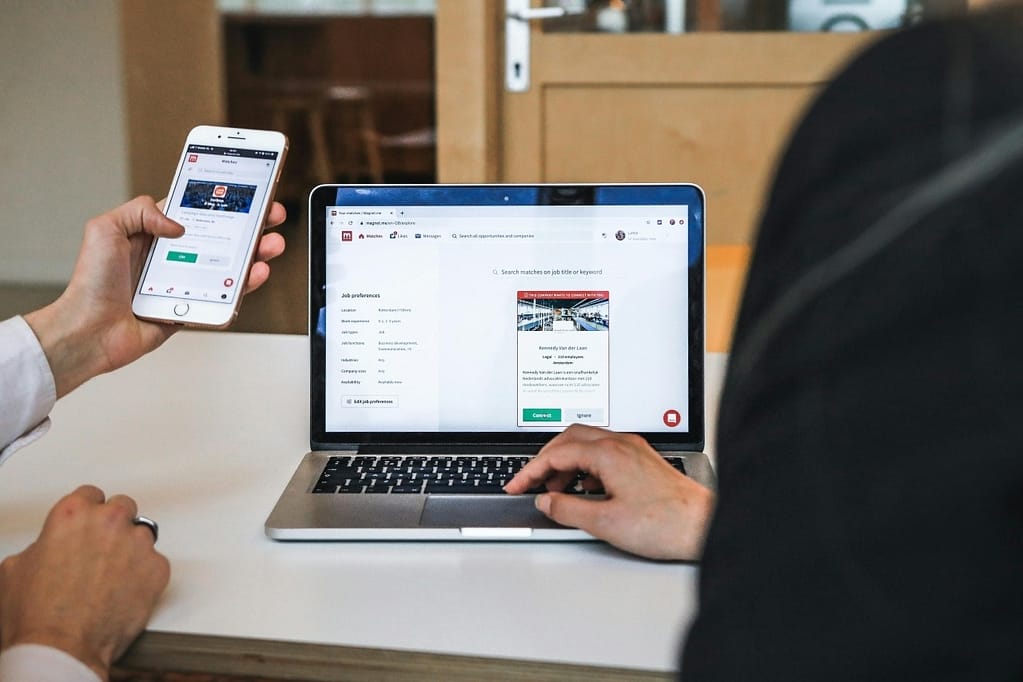
You don’t need a perfect website to start. But you do need a credible one. In 2026, your online presence is your first impression, your sales team, and your credibility check all rolled into one. The good news is that building a clean, functional, professional-looking online presence has never been more affordable or faster.
Choose Your Platform
The platform you choose depends on your business model:
| Business Model | Recommended Platform | Why |
| Ecommerce | Shopify | Built for selling, easy to scale |
| Digital Products | Gumroad or Kajabi | Easy product delivery and payments |
| Freelance / Consulting | WordPress + Calendly | Flexible and professional |
| Content / Blog | WordPress on Bluehost or Kinsta | Best for SEO long-term |
| AI SaaS | Custom (React/Next.js) or Bubble.io | More control for technical builds |
Don’t overthink this decision. A basic Shopify store or a clean WordPress site with a good free theme will do the job. Spend a day on setup, not a month.
Get Your Domain and Hosting
Your domain name should be short, easy to spell, and ideally contain your main keyword or brand name. Use Namecheap or Google Domains to check availability. Aim for a .com if you can get it.
For hosting, Bluehost starts at around $2.95/month for beginners. Shopify starts at $29/month if you’re going the ecommerce route. These are not big barriers to entry.
Use AI to Build Your Brand Identity Faster
Here’s where things get genuinely exciting in 2026. You can use:
- Canva AI to generate logo concepts and brand visuals in minutes
- ChatGPT to write your homepage copy, about page, and product descriptions
- Looka or Brandmark to create a professional brand identity package affordably
A clean logo, a consistent color palette, and clear messaging are all you need at the start. Don’t spend $2,000 on a brand agency when you’re pre-revenue.
The Minimum Viable Online Presence Checklist
- Domain name registered
- Website live with at least a homepage, about page, and contact page
- Clear headline on homepage that explains what you do and who you help
- At least one way to capture email addresses (a free lead magnet works well)
- Social media profile on one platform where your audience actually spends time
- Google Business Profile set up (even for online-only businesses, this helps)
That’s it. That’s the starting line. Everything else, like SEO, advanced funnels, and paid ads, comes after you’ve validated that your offer actually resonates.
How Do AI and Automation Help You Launch an Online Business Faster?
AI and automation let you launch an online business faster by replacing tasks that used to require full-time employees or expensive freelancers. In 2026, a solo founder with the right AI stack can execute at a level that previously required a team of five to ten people. The result is lower startup costs, faster output, and more time to focus on things only you can do.
This is the part of starting an online business in 2026 that most guides completely miss.
HubSpot’s State of Marketing report found that 64% of marketers already use AI tools in their work. And LinkedIn’s Workforce Report identifies AI and automation skills as among the fastest-growing in-demand skills globally. The early adopters are already pulling ahead.
Google Workspace shows that searches for “AI tools for small business” have grown over 200% in the past two years. This isn’t a niche interest anymore. It’s the new baseline for competitive operators.
AI Tools by Function: The 2026 Starter Stack
| Function | Tool | Cost | What It Replaces |
| Content Writing | ChatGPT / Claude | Free-$20/month | Freelance writer ($500+/month) |
| Design | Canva AI / Midjourney | Free-$10/month | Graphic designer ($1,000+/month) |
| Customer Service | ManyChat / Tidio AI | Free-$25/month | Part-time support staff |
| Email Marketing | Klaviyo / Mailchimp AI | Free-$20/month | Email marketing specialist |
| Research | Perplexity AI | Free-$20/month | Research assistant |
| Social Media | Buffer AI / Metricool | Free-$15/month | Social media manager |
| SEO | Surfer SEO / NeuronWriter | $49-$89/month | SEO consultant |
You don’t need all of these on day one. Start with a writing tool and a design tool, then add others as your needs grow. For a deeper breakdown of which tools are actually worth paying for, check out our guide to the best AI productivity tools in 2026 available right now.
A Real Automation Workflow Example
Here’s a simple content-to-customer automation that any beginner can set up:
- Use ChatGPT to write a blog post targeting a specific search query
- Use Canva AI to create visuals for the post and social media
- Publish the blog post on your website
- Use Buffer to automatically share the post across your social platforms
- Anyone who clicks through and joins your email list gets an automated welcome sequence via Mailchimp
- That sequence introduces your product or service and drives toward a sale
This entire system, once built, runs while you sleep. You set it up once. It works forever.
I’ve tested this workflow across several content-driven projects, and the consistent finding is the same: automating distribution and follow-up saves at minimum 15-20 hours per week compared to doing each step manually. That’s time you can reinvest into creating better offers, building relationships, and actually growing.
If you want a more comprehensive breakdown of this approach, our guide on how to use AI to automate your small business walks through the full process step by step.
The Grand View Research report projects the global AI market growing at a 30.6% CAGR through 2033. The tools are getting better, faster, and cheaper every year. Building your business on an AI foundation now means your operational advantage compounds over time.
How Do You Get Your First Customers Without a Big Budget?
Getting your first customers without a big budget means focusing on channels where attention is free or nearly free: search engine content, short-form video, community engagement, and direct outreach. The goal in the first 90 days isn’t to go viral. It’s to get 10-50 paying customers who validate your offer, then build from there.
Most people treat marketing like a mystery. It’s not. It’s a math problem. You need to put your offer in front of the right people, enough times, in a format they trust. Here’s how to do that without spending a lot of money.
The First 100 Customers Framework
Tier 1: Your Existing Network (Days 1-30)
Your first customers are often people who already know you. Tell everyone in your personal network what you’re doing. Post about it on LinkedIn. Send a personal email or message to people who might benefit or know someone who would. This feels uncomfortable. Do it anyway.
Most people skip this step because they’re afraid of judgment. The reality is that your first sale often comes from someone who knew you before the business existed.
Tier 2: Community Marketing (Days 14-60)
Find where your target customers spend time online. Reddit communities, Facebook Groups, Discord servers, LinkedIn groups, and niche forums are goldmines. Don’t go in and spam links. Spend two weeks adding genuine value: answering questions, sharing insights, and being helpful. Then, when people ask for resources, you have something to offer.
This approach takes patience. But it costs nothing and builds real trust.
Tier 3: Content and SEO (Day 1 Onward, Compounding Over Time)
Write content that answers the questions your target customers are already searching for. Use ChatGPT to help you research and draft. Publish on your blog. Optimize for search by including your target keyword in the title, first paragraph, and a few subheadings naturally.
SEO is a long game, but it compounds. A blog post you publish today can bring in customers 12 months from now for zero additional cost.
Tier 4: Short-Form Video (Ongoing)
TikTok, Instagram Reels, and YouTube Shorts are the fastest organic reach available right now. You don’t need to be a performer. Share practical, specific insights about your niche. Teach something useful in 60 seconds. Show the process behind what you do. Consistency matters more than production quality at the start.
Tier 5: Cold Outreach (When You Have a Specific Target)
If your business model involves B2B (business to business) sales, freelancing, or consulting, cold outreach is underrated. Use LinkedIn to identify your ideal clients. Send a personalized message that focuses on a specific problem you can solve for them. Don’t pitch immediately. Start a conversation.
For a wider view of tactics that go beyond the obvious, our post on creative ways to attract customers in business covers some of the most effective and least talked-about strategies working right now.
Set Up Your Email List on Day One
This is non-negotiable. Social media platforms change their algorithms. They can restrict your reach at any time. Your email list is an asset you own.
Create a simple lead magnet (a checklist, short guide, or free template) using ChatGPT and Canva. Offer it in exchange for an email address. Use Mailchimp or ConvertKit to collect and manage your list. Then send a weekly email that delivers value and gradually introduces your offer.
A list of 500 engaged subscribers is worth more than 50,000 social media followers who barely see your posts.
How to Scale an Online Business Strategically in 2026
Scaling an online business isn’t just about making more money. It’s about building systems that produce results without requiring your constant presence. Most online business owners hit a ceiling because they try to scale before they’ve built the foundation: clear processes, consistent revenue, and a product that people actually love.
Here’s a revenue-stage approach to scaling that makes sense in 2026.
Stage 1: Validation ($0 to $1K/Month)
At this stage, your only job is to prove your idea works. Don’t invest heavily in marketing yet. Focus on getting 10-20 paying customers by any means necessary. Talk to them. Understand why they bought and what they wish was better. Use that feedback to sharpen your offer.
Many people try to scale before they’ve validated. That’s how you burn money on ads driving traffic to an offer that doesn’t convert. Do not skip this stage.
Stage 2: Stabilization ($1K to $5K/Month)
Now you have proof. It’s time to build repeatable systems. Document everything you do to get customers and deliver your product. Create a simple content calendar. Set up your email automation. Make sure your website is converting visitors into leads.
This is also when time management becomes critical. Learning to plan your week as an entrepreneur properly can be the difference between controlled growth and constant chaos at this stage. Protecting your deep work hours and batching similar tasks will help you move faster without working longer.
This is also when you start taking your finances seriously. Track every dollar in and out. Understand your profit margin. Keep your personal and business finances separate from day one.
Stage 3: Acceleration ($5K to $10K+/Month)
At this stage, you’ve proven the model and built systems. Now you amplify. Options include:
- Paid advertising: Facebook, Google, or TikTok ads work well when you already know your offer converts organically
- Partnerships and affiliates: Find people in complementary niches who will promote your product for a commission
- Expanding the product line: Add higher-ticket offers, subscription options, or adjacent products your existing customers want
- Hiring or outsourcing: Use platforms like Upwork or Contra to hire specialists for tasks that are outside your strengths
According to Andreessen Horowitz (a16z), AI-native companies are scaling three times faster than traditional software companies. The same principle applies to solo founders and small teams who bake AI into their operations from the beginning. The automation advantage you build early becomes a real competitive moat as you scale.
The Biggest Mistake I See at the Scaling Stage
People try to do everything themselves for too long. They hit $5K/month, get excited, and keep working 60-hour weeks instead of systematizing. The goal of a business isn’t to create a more demanding job for yourself. It’s to build something that generates value and income without requiring your presence 24/7.
Start thinking like a system builder from day one. Document processes even when it feels unnecessary. That documentation becomes the instruction manual for the person or AI tool that eventually takes over those tasks.
Building a business that truly scales means thinking beyond your own effort. It means creating leverage through content, automation, smart people, and disciplined capital deployment. That’s a long game, and it’s worth playing.
Conclusion
Starting an online business in 2026 is genuinely one of the best opportunities available right now. The barriers to entry have never been lower. The tools have never been more powerful. And the market has never been more ready for smart, lean, digital-first operators.
Here are the three moves that matter most:
First: Validate before you build. Test your idea cheaply and quickly before you invest serious time or money.
Second: Use AI tools from day one. They’re not a shortcut; they’re a competitive advantage. Build your business on an AI-powered foundation and your efficiency compounds over time.
Third: Build systems early. A business is only as strong as the processes behind it. Document, automate, and delegate as soon as you can.
You don’t need perfect conditions to start. You need a plan, a few good tools, and the discipline to show up consistently.
The blueprint is in your hands. Now it’s time to use it.
For more practical insights on building businesses, growing wealth, and mastering AI, explore everything we’ve built at Rejoice Winning. We’re in your corner.
Frequently Asked Questions
1. How much money do I need to start an online business in 2026?
You can start most online businesses for $100 to $500 or less. A domain name costs around $10 to $15 per year. Basic hosting or a platform subscription runs $0 to $30 per month. AI tools like ChatGPT and Canva have free tiers that cover most beginner needs. If you’re starting a service business like freelancing or consulting, your startup costs can be close to zero. The most capital-intensive model is ecommerce, where you may need $300 to $500 for initial inventory or ad testing.
2. Which online business model makes money the fastest?
Freelance services and online consulting tend to generate income the fastest, often within one to two weeks of launching. This is because you’re selling your skills directly to clients without needing to build a product, a large audience, or complex infrastructure. Digital products can also move quickly if you already have an audience or a clear channel to reach buyers. Ecommerce and content creation typically take longer to generate consistent revenue but have stronger long-term scaling potential.
3. Can I start an online business with no experience?
Yes, and many successful online business owners started with no formal business experience. The key is choosing a model that aligns with skills you already have (writing, design, teaching, organizing, communicating) and learning as you go. AI tools now make it possible to handle tasks like content creation, design, customer service, and basic marketing without prior expertise in those areas. Start simple, validate fast, and build your skills through real-world execution rather than endless preparation.
4. What AI tools should I use to start an online business in 2026?
The best starter AI stack for a new online business includes ChatGPT or Claude for writing and content, Canva AI for design, Mailchimp or Klaviyo for email automation, and Perplexity for research. If you’re selling products, tools like ManyChat handle customer service automatically. For SEO-driven content, Surfer SEO helps you optimize posts to rank in search. You don’t need all of these on day one. Start with a writing tool and a design tool, then add others as your needs grow. HubSpot’s research shows 64% of marketers already use AI in their workflows, which means early adoption still represents a meaningful advantage.
5. How long does it take to make your first $1,000 online?
This depends heavily on your business model and the effort you invest. Freelancers and consultants can often reach $1,000 in their first two to four weeks by landing one or two clients. Digital product sellers may take four to eight weeks to build and launch their first product and make initial sales. Ecommerce businesses often see their first $1,000 in one to three months with consistent marketing effort. Content creators face the longest timeline, sometimes six to twelve months before reaching that milestone. The biggest variable is how quickly you validate your idea and start actively promoting it rather than spending time on setup and planning.

Chalchisa Dadi is the founder of Rejoice Winning — a platform built for ambitious people who refuse to be left behind in the digital economy. With over a decade of hands-on experience analysing and implementing business plans for both private and public enterprises, Chalchisa brings a rare combination of strategic depth, real-world execution, and analytical precision to every piece of content published on this site.
Holding a verified certification in Data Analysis and Artificial Intelligence Fundamentals from Udacity, Chalchisa sits at the intersection of business strategy, financial intelligence, and emerging technology — the exact three pillars that power Rejoice Winning. Every insight shared here is grounded in years of working directly with organisations to turn ideas into measurable, sustainable results.
Chalchisa created Rejoice Winning with a single conviction: that winning in the digital economy is not reserved for the privileged few. It is a deliberate outcome available to anyone willing to learn strategically, move decisively, and build consistently. That mission drives every article, every guide, and every resource published on this platform.