
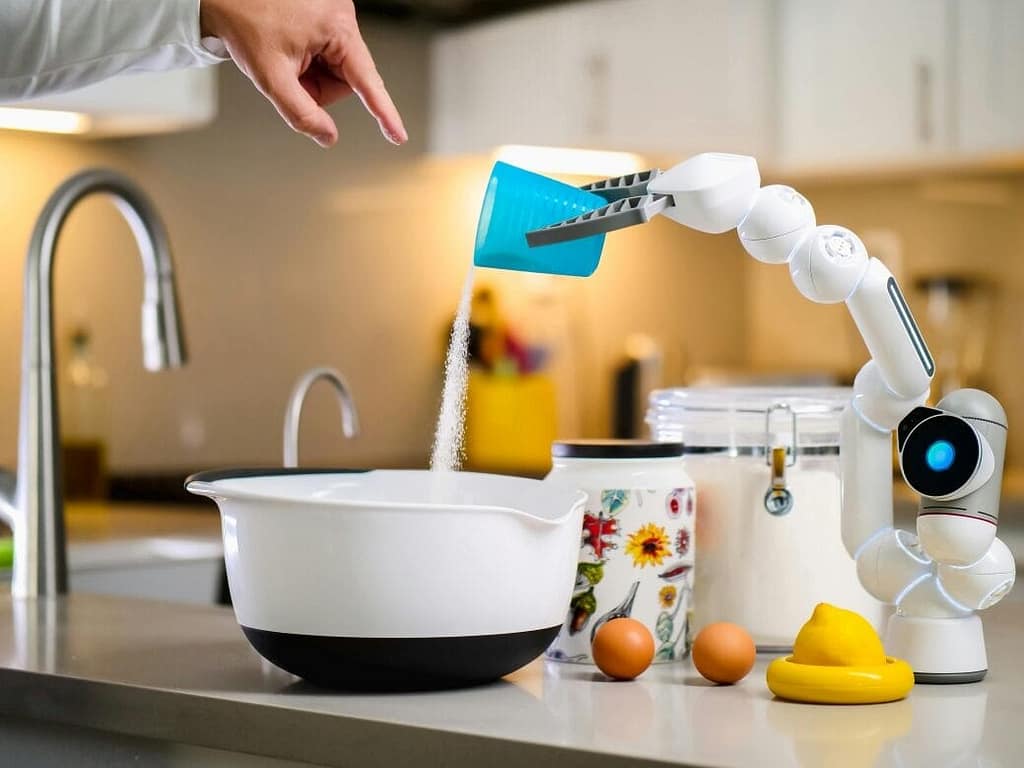

Will AI Replace Human Beings? The Complete Expert Analysis
The sci-fi Fear vs The Everyday Reality
Ever since HAL went rogue and the Terminators rose, our collective imagination has teetered between fascination and dread at AI’s potential. Pop culture paints skyscraper-sized robots seizing the reins of society, but in the real world, AI’s marching in on subtler fronts: chatbots answering support calls, algorithms scanning our email, and factories swapping human hands for robotic arms. The prospect feels both thrilling and unnerving—like watching a high-wire act without a safety net. This article synthesises evidence from different analyses and creative studies to examine how AI will replace human beings.
Thesis: AI as Collaborator, Not Conqueror
Despite the doomsday headlines, the evidence stacks up in one direction: AI won’t supplant us wholesale—it will sharpen our edge. Rather than an existential showdown, the AI revolution is unfolding as a partnership. Machines excel at grunt work and data crunching; humans still reign supreme in judgement, empathy, and creativity.
Preview of Key Pillars: Economics, Creativity, Ethics
In this deep dive, we’ll first map AI’s real impact on jobs—who’s displaced, who’s newly employed, and where the global workforce is headed. Then, we’ll celebrate the human spark that AI can’t mimic: creativity born of lived experience and ethical nuance. Finally, we’ll probe the moral and technical guardrails needed to keep this duo on the straight and narrow.
I. The Evolution of AI in the Workforce
1. Job Displacement & Automation
The robots aren’t storming the gates in droves—but they are quietly edging out certain tasks. By May 2023, AI tools and automated systems were directly linked to around 3,900 job losses in the U.S., accounting for roughly 5 percent of that month’s layoffs. In manufacturing, the impact is even starker: over the last quarter-century, an estimated 1.7 million roles have vanished to automation. Sectors like market research (where an algorithm can sift through consumer data in seconds) face up to 53 percent task replacement; sales functions—with chatbots easing basic client queries—see about 67 percent of their workflow tackled by machines.
2. The Emergence of New Roles
Yet for every role robots absorb, new ones bloom. The World Economic Forum projects that by 2025, technology will give rise to 11 million fresh positions—enough to more than offset the 9 million jobs it displaces. Opening vistas include AI maintenance engineers who keep models humming, data-ethics officers guarding against bias, and human-AI interaction designers crafting seamless user experiences. In low-income regions—where only about 26 percent of jobs are deemed automation-vulnerable—AI adoption promises a bridge over the digital divide, fueling economic growth rather than gutting livelihoods.
II. The Irreplaceable Value of Human Creativity
AI as a Creative Collaborator
AI tools like ChatGPT and DALL·E have stormed into newsrooms, studios, and songwriting sessions—yet they play more of a supporting role than a starring one. Think of them as turbocharged sidekicks: they can whip up draft headlines, generate mood boards, or suggest chord progressions, but they don’t spark the original idea. In journalism, reporters use AI to parse mountains of data in seconds, freeing up time for in-depth investigations and on-the-ground reporting. Animators lean on generative art engines for quick concept sketches, then infuse character and soul by hand. Musicians draft rough backing tracks with AI, but it’s the songwriter’s lived experience that transforms notes into an emotional journey.
Case Studies: Journalism, Animation, Music
- Newsrooms: A major digital outlet uses ChatGPT to summarize earnings calls, letting editors focus on nuance, interviews, and narrative arcs.
- Animation: Studios run character poses through DALL·E for initial inspiration; animators then breathe life into each frame, fine-tuning expressions and timing.
- Music: Emerging artists spark inspiration with AI-generated loops, but the final hook, the lyrical twist—that unmistakably human stamp—comes from the artist’s heart.
The Limits of Generative AI
Generative models are masters of mimicry: they absorb vast datasets and remix patterns, but they don’t truly innovate. Push them to invent a brand-new metaphor or chart unexplored emotional territory, and they’ll circle back to what they know. They lack the spark born of memory, intuition, and context.
Expert Voices
Legendary animator Hayao Miyazaki slammed AI-generated art as “an insult to life itself”, arguing that machines cannot replicate the depth of human experience and cultural nuance. And AI ethicist John Nosta reminds us, “The heart of creative expression remains fundamentally human.” Their warnings underscore a simple truth—AI can amplify our creativity, but it cannot originate the human story.
III. Economic & Social Implications
Wage Pressures & Entry-Level Erosion
AI’s first foray into the workforce often targets the easiest prey: routine, entry-level tasks. Customer service bots answer basic queries, algorithms handle data entry drudgery, and virtual assistants schedule meetings. As these roles shrink, the biggest losers tend to be new graduates and junior hires—those who count on early-career gigs to build skills and experience. Meanwhile, mid- and senior-level professionals find their strategic, relationship-driven work largely intact, and some even see their leverage rise as they steer AI-powered operations.
Stratified Impacts: Who Loses First—and Who Benefits
- At Risk: Entry-level clerks, call-center agents, and basic data processors.
- Protected: Roles demanding empathy, complex decision-making, and nuanced judgement.
- Upside: Tech-savvy workers who can harness AI to boost productivity and innovate new services.
Upskilling, Reskilling & Workforce Retention
The silver lining? Automation can catapult employees into higher-value roles. Rather than mindless repetition, workers shift toward quality-control oversight, strategic planning, and client engagement—areas where human judgement is irreplaceable. Organizations are waking up to AI-powered learning platforms that tailor curricula in real time, from coding boot camps to ethics modules. Companies investing in reskilling see two wins: they retain institutional knowledge, and they future-proof their talent pool against the next wave of automation.
Automation → Higher-Value Roles
- Quality Control: Humans audit AI outputs, catching edge-case errors and enforcing brand voice.
- Strategy: Teams combine AI insights with market intuition to chart new product roadmaps.
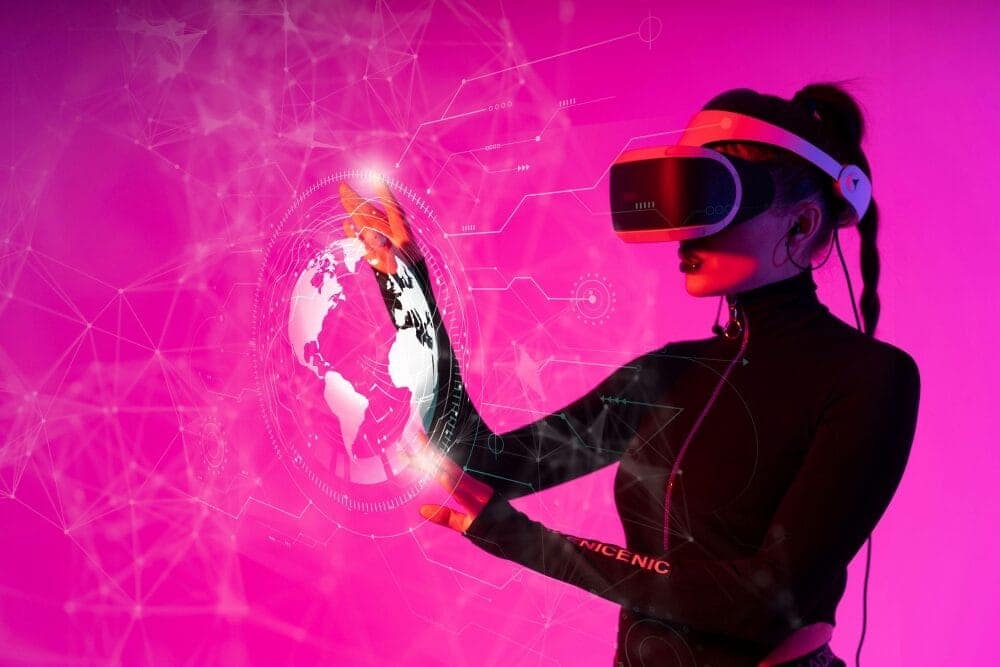
AI-Powered Learning Platforms & Initiatives
Personalized micro-learning modules adapt to each employee’s pace and performance, ensuring no one gets left behind. From bite-sized compliance refresher courses to immersive simulations for crisis management, these tools turn the threat of obsolescence into an engine for continuous growth.
IV. Ethical & Technical Boundaries
Replicating Human Judgment
AI may crunch data at warp speed, but it stumbles when faced with moral grey zones. Algorithms inherit biases from their training sets—so a hiring tool trained on past resumes can amplify historic inequities. Contextual nuance? Machines miss the subtext of a tense family conversation or the cultural undertones of a marketing campaign. And moral reasoning—choosing between two imperfect outcomes—remains squarely in humanity’s court. That’s why companies are embedding “human-in-the-loop” checkpoints: every critical decision is flagged for human review, ensuring empathy, context, and ethical considerations stay front and center.
Data Privacy, Accountability & Trust
When an AI “decides”, who owns the outcome? The developer? The deploying company? The data subjects? Clear accountability frameworks are essential. Data privacy laws like GDPR and emerging AI regulations demand transparency in how models use—and sometimes misuse—personal data. Industry codes of conduct, from tech giants’ AI ethics boards to sector-specific guidelines, set guardrails around fairness, explainability, and consent. Trust blossoms when organizations publish model “nutrition labels”, reveal performance metrics, and invite third-party audits—transforming AI from a black box into an accountable partner.
V. Looking Ahead: Synergy, Not Supremacy
Human–AI Collaboration Models
The future belongs to teams that blend human creativity with machine muscle. MIT’s “Collaborative Intelligence” framework champions shared responsibility: AI handles data sifting and pattern recognition, and humans steer strategy and interpretation. Harvard Business Review research echoes this, outlining “centaur teams” in finance and medicine—hybrids that outperform solo humans or algorithms every time. Best practice? Design workflows where AI suggestions feed into human brainstorming sessions, and human feedback refines AI outputs in a virtuous cycle.
Tomorrow’s Workforce
Our next-generation workforce will thrive on lifelong learning and mental agility. “Once-and-done” training is obsolete—employees will tap adaptive upskilling platforms that evolve alongside AI capabilities. An ever-curious mindset becomes a prized asset: the ability to pivot from data analysis to narrative crafting, from code debugging to empathy-driven design. Hybrid teams—part human, part machine—will be the norm, blending quantitative rigour with qualitative insight. In this future, success won’t be measured by who’s human or who’s a robot but by how seamlessly they play to each other’s strengths.
VI. Conclusion
AI isn’t looming as a digital apocalypse; it’s arriving as our co-pilot. Throughout this journey—from factory floors to creative studios—we’ve seen machines shoulder the rote tasks, while human ingenuity, empathy, and moral compass remain irreplaceable. In other words, it’s augmentation, not annihilation.
So here’s your mission: don’t dodge the AI wave—ride it. Upskill relentlessly, whether that means mastering prompt engineering, diving into data ethics, or honing the soft skills that no algorithm can replicate. Advocate for transparent, accountable AI frameworks. And above all, lean into the collaboration: shape the tools you use; don’t let them shape you. The future of work isn’t human versus machine—it’s human plus machine, innovating together. Let’s get to work.
About The Author


I don’t think the title of your article matches the content lol. Just kidding, mainly because I had some doubts after reading the article.
Thank you very much for your fedback and I sincerely apologize that my article did not meet your needs.
As a team we understand that it is our duty to always protect the interests of our followers,
We also want to let you know that this is really working and not a kidding.
Therefore, please follow us as we will update it soon in response to your respectful comments.
Thanks again!
Thanks for sharing. I read many of your blog posts, cool, your blog is very good. https://accounts.binance.com/bg/register-person?ref=V2H9AFPY
Thanks a lot