
How to know when crypto will rise or fall? A comprehensive guide to predicting crypto market swings
Cryptocurrency is often described as the wild west of finance—unpredictable, exciting, and sometimes maddeningly volatile. If you’ve ever asked yourself, “How to know when crypto will rise or fall?” then you’re tapping into one of the most enduring puzzles faced by traders, investors, and enthusiasts alike.
While there is no crystal ball that guarantees pinpoint accuracy, there are ways to methodically assess market conditions and increase your odds of anticipating crypto’s next moves. Most articles throw around buzzwords or pack their pages with jargon, but here, I’m going to take you on an eye-opening journey with fresh insights, thoughtful case studies, and technical depth—all served in a conversational, no-nonsense style.
By the end, you’ll be equipped not only with the tools but also with a mindset to navigate the crypto seas with more confidence and clarity.
1. The Crypto Market as a Living Organism: Understanding the Ecosystem
Imagine crypto as a vast ecosystem—a living organism made up of countless interacting parts: traders, miners, developers, regulators, speculators, media channels, and more. Price movements are essentially the pulse of this living entity.
Why This Matters:
Traditional stocks are impacted by company earnings and macroeconomics, but crypto prices can be wildly influenced by sentiment in niche communities, top influencers on Twitter, regulations in faraway countries, or major technology updates.
Case Study:
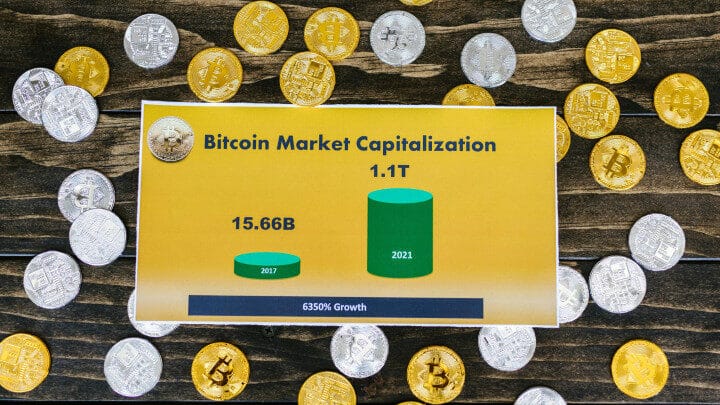
Take Bitcoin’s surge in late 2017. It wasn’t just institutional interest—it was retail investors fueled by FOMO on Reddit and social media hyping the “to the moon” narrative. Conversely, the crypto winter that followed saw many panic with a complete loss of confidence.
Key Takeaway:
To anticipate crypto’s moves, you must understand it as a human-driven market first—then layer in data and charts.
2. Tapping into Social Sentiment: How Tweets, Trends, and Memes Move Prices
Crypto is uniquely sensitive to social media and public sentiment. Traditional markets have their news outlets, but crypto thrives on Twitter storms, Reddit threads, and Telegram groups.
The Power of Social Sentiment
- Tweets from influential figures like Elon Musk have triggered massive price swings in Dogecoin and Bitcoin.
- Sudden Reddit surges can pump small-cap coins overnight.
- Fear, uncertainty, and doubt (FUD) or hype can spread quickly, pushing prices dramatically.
Tools to Track Sentiment
- LunarCrush: Analyzes social mentions, engagement, and sentiment for coins.
- Santiment: Provides crowd sentiment metrics and on-chain analytics.
- Google Trends: Tracks search popularity spikes indicating growing interest.
Example:
In early 2021, a tweet from Elon Musk saying Tesla bought $1.5B in Bitcoin ignited a price rally from around $30K to over $60K in a few months.
How to Use This:
Monitor social sentiment as an early signal. A spike in mentions or sentiment could indicate high interest and buying pressure. Be cautious of hype bubbles, though—extreme positive sentiment can precede corrections, while extreme fear might hint at good buying opportunities.
3. Decoding Technical Analysis: The Art and Science of Chart Reading
Most guides zoom into hundreds of technical indicators, but here’s the honest truth: technical analysis (TA) is probabilistic, not prophetic.
TA tools like moving averages (MA), relative strength index (RSI), moving average convergence divergence (MACD), and Bollinger Bands do not magically predict price. Instead, they help estimate the likelihood of certain trends continuing or reversing based on historical price and volume data.
Crucial TA Concepts for Predicting Rises and Falls:
- Volume Analysis: Volume is the fuel behind price. Rising prices on increasing volume tend to be sustainable. Falling volume during a rally can signal a weak move.
- Moving Averages: The 50-day and 200-day moving averages are watched closely. A “golden cross” (50-day MA crossing above 200-day MA) often signals bullish momentum; a “death cross” hints at bearish shifts.
- RSI: Shows overbought or oversold conditions. Above 70 may signal an overbought market likely to see a correction; below 30 indicates oversold and a potential rebound.
- Chart Patterns: Classic patterns like double tops/bottoms, head and shoulders, and triangles highlight potential breakouts or reversals.

Case Study: Bitcoin’s Golden Cross in 2020
In May 2020, Bitcoin’s 50-day MA crossed above its 200-day MA for the first time since 2019—signalling the start of its epic bull run later that year. Traders globally took this as a bullish sign.
But remember:
Never rely solely on TA. Combine it with fundamentals, sentiment, and macro outlook for a fuller picture.
4. Real-World Adoption and the Network Effect: The Long-Term Drivers
Technology adoption is the bedrock under crypto’s price. When more people actively use a cryptocurrency—whether for payments, decentralized apps (dApps), or DeFi protocols—the value tends to rise due to increased demand and utility.
Why It Matters
- More merchants accepting Bitcoin = greater utility = higher valuation.
- Ethereum’s steadily growing DeFi ecosystem was a key catalyst behind its price gains in 2020-2021.
- Layer-2 solutions and scalability upgrades signal forward momentum.
Example: Ethereum 2.0 Upgrades
Announcements about Ethereum’s transition to proof-of-stake and sharding demonstrated technological progress. While initial enthusiasm helped price gains, actual adoption of the upgraded network is what sustains long-term appreciation.
Watch for:
- Developer activity (Github commits, project launches)
- User growth in dApps
- Network transaction volume and fees as indicators of usage.
5. Regulatory Movements: The Silent Giant of Price Swings
Arguably, regulation causes some of the biggest shocks in crypto markets. From China’s mining bans to US SEC investigations and the arrival of crypto ETFs, regulatory decisions can make or break market sentiment overnight.
Why Regulation Moves Prices
- Clear regulations reduce uncertainty, often driving prices up.
- Bans, crackdowns, or harsh restrictions spook investors, triggering sell-offs.
- The timing of news matters—expectations are usually priced in ahead of announcements; surprises cause volatility.
Case Study: China’s Mining Ban 2021
When China announced a crackdown on crypto mining, Bitcoin’s price plunged from $58K in May to around $30K by July, partly due to forced miner shutdowns and fears of a wider ban on crypto trading.
How to Stay Informed
- Follow news from the SEC, FCA, and similar bodies worldwide.
- Track major bills and legislation affecting crypto.
- Evaluate the likelihood of regulation based on political and economic context.
6. The Hidden Puppet Masters: Algorithmic Trading and Liquidity Pools
Did you know a significant chunk of crypto trading volume is executed by trading bots and algorithms? These high-frequency traders can manipulate prices by triggering stop losses or creating liquidity squeezes.
What Does This Mean for You?
- Sudden sharp drops or spikes might not be driven by fundamental news but by algorithmic market plays.
- Thin order books in lesser-known coins can be easily manipulated.
- Key “whales” (large holders) and bots often pump and dump coins to extract profits.
Example: Flash Crashes
In March 2020, Bitcoin experienced a “flash crash,” dropping from about $7,900 to $4,900 in minutes, due in part to algorithmic liquidation cascades on leveraged exchanges.
How to Navigate
- Check order book depth to assess volatility risk.
- Avoid trading during thin markets or low-liquidity periods.
- Use stop losses wisely—or avoid over-leveraged trading, which bots exploit.
7. Macroeconomic Context: Crypto in the Global Financial Web
Crypto doesn’t operate in isolation. Global economic trends, stock markets, inflation expectations, and geopolitical tensions all influence crypto demand and prices.
Examples of Macro Impact
- Inflation Hedge: Bitcoin is often called “digital gold.” When inflation fears spike (like in 2021-22), many flock to BTC.
- Interest Rates: Rising rates make bonds and safer assets more attractive, sometimes leading to crypto sell-offs.
- Geopolitical Instability: Political crises and capital controls increase crypto usage as an escape route.
What to Watch
- Inflation reports
- Central bank policy announcements
- Stock market trends and risk appetite
8. The Emotional Cycles Driving Markets: Fear, Greed, and Everything in Between
Market psychology is the invisible hand behind nearly every rally and crash in crypto.
The Cycle in a Nutshell
- Accumulation Phase: Early buying when the market is still quiet.
- Mark-Up Phase: Prices rise quickly as optimism and greed set in.
- Distribution Phase: Smart money sells into hype; market peaks.
- Mark-Down Phase: Panic selling dominates; prices fall.
- Despair: The market bottoms and awaits new accumulation.
Tools to Gauge Sentiment
- Crypto Fear & Greed Index: Combines volatility, sentiment, volume, social media, and surveys.
- Watch for extreme greed as a cautionary signal and extreme fear as a buying signal.
9. News Filtering: How to Avoid Being a Pawn
Crypto news is lightning fast, and much of it is sensationalist.
Tips for Smart News Consumption
- Confirm from multiple credible sources before reacting.
- Ask how news really impacts supply-demand balance.
- Ignore rumors and unverified leaks.
- Utilize news aggregator tools like CoinDesk, The Block, and CryptoPanic.
10. The Ultimate Checklist: Combining Signals for a Clearer Prediction
Here’s a practical checklist combining all the elements to estimate crypto rises or falls:
| Factor | What to Look For | Signal For |
| Social Sentiment | Rising mentions, positive sentiment spikes | Possible rally |
| Technical Analysis | Rising volume, golden cross, RSI below 70 | Bullish trend |
| Real-World Adoption | Network usage uptick, major partnerships | Long-term price support |
| Regulation | Favorable bills, clarity | Price boost |
| Algorithmic Activity | Stable order books, volume spikes without news | Potential manipulated spikes |
| Macroeconomic Trends | Inflation pressure, geopolitical risk | Safe-haven buying |
| Emotional Cycle | Extreme greed/fear indicated by fear & greed index | Market top/bottom signal |
| News Verification | Confirmed impactful news only | Avoid knee-jerk reactions |
Real-Life Application: Putting The Framework to the Test
Example Scenario: Ethereum’s 2020-21 Bull Run
- Sentiment: Massive hype around DeFi and yield farming on Ethereum.
- TA: Ethereum’s price kept breaking resistance with high volume.
- Adoption: Explosive increase in dApps and user activity.
- Regulation: No explicit negative pressure during the run.
- Algorithmic Activity: Healthy order books with moderate volatility.
- Macro: Post-COVID stimulus led to increased liquidity.
- Psychology: The Fear & Greed Index showed greed nearing euphoric phases.
- News: Positive headlines about innovations and upgrades.
The synthesis of these signals correctly pointed to a strong bull run—but savvy traders watched to take profits once the euphoric greed phase appeared.
Final Thoughts: Preparation Over Prediction
To wrap it up, predicting crypto is less about certainty and more about preparation. Markets will always surprise us, but those who cultivate a multi-angle awareness can read the signs better.
Balancing social sentiment, technical charts, fundamentals, regulation, algorithmic behavior, macro trends, and psychology creates a compass—not a crystal ball—but one that can guide strategic decisions.
So instead of chasing every headline or chart pattern, take a breath, gather your data, ask why the market is moving, and prepare accordingly. In this rapidly evolving world, that’s your best path to crypto success.
Frequently Asked Questions (FAQs)
1. How can I tell if the crypto market is about to rise or fall?
You can analyze a combination of social sentiment, technical indicators, adoption trends, regulatory news, and macroeconomic factors. Watching volume changes, major influencer activity, and market psychology also helps gauge upcoming movements.
2. Are there any tools to predict crypto price movements accurately?
While no tool guarantees accuracy, sentiment analysis platforms like LunarCrush and Santiment, combined with technical analysis tools such as TradingView and the Fear & Greed Index, can provide valuable clues about market trends.
3. How important is social media in predicting crypto price changes?
Very important. Influential tweets, Reddit hype, and social sentiment can move prices dramatically in the short term. Tracking social buzz helps anticipate sudden price rallies or drops.
4. Can technical analysis alone help me know when crypto will rise or fall?
Technical analysis provides probabilities based on historical data but shouldn’t be used alone. It’s best combined with fundamental analysis, market psychology, and news verification for a holistic view.
5. How do regulations affect cryptocurrency prices?
Regulatory announcements can cause significant volatility. Positive regulations tend to boost prices, while bans or restrictions often lead to sell-offs. The market usually prices in expected regulations in advance, so surprises have the greatest impact.
6. What role do algorithmic traders play in crypto market fluctuations?
Algorithmic and high-frequency traders can create sudden price swings by exploiting market liquidity or triggering stop losses. Understanding their impact helps you avoid panic amid flash crashes or artificial spikes.
7. How does global economic news influence crypto prices?
Crypto often responds to macroeconomic events like inflation rates, interest changes, and geopolitical conflicts. For example, inflation fears can increase demand for Bitcoin as a hedge.
8. What is the Fear & Greed Index, and how does it help predict market trends?
The Fear & Greed Index measures market emotions using multiple factors like volatility and social media sentiment. High greed often signals a market top, while extreme fear could indicate buying opportunities.
9. Is it possible to predict cryptocurrency prices with 100% accuracy?
No, cryptocurrency markets are highly volatile and influenced by many unpredictable factors. However, combining sentiment, technical, fundamental, and macro analysis can improve decision-making.
10. How can I stay updated on news that truly impacts crypto prices?
Follow credible crypto news outlets, verify news from multiple sources, and be cautious of sensational or unconfirmed reports. Tools like CoinDesk and CryptoPanic aggregate trusted crypto news quickly.
About The Author