
Entrepreneurship vs Employment: Which Path Is Right for You in 2026? (Data, Income, Risk and Lifestyle Breakdown)
TL;DR: Comparing entrepreneurship vs employment in 2026 comes down to four things: income potential, risk tolerance, lifestyle priorities, and personal readiness. Employment offers stability and a predictable income. Entrepreneurship offers freedom and unlimited upside, but carries real financial and psychological risk. Neither path is universally better. This post breaks down real data on income, risk, lifestyle, and timing so you can make the choice that actually fits your life.
Every year, millions of people ask themselves the same question: “Should I keep my job, or should I build something of my own?”
It’s one of the most consequential questions you can ask. And in 2026, the stakes feel higher than ever. The entrepreneurship vs employment debate isn’t just about money anymore. It’s about identity, flexibility, security, and what kind of life you actually want to wake up to every day.
Here’s a number that might surprise you. According to the U.S. Small Business Administration, small businesses make up 99.9% of all U.S. businesses. Yet roughly 20% of them fail within the first year, according to Bureau of Labor Statistics data. Meanwhile, employee engagement in traditional jobs sits at a historically low 32%, according to Gallup.
Neither path is perfect. Both can lead to wealth, fulfillment, and impact. But they’re built on completely different foundations. And choosing the wrong one for your personality, life stage, or financial situation can cost you years.
This post gives you the real data, the honest tradeoffs, and a practical framework so you can decide with clarity instead of fear.
What’s the Real Difference Between Entrepreneurship and Employment?
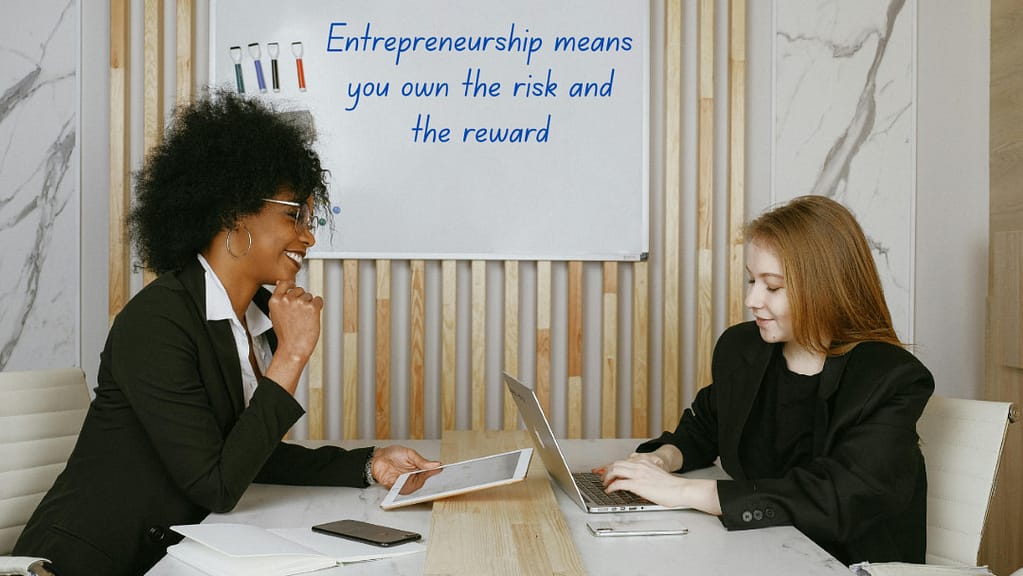
Entrepreneurship means you own the risk and the reward. Employment means someone else does. As an entrepreneur, you build, operate, or grow a business and your income depends directly on its performance. As an employee, you trade your time and skills for a predictable salary, and someone else carries the business risk. The mindset, financial structure, and daily reality of each path are fundamentally different.
That definition sounds simple. But the lived experience of each path is far more complex.
When you’re employed, you show up, do your work, and receive a paycheck whether the business has a great month or a terrible one. Your income is relatively predictable. Your responsibilities are defined. You have a manager, a team, a structure. That structure can feel like support or like a ceiling, depending on who you are.
When you’re an entrepreneur, you are the structure. You make the decisions, absorb the losses, and capture the upside. You’re responsible for generating revenue, managing expenses, leading people (even if that just means managing yourself), and constantly adapting to change. There’s no guaranteed paycheck. There’s no HR department solving your problems for you.
The distinction also goes deeper than job titles. Many people assume they want entrepreneurship when what they actually want is autonomy. And many people assume they’re content in employment when what they really have is comfort masking stagnation.
According to Statista’s 2024 self-employment data, approximately 16 million Americans are currently self-employed. That number doesn’t include the millions more who run incorporated businesses or operate side ventures alongside traditional employment. The line between entrepreneur and employee is blurrier than it’s ever been, and that’s actually good news for your decision-making.
The real question isn’t which label fits you. It’s which structure serves your goals.
How Do the Income Trajectories Actually Compare?
In the short term, employment usually wins on income stability. In the long term, successful entrepreneurship can generate significantly more wealth. The median full-time U.S. employee earns around $59,228 per year (BLS, 2023). Entrepreneurs, by contrast, have wildly variable income, ranging from zero in the early years to far above the employee median once a business is profitable. The wealth gap between a thriving business owner and a career employee often widens dramatically after year five.
Let’s break this down with actual numbers.
Employee Income: Stable, Predictable, Capped
The average full-time U.S. worker earns roughly $1,139 per week, or about $59,228 annually, according to Bureau of Labor Statistics Q4 2023 data. That income is relatively reliable. It comes with employer benefits: health insurance, retirement matching, paid time off, and sometimes stock options.
For many professionals, salary growth follows a predictable curve. You start at an entry-level rate, earn promotions, change companies strategically, and might peak somewhere between $80,000 and $150,000 depending on your field. Some high-skilled roles (engineering, medicine, law, finance) blow past that ceiling significantly. But for most employees, income is bounded by what the market pays for your role.
Entrepreneur Income: Variable, Risky, and Potentially Unlimited
Entrepreneurs don’t have a salary floor. A founder in year one might earn nothing while reinvesting every dollar back into the business. A founder in year five with a profitable operation might earn $200,000, $500,000, or more, depending on the business model.
Research from the Kauffman Foundation suggests that over a lifetime, successful entrepreneurs tend to accumulate significantly more wealth than employees in comparable fields, driven by business equity, not just income. When a business is sold, acquired, or scaled to generate passive revenue, that’s where the real wealth gap opens up.
Here’s a simplified view of how income timelines often compare:
| Timeline | Typical Employee | Typical Entrepreneur |
| Year 1 | $45,000-$65,000 | $0-$30,000 (often reinvested) |
| Year 3 | $55,000-$75,000 | $20,000-$80,000 (variable) |
| Year 5 | $65,000-$90,000 | $50,000-$250,000+ (if profitable) |
| Year 10+ | $80,000-$120,000 | $100,000-$1M+ (if scaled or exited) |
Note: These are broad generalizations. Actual figures vary widely by industry, location, business model, and individual performance.
The critical point here is timing. Employees build income steadily from day one. Entrepreneurs often delay income in exchange for future upside. If you need to pay rent next month, that distinction matters enormously.
One thing that often gets overlooked is the role of benefits in true compensation. An employee earning $70,000 with employer-matched 401k contributions, healthcare, and paid leave is effectively earning closer to $85,000-$90,000 in total compensation. An entrepreneur earning the same $70,000 in revenue must pay for all of that personally, which meaningfully changes the real comparison.
Risk by the Numbers: What Does the Data Actually Say?
Entrepreneurship carries higher short-term financial risk than employment, but the data shows that risk is manageable and often overstated. Approximately 20% of new businesses fail in year one and around 45% fail by year five, according to BLS Business Survival Statistics. But those numbers include businesses started without planning, capital, or market validation. Employees face their own risk: layoffs, industry disruption, and skill obsolescence.
This is where most “entrepreneurship vs employment” comparisons get lazy. They cite the failure rate and stop there. That’s not the full picture.
The Real Risk Profile of Entrepreneurship
Yes, businesses fail. But the reasons they fail are often identifiable and preventable. The Federal Reserve’s Small Business Credit Survey (2024) found that 43% of small businesses reported financial challenges, with cash flow problems and debt being the top issues. These are operational risks, not inherent to entrepreneurship itself.
According to Harvard Business Review research on entrepreneurial failure, first-time founders who experience failure have a 20% higher success rate on their subsequent ventures. Failure, in other words, is also a learning mechanism. The risk of entrepreneurship is real, but it’s not a one-way door.
The Global Entrepreneurship Monitor 2023/2024 Report found that 33% of potential entrepreneurs globally cite fear of failure as the primary reason they don’t start. That fear is often disproportionate to the actual risk for prepared, resourceful individuals.
The Risk Profile of Employment That Nobody Talks About
Employment feels safe. But it carries its own risk profile.
- Layoffs can happen with two weeks’ notice regardless of your performance.
- Entire industries can be disrupted (think: retail, publishing, banking, travel).
- Your salary growth is largely controlled by someone else.
- McKinsey Global Institute research projects that up to 30% of current work tasks could be automated by 2030, putting millions of traditional roles at risk.
The risk of employment isn’t dramatic. It’s slow, quiet, and easy to miss until it’s too late. You can spend 20 years building skills for a role that no longer exists.
Psychological Risk: The Hidden Factor
Risk isn’t only financial. The psychological weight of entrepreneurship is real and worth naming honestly.
Entrepreneurs report higher levels of stress, anxiety, and uncertainty, especially in the early years. But they also report higher levels of purpose, autonomy, and meaning. Employees often report lower stress but also lower engagement: only 32% of U.S. employees feel engaged at work, according to Gallup’s workplace research.
Neither path is stress-free. They just carry different kinds of stress. One challenge is uncertainty and pressure. The other is disengagement and stagnation. You need to be honest with yourself about which one you’re better equipped to handle.
The Lifestyle Factor: Freedom, Time, and Mental Load
This is where most people’s assumptions don’t match reality. And it’s worth examining carefully before you make any major decisions.
The Freedom Myth of Entrepreneurship
Ask most aspiring entrepreneurs why they want to start a business, and “freedom” is somewhere in the top three answers. Freedom to set your own hours. Freedom to work from wherever. And freedom to build something that matters.
That freedom is real. But it doesn’t arrive on day one.
Surveys consistently show that entrepreneurs, especially in the early stages, work longer hours than employees. According to data cited by CNBC, entrepreneurs work an average of 52 hours per week, compared to around 38 hours for traditional employees. And those entrepreneurial hours often bleed into evenings, weekends, and vacations in ways that a salaried role simply doesn’t.
The mental load is also different. As an employee, when you leave the office (or close your laptop), you can mentally detach. Your problems belong to the company. As an entrepreneur, the business is yours. The problems follow you home. Cash flow anxiety, team issues, client relationships, product decisions: these don’t clock out when you do.
The Freedom Reality of Entrepreneurship (Long-Term)
Here’s where the story shifts. For entrepreneurs who make it past year three and build systems, teams, or scalable revenue, the lifestyle picture changes substantially. Many successful business owners report genuine schedule flexibility, location independence, and the ability to design their work around their life rather than the other way around.
That level of freedom is harder to achieve in traditional employment, though remote work has genuinely changed the equation. According to Pew Research Center data (2023), 60% of workers who can work remotely are doing so at least part of the time. The employment experience in 2026 is significantly more flexible than it was five years ago.
Job Satisfaction: The Numbers
Only 32% of U.S. employees report feeling engaged at work, according to Gallup. That’s a remarkable figure. It means roughly two thirds of employed workers are either not engaged or actively disengaged, showing up but not feeling connected to their work.
Entrepreneurs, on the other hand, consistently report higher levels of meaning and purpose, even when income is lower. The tradeoff often goes like this: employees get stability but risk disengagement. Entrepreneurs get meaning but risk burnout. Understanding which of those risks you’re better equipped to manage is one of the most important parts of this decision.
For practical guidance on managing stress and wellbeing while building a business or navigating a demanding career, the right habits and mindset practices can make an enormous difference regardless of which path you’re on.
Which One Is Better for Long-Term Wealth Building?
Entrepreneurship offers greater long-term wealth potential through equity and business value, but employment provides more reliable foundational wealth-building tools like retirement matching and benefits. The smartest approach is to understand both mechanisms and use whichever path you’re on to its full advantage.
How Employees Build Wealth
Employees build wealth through three primary mechanisms: salary growth, employer benefits, and consistent investing.
The employer-matched 401k is one of the most underrated wealth-building tools available. Fidelity Investments research shows that employees who consistently maximize employer matching and contribute to retirement accounts build retirement savings at roughly twice the rate of those who don’t participate. Over a 30-year career, this compounding effect is significant.
Employees also benefit from employer-paid health insurance, which represents real financial value ($7,000-$12,000 per year per person on average), as well as paid leave, disability coverage, and sometimes equity in the form of stock options or RSUs at larger companies.
How Entrepreneurs Build Wealth
Entrepreneurs build wealth primarily through business equity. The salary an entrepreneur pays themselves is just one part of the picture. The real value is in what the business is worth.
A profitable business generating $500,000 per year might be worth $1.5 million to $3 million or more if sold, depending on the industry and growth trajectory. That equity event, whether a sale, merger, or investment round, is how many entrepreneurs build life-changing wealth in ways that a salary simply cannot replicate.
Entrepreneurs also have access to tax strategies that employees don’t, including business expense deductions, self-employed retirement accounts (SEP-IRA, Solo 401k), and potential capital gains treatment on business sales. These advantages can meaningfully accelerate wealth accumulation when used strategically.
For a deeper look at business growth strategies that apply whether you’re building a startup or growing a side income, the fundamentals of sustainable growth apply across both paths.

The Hybrid Wealth Strategy
Increasingly, the most financially sophisticated approach isn’t choosing one path exclusively. It’s using employment income as a stable foundation while building entrepreneurial assets on the side. This “hybrid” model reduces the financial risk of entrepreneurship without sacrificing the upside potential.
Entrepreneurship vs Employment: How Do You Know Which Path Is Right for You?
The right path between entrepreneurship and employment depends on four personal factors: your financial runway, your risk tolerance, your motivation drivers, and your current life stage. There’s no universal answer. But there is a decision framework that helps you cut through the noise and get honest with yourself.
I’ll be upfront about something here. In years of observing people navigate this decision, the biggest mistake isn’t choosing the wrong path. It’s choosing based on what sounds impressive to others rather than what actually fits your life. Both paths can lead to success. Both can lead to regret. The difference is almost always in the fit, not the path itself.
The Four-Factor Framework
1. Financial Runway
How long can you sustain yourself without a reliable income? If the answer is three months or less, starting a full-time venture right now carries extreme risk. Most financial advisors recommend having six to twelve months of living expenses saved before making a full transition to entrepreneurship. If you don’t have that yet, the smartest move might be building your business on the side while employed.
2. Risk Tolerance
This is different from bravery. Risk tolerance is about how you actually respond to uncertainty, not how you want to respond. If financial uncertainty causes you serious anxiety that affects your health, relationships, or decision-making, that’s important information. It doesn’t mean entrepreneurship is off the table, but it does mean you need lower-risk entry points (service businesses, freelancing, consulting) rather than high-burn startups.
3. Motivation Drivers
What actually drives you? If the answer is autonomy, creation, and ownership, entrepreneurship aligns naturally. If the answer is mastery, collaboration, and stability, employment might serve you better. Neither motivation profile is superior. But misaligning your path with your drivers is a recipe for unhappiness regardless of the income.
4. Life Stage
Your obligations matter. Someone in their mid-twenties with low expenses and no dependents can absorb more risk than someone in their forties with a mortgage, children, and aging parents to support. Entrepreneurship isn’t age-restricted, but the timing and structure of how you enter it should reflect your current responsibilities.
Use this quick self-assessment to get honest:
| Question | Employment Signal | Entrepreneurship Signal |
| How do I feel about unpredictable income? | Uncomfortable or anxious | Manageable or motivating |
| Do I prefer defined roles or open-ended problems? | Defined roles | Open-ended problems |
| Am I energized by creating systems or following them? | Following them | Creating them |
| Do I have 6+ months of savings? | Not yet | Yes |
| Am I motivated by ownership and equity? | Not primarily | Yes, strongly |
If most of your answers lean in one direction, that’s a useful signal. It’s not a final verdict, but it’s a starting point for an honest conversation with yourself.
Developing the right entrepreneurship mindset is also worth investing in early, regardless of which path you ultimately choose. The habits of self-awareness, strategic thinking, and resilience serve you well in both employment and business ownership.
What Does Entrepreneurship vs Employment Look Like in 2026 Specifically?
The context for this decision is genuinely different in 2026 than it was even five years ago. Several forces are reshaping both sides of the equation in ways that matter for your decision.
AI Is Changing Both Paths
Artificial intelligence is disrupting traditional employment in ways that can’t be ignored. McKinsey Global Institute projects that up to 30% of work tasks could be automated by 2030. Roles that involve repetitive processing, data entry, basic analysis, and routine communication are at the highest risk.
But AI is also democratizing entrepreneurship in remarkable ways. Tools that once required large teams and significant capital (design, content creation, customer service, software development, financial modeling) are now accessible to solo founders and small teams at a fraction of the traditional cost. This lowers the barrier to starting a business and increases the potential leverage a small team can achieve.
For entrepreneurs paying attention to technology and innovation, this is one of the most significant tailwinds in recent history. The cost of starting and running a business has never been lower.
The Rise of the Hybrid Model
In 2026, the binary of “employee or entrepreneur” is increasingly outdated. A growing number of people are pursuing hybrid models:
- Solopreneurship: Running a one-person service business while maintaining some employment or contracting income
- Side ventures: Building a business with evenings and weekends before making a full transition
- Fractional work: Providing part-time executive or specialist services to multiple companies
- Creator economy: Building an audience and monetizing through products, courses, or partnerships
According to Pew Research (2023), many workers now actively combine multiple income streams rather than relying on a single employer. This trend is accelerating.
Remote Work Has Changed Employment’s Value Proposition
For a long time, entrepreneurship had a near-monopoly on location flexibility and schedule autonomy. Remote work has narrowed that gap significantly for employees. Someone who works remotely in a job they find meaningful, earns a competitive salary, and has strong benefits now has an employment experience that would have seemed extraordinary in 2015.
This doesn’t make entrepreneurship less attractive. But it does mean that employees who were considering entrepreneurship purely for lifestyle reasons should pause and honestly assess whether those lifestyle goals are already achievable within their current career.
What This Means for Your Decision
If you’re considering entrepreneurship in 2026, the environment is genuinely favorable for certain types of ventures (service businesses, digital products, AI-augmented businesses, creator-led brands). The barriers are lower, the tools are better, and the cultural acceptance of entrepreneurship has never been higher.
If you’re committed to employment in 2026, the smart move is to actively skill up in areas that are AI-resistant: leadership, strategic thinking, creative problem-solving, and relationship-intensive roles. These are the areas where human value is increasing, not decreasing.
Both paths reward intentionality. Neither path rewards passivity in 2026.
Entrepreneurship vs Employment: Conclusion
The entrepreneurship vs employment debate doesn’t have a single right answer. It never did, and it especially doesn’t in 2026.
What the data tells us is this: employment offers reliable income, strong foundational wealth-building tools, and lower short-term risk. Entrepreneurship offers higher long-term wealth potential, deeper meaning, and more control over your life, but it demands more from you financially, psychologically, and strategically.
The people who thrive on either path share one common trait: they chose with intention, not by default. They assessed their financial runway, understood their risk tolerance, and aligned their path with what actually drives them.
So the real question isn’t “which path is better?” It’s “which path is better for you, right now, with what you have?”
Start there. Be honest. Use the framework in this post. And take the next step, whatever that looks like for you.
For more content that helps you build a sustainable income and make smarter decisions about your career and finances, explore more resources at Rejoice Winning.
Frequently Asked Questions
1. Can you switch from employment to entrepreneurship later in life?
Yes, absolutely. Many successful entrepreneurs start their businesses in their 40s, 50s, and beyond. In fact, research from the Kauffman Foundation suggests that founders in their 40s and 50s often have higher success rates than younger founders because they bring industry expertise, professional networks, and financial stability. The key is ensuring your financial runway is sufficient and that your business idea is validated before making a full transition.
2. How much money do you need saved before starting a business?
Most financial advisors and business coaches recommend having at least six to twelve months of personal living expenses saved before leaving employment to start a business full-time. This buffer gives you time to generate revenue without making desperate decisions. According to the Federal Reserve’s Small Business Credit Survey, cash flow challenges are among the top reasons small businesses struggle, so starting with adequate reserves significantly improves your odds of survival.
3. Is entrepreneurship more stressful than employment?
Both paths carry stress, but the type is different. Entrepreneurship tends to bring financial uncertainty, decision fatigue, and the weight of ownership. Employment tends to bring disengagement, limited control, and the stress of external decisions affecting your livelihood. Gallup research shows that only 32% of employees feel engaged at work, which is its own form of psychological cost. The better question is: which type of stress are you better equipped to handle and grow through?
4. What’s the failure rate for new businesses in 2025 and 2026?
According to Bureau of Labor Statistics Business Survival Data, approximately 20% of new businesses fail in their first year and roughly 45% fail by year five. However, these statistics include businesses that were underprepared, underfunded, or entered without market validation. Businesses that start with clear customer demand, adequate capital, and a defined business model have substantially better survival odds. Failure rates are also highly variable by industry, with some sectors showing significantly higher survival rates than others.
5. Can you be an entrepreneur while keeping a full-time job?
Yes, and for many people, this is the smartest approach. Starting a business on the side while employed allows you to test your idea, generate early revenue, and build confidence before making a full financial commitment. Many successful businesses were built entirely outside of regular working hours before their founders made a full transition. The creator economy and digital business models have made this especially viable in 2026, with lower startup costs and more flexible tools available than ever before.
About The Author