

How to Start a Small Business at Home: Step-by-Step Guide (2026)
If you want to know how to start a small business at home, the short answer is this: pick a simple idea, validate demand before spending much money, choose a legal structure, register the business if needed, separate your finances, and launch with one clear offer. Starting from home lowers overhead and gives you room to test your idea without the pressure of a lease or big payroll. The smartest path is usually the simplest one. Start lean, get your first customer fast, and improve as you go.
Key Takeaways
- Starting a small business at home is often cheaper and faster than opening a physical location.
- The best first step is choosing a business idea that matches your skills and has real market demand.
- Validate your idea before you invest in branding, inventory, or expensive tools.
- Many home businesses begin as sole proprietorships, but some owners choose an LLC for liability protection.
- You may need a DBA, license, permit, or zoning approval depending on your city, county, and business type.
- Keep business money separate from personal money from day one.
- Many home businesses can launch with a very small budget if you start with services or digital offers.
- A simple website, clear offer, and focused marketing plan can help you get your first customers quickly.
Why starting a small business at home appeals to so many people
A home-based business is one of the most practical ways to enter entrepreneurship. You can keep costs low, test demand in a controlled way, and build around your current schedule. That matters a lot if you work full-time, care for family, or simply want to avoid a large financial risk early on.
The bigger trend also supports this move. Recent U.S. Census Bureau business formation statistics show that business applications remain active across the country, which tells us that interest in entrepreneurship is still strong. At the same time, federal labor data from the Bureau of Labor Statistics continues to reflect the importance of self-employment and flexible work in the modern economy.
In my experience, many successful small businesses do not begin in a polished office. They begin in a spare bedroom, at a kitchen table, or in a garage with a laptop and a simple plan. That early stage is not glamorous, but it is powerful. It gives you room to learn without carrying heavy overhead.
How to start a small business at home
According to the official SBA startup checklist, the process of starting a business usually includes these core steps:
- Research your market
- Write a business plan
- Fund your business
- Pick a business location
- Choose a business structure
- Choose your business name
- Register your business
- Get federal and state tax IDs
- Apply for licenses and permits
- Open a business bank account
For a home-based business, the path often looks like this in real life:
- Choose a business idea that fits your skills
- Make sure people will pay for it
- Set up the simplest legal and financial structure that works for your situation
- Launch with one clear offer
- Get a few customers
- Improve your systems over time
That is the version most beginners need. You do not need a giant plan. You need a smart sequence.
Step 1: Choose the right home business idea
The right business idea sits at the overlap of three things:
- What you can do well
- What people will pay for
- What you can deliver from home
This sounds basic, but it saves people from months of wasted effort. A lot of beginners choose ideas based only on trend videos or social hype. That usually leads to frustration. A better approach is to start with your strengths and then look for demand around them.
Best types of home-based businesses to start
Here are common home business models that work well:
- Freelance writing
- Graphic design
- Web design
- Bookkeeping
- Virtual assistant services
- Online tutoring
- Consulting or coaching
- Social media management
- Selling handmade products
- Print-on-demand
- Affiliate content sites
- Digital products, such as templates or courses
- Reselling and e-commerce
- Home bakery or food business (if local rules allow it)
What is the easiest home business to start?
The easiest home business to start is usually a service business based on a skill you already have. That could be writing, editing, design, tutoring, bookkeeping, or admin support.
Why service businesses are often easiest:
- Low startup costs
- No inventory
- Faster path to first sale
- Simple operations
- Easy to test with a small audience
If you are brand new, start with a service before a product-heavy business. In the first year, cash flow and speed matter more than complexity.
Home business ideas compared
| Business Type | Startup Cost | Time to First Sale | Skill Needed | Best For |
| Freelance service | Low | Fast | Existing skill | Beginners with a marketable skill |
| Consulting | Low | Medium | Strong expertise | Professionals with experience |
| E-commerce | Medium | Medium | Product sourcing, marketing | People who want to sell products |
| Digital products | Low | Medium | Content creation | Experts, creators |
| Tutoring | Low | Fast | Subject expertise | Teachers, students, specialists |
| Handmade products | Medium | Medium | Craft skill, fulfillment | Makers and artisans |
Step 2: Validate demand before you spend money
This is the step many people skip, and it costs them. They buy logos, build websites, order inventory, and then discover nobody wants the offer.
Validation means testing whether real people want what you plan to sell.
How to test a business idea from home
Use simple signals first:
- Search for your idea on Google and YouTube
- Look at Etsy, Amazon, Upwork, Fiverr, or local directories
- Read reviews of competitors
- Join Facebook groups, Reddit threads, and community forums
- Ask potential buyers what they struggle with
- Post a basic offer and see who responds
- Try pre-selling before you build the full thing
If you are offering a service, the fastest validation method is often to pitch a small version of your offer to real people.
For example:
- Offer a one-hour tutoring session
- Offer one bookkeeping cleanup package
- Offer one landing page design package
- Offer a starter content bundle for local businesses
Free ways to validate your offer
You do not need a big budget to validate demand. Try these:
- A simple Google Form
- A one-page website
- A social media post
- A message to your network
- A local community group post
- A marketplace listing
- A waitlist page
One pattern I have seen again and again: people who validate early usually learn something important within a week. Maybe the audience is wrong. Maybe the offer is too broad. Or maybe the price is too low. That feedback is gold. It saves time and money.
Step 3: Write a simple business plan for your home business
You do not need a 40-page business plan to start at home. You do need clarity. The U.S. Small Business Administration recommends creating a plan, and for most new home businesses, a one-page version is enough at first.
What to include in a one-page business plan
Write down:
- Business idea: What you sell
- Target customer: Who you help
- Problem: What pain point you solve
- Offer: Your first product or service
- Pricing: What you will charge
- Marketing channels: How people will find you
- Startup costs: What you need to spend
- Revenue goal: What success looks like in 3 to 6 months
- Operations: How you will deliver the work from home
Here is a simple example:
| Section | Example |
| Business idea | Virtual assistant service for busy real estate agents |
| Target customer | Solo agents doing 10 to 30 transactions a year |
| Problem | They waste time on admin and follow-up |
| Offer | Monthly admin support package |
| Pricing | $600 per month starter plan |
| Marketing | Local networking, LinkedIn, referrals |
| Startup costs | Laptop, email, invoicing software |
| 90-day goal | 3 clients and stable monthly income |
A small plan creates focus. It also helps you make faster decisions when new ideas try to distract you.
Step 4: Choose a business name and brand basics
Naming matters, but not as much as beginners think. A clear name beats a clever name almost every time.
How to pick a business name that is available
Your business name should be:
- Easy to spell
- Easy to remember
- Relevant to your niche or promise
- Available as a domain and social handle
- Not too similar to local competitors
Check:
- Your state business database
- Domain availability
- Major social platforms
- Trademark conflicts if you plan to grow nationally
Domain name, social handles, and brand consistency
Try to keep your business name, website domain, and social usernames close to each other. That makes your brand easier to find and trust.
My advice here is simple: do not let naming delay your launch. I have seen people spend three weeks debating names when they should have spent those three weeks finding customers.
Step 5: Decide on your legal structure
Your legal structure affects taxes, paperwork, and liability. This is a major decision, but it does not need to feel overwhelming.
The IRS guidance on business structures outlines the main options: sole proprietorship, partnership, corporation, S corporation, and limited liability company (LLC).
For many people starting a business at home, the most common first choices are:
- Sole proprietorship
- LLC
Do I need an LLC to start a home business?
No, you do not always need an LLC to start a home business.
Many people start as sole proprietors because it is simple and low-cost. But some choose an LLC because it can help separate personal and business liability.
The right choice depends on:
- Your risk level
- Your state fees
- Your business type
- Whether you sign contracts
- Whether you sell physical products
- Whether you want stronger separation between you and the business
Sole proprietorship vs LLC for a home business
| Factor | Sole Proprietorship | LLC |
| Setup | Very simple | More paperwork |
| Cost | Usually lower | State filing fees apply |
| Taxes | Pass-through | Often pass-through by default |
| Liability | No legal separation | Better legal separation |
| Admin | Minimal | More ongoing compliance |
If you offer low-risk freelance or local services, many people begin as sole proprietors and later form an LLC. If you want liability protection earlier, or your work carries more risk, forming an LLC sooner may make sense.
This is one of those areas where local law and personal risk matter. If you are unsure, talk with a qualified attorney or accountant in your state.
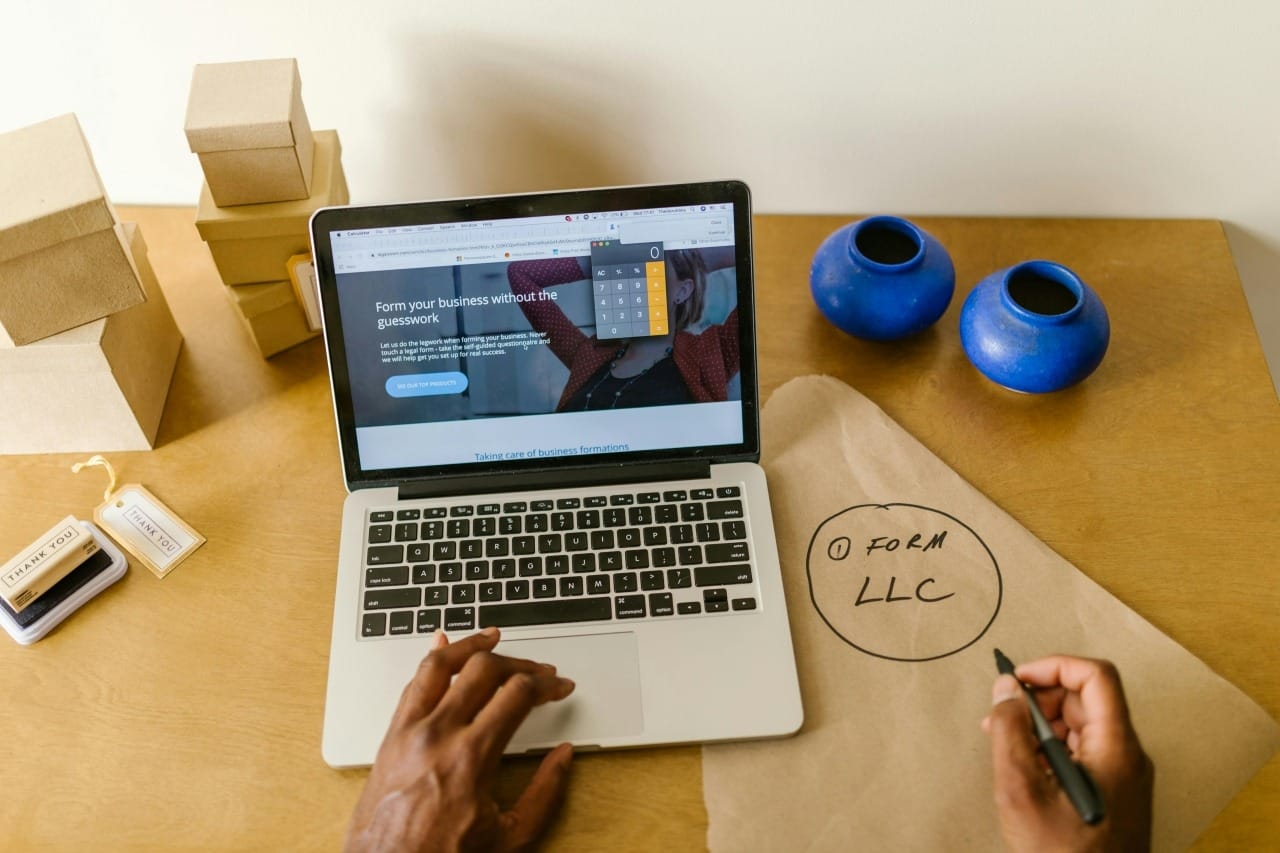
Step 6: Register your small business at home
Once you pick your structure, handle the setup work.
EIN, state registration, DBA, and local requirements
Depending on your setup, you may need:
- EIN: Employer Identification Number from the IRS
- DBA: “Doing business as” name if your business name differs from your legal name
- State registration: Often required for LLCs and corporations
- Sales tax permit: If you sell taxable goods
- Professional license: For regulated industries
- Local business license: City or county rules may apply
Use the SBA’s startup guide as your baseline, then check your state and local government websites.
What legal permits or licenses do I need for a home-based business?
This depends on where you live and what you sell. Common requirements include:
- General business license
- Home occupation permit
- Sales tax permit
- Health permit for food-related businesses
- Professional or occupational license
- Sign permit in some local areas
Also check:
- Zoning rules
- Lease restrictions if you rent
- HOA rules if you own in a managed community
- Insurance requirements
This part is easy to ignore, especially if you are only working from a laptop at home. But local rules can still matter. A city may limit customer visits, deliveries, signage, or certain business activities in residential areas.
Step 7: Separate your finances from day one
This is one of the best habits you can build early. If you mix business and personal money, bookkeeping becomes messy fast.
Open a business bank account
A separate business bank account helps you:
- Track income clearly
- Track expenses clearly
- Prepare for taxes
- Look more professional
- Protect your records
For an LLC, this step becomes even more important because you want a clear separation between personal and business activity.
Set up bookkeeping, invoicing, and tax savings
At minimum, do these three things:
- Use one business checking account
- Track every expense and income item
- Set aside money for taxes every month
You can use simple tools such as:
- Accounting software
- Spreadsheet tracking
- Invoice software
- Receipt scanning apps
The IRS small business resources are useful here, especially for understanding business recordkeeping and tax obligations. Even if your business is tiny, treat your records like they matter, because they do.
In real life, this is where a lot of home business owners get stressed. Not because the work is hard, but because they waited too long. Ten minutes a week beats a weekend of panic every quarter.
Step 8: Calculate startup costs and set a small budget
One reason many people start at home is cost. Home businesses usually avoid rent, storefront buildout, and large staffing costs. That is a real advantage.
Still, “low cost” does not mean “no cost.”
According to recent Bank5 startup cost estimates, startup costs vary widely based on the business model, and many small businesses underestimate what they need. That is why a simple budget matters before launch.
How much money do I need to start a small business at home?
It depends on the type of business.
Here is a realistic low-to-mid range starting point for common home business models:
| Business Model | Typical Early Costs |
| Freelance service | $100 to $1,000 |
| Tutoring or coaching | $100 to $1,500 |
| Virtual assistant business | $100 to $800 |
| Handmade products | $500 to $5,000 |
| E-commerce store | $500 to $5,000+ |
| Home food business | Varies widely by local compliance rules |
Common startup expenses include:
- Website and domain
- Business registration fees
- Software subscriptions
- Equipment
- Insurance
- Inventory or supplies
- Shipping materials
- Marketing
- Professional help, such as legal or accounting support
How can I start a home business with no money?
You may not be able to start with literally zero, but you can start very lean.
Best low-cost ways to begin:
- Sell a service you can deliver with tools you already own
- Start with one offer, not five
- Use free tools where possible
- Build a one-page website instead of a complex site
- Market through referrals and outreach before paid ads
- Pre-sell before investing deeply
- Use marketplaces before building your own store
If I had to give one budget tip after years of watching small businesses launch, it would be this: spend money only when it helps you make money or stay compliant. Nice-to-have branding can wait. Revenue and legal basics come first.
Step 9: Create your first offer and pricing
A business does not make money because it exists. It makes money because it has an offer that solves a problem.
How to price a home-based business
Start with three inputs:
- Your costs
- Market expectations
- The value of the result you create
If you sell a service, avoid pricing so low that people doubt the quality or you burn out fast. New business owners often underprice because they feel nervous. That is normal, but it can hurt you quickly.
Simple pricing models:
- Hourly rate
- Project-based fee
- Monthly retainer
- Product price
- Tiered packages
Minimum viable offer for beginners
Your first offer should be:
- Easy to explain
- Easy to deliver
- Easy to buy
Good examples:
- “I create 10 social posts for local businesses each month.”
- “I provide weekly bookkeeping cleanup for solo service firms.”
- “I tutor middle school math twice a week online.”
- “I sell printable meal planners for busy parents.”
Clarity wins. Fancy wording does not.
Step 10: Set up your online presence
You do not need to be everywhere online. You need to be visible in the places your buyers already use.
Website, Google Business Profile, social media, and marketplaces
Start with these basics:
- A simple website with your offer, pricing or starting price, and contact details
- A professional email address
- A Google Business Profile if you serve local customers
- One or two social channels that fit your audience
- Marketplace profiles if relevant, such as Etsy, Upwork, Fiverr, or Amazon
If you serve local clients, local SEO matters. If you sell nationally, your website and content matter more.
SEO basics for a new home business
Basic SEO steps:
- Use clear page titles
- Write service pages around real search terms
- Add your location if you serve locally
- Make your site mobile-friendly
- Add testimonials when you have them
- Publish helpful content that answers customer questions
As an SEO strategist, I can tell you this plainly: new businesses often overthink advanced SEO and ignore basic clarity. A clear homepage with a strong offer and a way to contact you will beat a vague fancy site almost every time.
Step 11: Get your first customers from home
You do not need viral reach. You need traction.
Simple marketing channels that work
Try these first:
- Personal network outreach
- Referrals
- Local Facebook groups
- Community partnerships
- Local business networking
- Email outreach
- Helpful content on your website
- Marketplace platforms
How to get your first 10 sales
A practical path:
- Define one clear offer
- List 50 people or businesses who may need it
- Reach out with a short, useful message
- Ask for referrals from people who know your work
- Offer a simple starter package
- Collect testimonials
- Improve your offer based on feedback
- Repeat what works
This part feels uncomfortable for many beginners, and I get it. Selling your own work can feel personal. But your first customers usually come from direct contact, not from waiting for strangers to find your website.
Home-based business insurance, taxes, and compliance basics
This section often gets left out of beginner guides, but it matters for trust and long-term stability.
Insurance for a home business
Depending on your business, you may need:
- General liability insurance
- Professional liability insurance
- Product liability insurance
- Business property coverage
- Cyber insurance
Do not assume your homeowners or renters insurance covers business activity. Check with your insurer.
Tax basics for a home business
Your tax responsibilities depend on your structure and what you sell. At a basic level, be ready for:
- Income tax
- Self-employment tax for many sole proprietors
- Sales tax in some states for product sales
- Estimated quarterly tax payments in some cases
The IRS business structures overview is a strong starting point for understanding how tax treatment changes by entity type.
Common mistakes when you start a small business at home
Here are the mistakes I see most often:
1. Starting with branding instead of demand
Logos do not create customers. Validation does.
2. Choosing a business idea with no clear buyer
If you cannot name the customer, marketing becomes hard.
3. Spending too much too soon
New software, inventory, and design costs add up fast.
4. Mixing personal and business money
This creates stress and weak records.
5. Ignoring local rules
Zoning, permits, and licenses still matter for home businesses.
6. Trying to sell too many things
One clear offer is easier to market.
7. Underpricing
Low prices can lead to burnout and weak margins.
8. Waiting too long to market
Do not hide behind preparation. Launch early.
30-day checklist to start a small business at home
Here is a simple 30-day launch plan you can follow.
First Week
- Choose one business idea
- Identify your target customer
- Research competitors
- Validate the offer with 5 to 10 potential buyers
Second Week
- Write a one-page plan
- Choose a business name
- Check domain and social availability
- Decide on sole proprietorship or LLC
- Review local permit and zoning requirements
Third Week
- Register the business if needed
- Get an EIN if needed
- Open a business bank account
- Set up basic bookkeeping
- Build a simple website or sales page
Fourth Week
- Finalize pricing
- Create your first offer
- Reach out to prospects
- Ask for referrals
- Start posting helpful content
- Aim for your first sale
Final thoughts on how to start a small business at home
Starting a small business at home is one of the most realistic ways to build income and independence. It gives you a lower-risk environment to test your idea, learn your market, and grow at your own pace. The key is not to do everything at once. Pick one idea, validate it, set up the basics correctly, and get your first customer.
If you feel overwhelmed, remember this: most successful businesses do not start with perfect systems. They start with a simple offer and a real customer. That is enough to begin.
Frequently asked questions about how to start a small business at home
- What is the easiest home business to start?
A skill-based service business is usually the easiest because it has low startup costs and can generate income quickly. Examples include freelance writing, tutoring, bookkeeping, and virtual assistant work.
- How much money do I need to start a small business at home?
Some service-based businesses can start for under $500. Product-based businesses often require more because of inventory, packaging, and shipping.
- Do I need an LLC to start a home business?
No. Many home businesses start as sole proprietorships. An LLC may offer liability protection, but whether you need one depends on your risk level, business type, and state costs.
- What legal permits or licenses do I need for a home-based business?
That depends on your location and industry. You may need a general business license, home occupation permit, sales tax permit, or professional license. Check city, county, and state requirements.
- How can I start a home business with no money?
Start with a service you can deliver using tools you already have. Validate demand before spending money, use free tools where possible, and focus on direct outreach and referrals first.
About The Author