

Electric Vehicle Insurance Costs vs Gas Cars (2026): What’s Really More Expensive—and Why
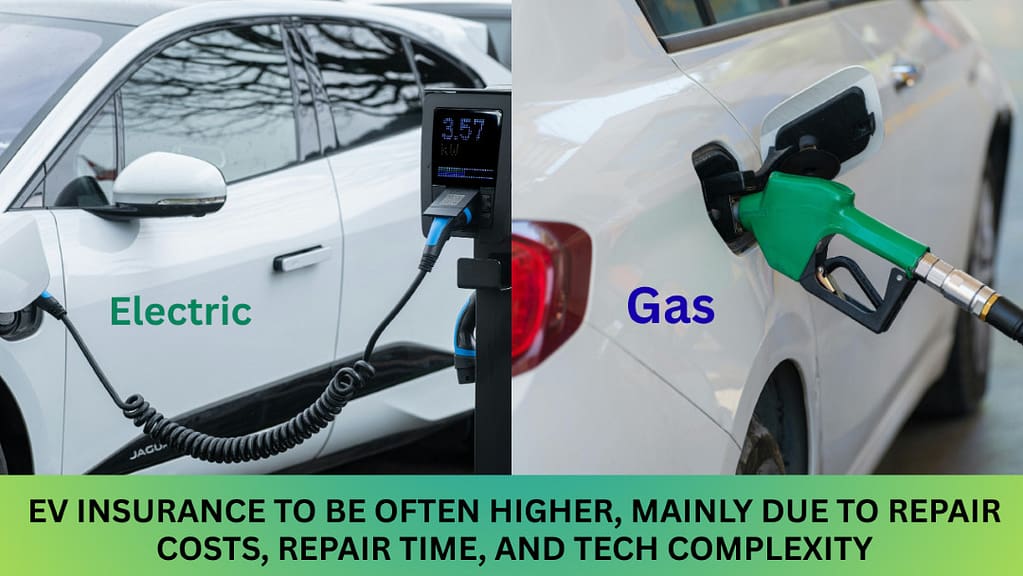
Electric vehicle insurance costs vs gas cars 2026 is a real budgeting question, and the honest answer is: many EVs still cost more to insure than comparable gas cars, but the gap depends heavily on your model, location, and insurer. EVs can cost more because repairs often take longer, require specialized shops, and include pricey parts and recalibration. That said, I’ve also seen EV quotes come in surprisingly close to gas cars when the driver has a clean record and the car is common enough that insurers know how to price it. If you shop smart and compare the right coverages, you can often narrow the difference a lot.
Electric vehicle insurance costs vs gas cars 2026: the short answer
In 2026, you should expect EV insurance to be “often higher, sometimes similar, occasionally lower” compared with gas cars when you compare truly similar vehicles and the same coverage.
Why this isn’t a simple yes/no:
- Insurers price risk based on what they pay out (repairs, medical, rentals, total losses, theft) and how often claims happen.
- “EV vs gas” matters, but repairability, parts availability, vehicle value, and driver profile often matter more.
Here’s a clean way to think about it:
EV vs gas insurance: what actually drives the premium (2026)
| Cost driver | Why it matters | Often bigger for EVs? | What you can do |
| Collision repair cost | Higher parts + specialized labor + calibration can raise claim size | Often | Choose a model with strong repair network; raise deductible if you can afford it |
| Repair time / rental days | Longer repairs can increase rental reimbursement payouts | Often | Ensure you have rental coverage; pick shops early |
| Vehicle value (ACV) | Higher ACV can raise comprehensive/collision costs and total loss payouts | Sometimes | Compare trims; don’t overbuy features you don’t need |
| ADAS sensors & calibration | Cameras/radar + calibration add cost even in “minor” crashes | Often (new cars in general) | Ask about ADAS repair procedures; consider glass coverage |
| Theft / vandalism | Some models have higher theft or vandalism patterns | Varies | Park securely; consider alarms; review comprehensive deductible |
| Driver + location | Tickets, claims, credit (where allowed), and zip code can dominate | Same | Shop carriers; consider telematics |
| Insurer appetite | Some companies price EVs aggressively, others don’t want the risk | EV-specific | Get multiple quotes; check EV-friendly carriers |
Expert note : When readers tell me “my EV quote is double,” the reason is usually not “because it’s electric.” It’s usually a mix of vehicle value + repair pipeline in that zip code + insurer’s EV pricing model. The fix is rarely one magic discount; it’s a structured comparison.
What makes EV insurance different from gas car insurance in 2026?
Let’s break this down in plain language. Insurance companies don’t charge more because they dislike EVs. They charge more when:
- A claim costs more when it happens, or
- Claims happen more often, or
- They can’t predict losses well, so they price conservatively.
Repair costs, parts delays, and shop availability (the hidden premium driver)
If you only remember one reason EV insurance can run higher, make it this:
Repair complexity + parts + time in the shop can turn a small crash into a big claim.
Even if the car drives fine, a modern EV (like many modern gas cars) may still need:
- A bumper cover replacement that includes embedded sensors
- Headlight assemblies that cost far more than older designs
- Calibration of cameras/radar after repairs
- Extra labor steps to follow OEM procedures
This is where loss data becomes important. The Insurance Institute for Highway Safety (IIHS) and its affiliate Highway Loss Data Institute (HLDI) track real-world insurance losses and publish research that helps explain why some vehicles cost more to insure, including differences in claim severity and repair outcomes. Their insurance-focused research hub is here: IIHS/HLDI auto insurance topics. When you see insurers pricing EVs higher, it’s often because real claims show higher average payouts on certain models or types of damage.
Personal insight: I’ve had friends who assumed “a fender bender is a fender bender.” Then the shop tells them the car needs sensor calibration, a bracket that’s backordered, and the insurer is paying for a rental for weeks. That’s not a moral judgement about EVs, it’s math.
Why parts and shop capacity matter in 2026
By 2026, EV adoption is higher than it was in the early 2020s, but repair infrastructure still varies by region. In some metro areas, you can find multiple EV-certified shops. In others, you might have one approved shop serving a wide radius. That bottleneck affects:
- Cycle time (how long repairs take)
- Storage fees (sometimes)
- Rental reimbursement payouts
- Total claim cost
Battery packs: what insurance covers (and what it usually doesn’t)
Battery anxiety drives a lot of “EV insurance must be insane” assumptions, so let’s clear it up.
In most standard auto policies:
- Collision coverage pays if you crash and damage the car (including battery components damaged in a covered accident).
- Comprehensive pays for non-collision events (theft, fire, hail, vandalism, falling objects, animal hits).
- Insurance does not pay for normal battery degradation. That’s wear and tear.
- Insurance also doesn’t act like a battery warranty. The automaker warranty does that job (terms vary by brand).
So yes—battery-related damage can be expensive. But the bigger pricing story is often:
- How frequently insurers see battery-related total losses
- Whether a model has clear repair procedures
- Whether shops can safely diagnose and isolate battery issues without totaling the car “just to be safe”
What to do as a shopper (practical):
- Ask the insurer: “Do you treat OEM battery parts differently than OEM engine parts for coverage or claims handling?”
- Ask the dealership or service department: “Do local body shops in this area regularly repair this model?”
ADAS sensors and calibration after a crash
In 2026, many cars, EV and gas, use advanced driver assistance systems (ADAS). Think:
- Automatic emergency braking
- Lane-keeping assist
- Adaptive cruise control
- Parking sensors and cameras
These systems can reduce crashes, but repairs can cost more because you may need:
- Sensor replacements
- Windshield replacement with camera modules
- Calibration procedures after a collision or glass work
For a grounded explanation of vehicle safety tech and regulation context, NHTSA is the best starting point. When you see an insurance estimate that includes calibration lines, it’s not fluff; it’s part of restoring safety systems to spec.
Personal insight: This is one of the most common “surprise” line items I see people complain about online. The shop isn’t trying to pad the bill. If the car’s camera-based safety systems are off, the car can behave unpredictably. Insurers and shops take that seriously.
Vehicle value (ACV) and depreciation’s role in total losses
Insurance pricing closely tracks the car’s actual cash value (ACV), which is the amount the insurer might have to pay if the vehicle becomes a total loss.
- Higher ACV often means higher comprehensive and collision premiums.
- High repair costs can trigger a total loss even when damage looks repairable.
- Depreciation affects ACV over time, which can change how insurers view loss risk.
For broader market context on vehicle pricing and trends, Cox Automotive’s market updates are a useful anchor because they cover pricing shifts and market dynamics that feed into insurance totals and payouts. Here’s their market insights hub: Cox Automotive Market Insights.
Why this matters for EV vs gas in 2026: If EV prices and used values move (up or down), insurers adapt. A model with unstable used values can produce unpredictable claim costs, and insurers price uncertainty into premiums.
Are EVs more expensive to insure than gas cars in 2026? (What the data shows)
Most reputable consumer-rate comparisons still find that EVs tend to cost more to insure on average than gas cars. But you need to read that sentence carefully: on average it takes a lot of work.
What major reports say about EV vs ICE premiums
For consumer-friendly, frequently updated benchmarking, Bankrate regularly publishes auto insurance price analysis, including average full coverage costs and discussion of pricing factors. Their auto insurance resource hub is here: Bankrate car insurance.
I like using Bankrate as one reference point in content because:
- It’s updated often
- It explains methodology clearly for readers
- It’s widely cited, so it’s familiar in AI-powered search summaries
Important caution (so you don’t misread averages):
- National averages hide huge local variance.
- Even within one state, zip codes can swing rates.
- Two EVs can differ more than “EV vs gas” differences.
When an EV can be similar (or cheaper) to insure than a gas car
Yes, it happens and if you’ve seen it, you’re not imagining it.
Here are common situations where EV insurance can come in close to gas cars:
- You compare a modest EV trim to a high-performance gas trim.
Performance and acceleration correlate with claims risk in many pricing models. - Your insurer is actively competing for EV customers.
Some carriers price EVs aggressively to gain market share. - You have a strong driver profile.
Clean record, stable garaging address, good insurance history, and good credit (where allowed) can outweigh vehicle type. - Your EV has strong repair support in your area.
More shops + better parts access can reduce expected claim cost.
Expert experience note: I’ve seen the same EV quote differ by hundreds per year between carriers, with identical coverages, simply because one carrier had better EV loss experience in that state or they wanted more EV customers.
Why Tesla insurance can look higher than other EVs (and not always)
People often ask this as if Tesla is the “default EV,” so it deserves a clear answer.
Tesla insurance can price higher for some drivers because of a combination of:
- Repair and parts pricing on certain models/trims
- Claim severity (how expensive claims are when they happen)
- Performance (some trims are extremely quick)
- Body shop network constraints in certain regions
- High concentration of tech + sensors (repair/calibration costs)
At the same time, Tesla insurance isn’t automatically higher in every case. I’ve seen:
- Drivers with clean records get competitive quotes
- Quotes improve after switching carriers or adjusting deductibles
- Regional differences that flip the story completely
This is where the IIHS/HLDI lens helps again: the “insurance losses” conversation is about real-world claim outcomes, not assumptions. Their research hub is still the cleanest reference for readers who want to understand how insurers think: IIHS/HLDI auto insurance topics.
A personal note: I once helped a neighbor compare quotes (not as an agent; just as the “friend who reads the fine print”). The Tesla quote looked outrageous; until we realized the comparison used different deductibles and rental coverage. Once we matched coverages, the gap shrank, then disappeared with a different carrier.
Will electric vehicle insurance costs go down in 2026? (Trends to watch)
You’ll see confident predictions online. The truth is messier. Some forces push EV premiums down; others push them up.
More competition, more data, and better repairs (downward pressure)
These trends can help EV insurance in 2026:
- More historical claims data → insurers price more accurately (less “uncertainty loading”)
- More EV-capable body shops → faster repairs, fewer rental days
- Improved parts supply (varies by brand) → lower cycle time
- Standardization of repair procedures → fewer “we have to replace it all” estimates
For the broader market and pricing environment that influences total-loss math and insurer costs, Cox Automotive’s market coverage is a useful context: Cox Automotive Market Insights.
What could keep rates high in 2026 (upward pressure)
Even if EV-specific issues improve, other factors can keep premiums elevated:
- Repair labor costs (technicians, calibration specialists)
- More expensive vehicle technology across the board (EV and gas)
- Severe weather and catastrophe losses (hail, floods, storms)
- Medical costs and litigation trends in certain states
- Theft trends for specific models (EV or gas)
Put simply: EV insurance doesn’t live in a bubble. If the whole auto insurance market hardens, EV owners feel it too.
The biggest sleeper factor: your state’s rate environment
If you only compare “EV vs gas” without considering your state, you’ll get frustrated.
State-level differences include:
- Minimum coverage requirements
- How insurers can use credit-based insurance scores (where allowed)
- Litigation environment
- Repair cost inflation and labor availability
This is why two people with the same EV can post wildly different premiums online and both be telling the truth.
How to lower electric vehicle insurance costs in 2026 (step-by-step)
This section is the most important one if you’re trying to save money. I’m going to keep it practical.
Step 1: Shop more than once and shop the right way
Many drivers only shop when they feel angry about a renewal increase. I get it. But you usually do better when you shop:
- At purchase time
- At renewal time
- After a life change (move, marriage, new job commute)
- After 6–12 months of clean driving (some carriers reward stability)
J.D. Power has repeatedly reported on increased consumer shopping activity in auto insurance. Their press release hub is here: J.D. Power press releases, and it’s a credible place to reference broader shopping behavior trends when discussing why switching carriers has become common.
How to shop (the method that avoids fake “cheap quote” comparisons):
- Pick one coverage package (liability limits, comp/collision deductibles, rental, roadside).
- Quote 3–5 carriers with the exact same package.
- Confirm the quote includes the correct vehicle trim and usage.
- Repeat after you decide deductible changes, not before.
Step 2: Use a deductible strategy that fits EV repair reality
Many people default to $500 deductibles because “that’s what I’ve always done.”
In 2026, with repair costs high for many vehicles, consider:
- If you have strong savings: test $1,000 or $1,500 deductibles
- If you don’t: keep a lower deductible so one surprise doesn’t wreck your budget
Quick rule I use personally: Don’t raise your deductible unless you can pay it tomorrow without stress.
Step 3: Don’t skimp on rental reimbursement (EV repairs can take time)
If parts delays or shop scheduling are common in your region, rental reimbursement becomes more valuable, not less.
When I review policies for friends/family, rental is one of the most common gaps. People assume they’ll “just borrow a car.” Then life happens.
Step 4: Consider telematics (but read the tradeoffs)
Usage-based insurance can help safe drivers. It can also backfire if you:
- Drive late at night often
- Have heavy stop-and-go commuting
- Brake hard frequently (even for defensive reasons)
My advice: Try it if the insurer offers a meaningful discount up front and a clear way to opt out later.
Step 5: Verify EV-specific coverages and exclusions
Ask the insurer:
- Do you cover OEM parts or aftermarket parts? (Varies)
- How do you handle battery damage diagnostics after an accident?
- Do you cover charging equipment if it’s stolen/damaged? (Often homeowners/renters may apply more than auto)
Step 6: Bundle and fix the “boring” stuff
Bundling still matters for many households:
- Auto + home
- Auto + renters/condo
- Multi-car
Also check:
- Garaging address accuracy
- Annual mileage estimate
- Driver list and household members
- Lienholder details (if financed)
Savings levers vs tradeoffs (2026)
| Lever | How it can lower premium | Tradeoff |
| Higher deductibles | Lowers collision/comp premium | More out-of-pocket after a claim |
| Telematics | Rewards safe driving patterns | Data tracking + possible rate increase |
| Bundle policies | Multi-policy discount | May reduce flexibility to shop separately |
| Reduce coverage add-ons | Lower premium | More risk (rental, roadside, gap) |
| Improve credit (where allowed) | Can lower rate | Takes time; not available in all states |
| Choose a different model/trim | Lower expected claim cost | Might compromise features/range |
EV insurance cost comparison checklist (2026): compare apples to apples
If you want a clean EV vs gas comparison, use this checklist. It prevents the #1 mistake: comparing two quotes that look similar but aren’t.
Coverage checklist
Match these line by line:
- Bodily injury liability (e.g., 100/300)
- Property damage liability (e.g., 100)
- Uninsured/underinsured motorist (where applicable)
- Personal injury protection / MedPay (state-dependent)
- Comprehensive deductible
- Collision deductible
- Rental reimbursement (daily limit + max days)
- Roadside assistance/towing
- Glass coverage (if offered)
- OEM parts endorsement (if available)
- Gap insurance (often separate; may be through lender)
Vehicle + usage checklist
- Exact trim (standard vs long-range vs performance matters)
- Annual mileage
- Commute vs pleasure vs business use
- Garaging zip code
- Drivers and driving history
Expert tip: If you’re comparing an EV to a gas car, compare vehicles with similar:
- MSRP/ACV range
- Performance (0–60 and horsepower)
- Safety tech level
- Repair complexity
Comparing a base EV crossover to a luxury gas SUV isn’t really “EV vs gas.” It’s “price tier vs price tier.”
Additional points that strengthen the topic: Electric vehicle insurance costs vs gas cars 2026
EV vs gas: collision vs comprehensive; what’s actually driving your bill?
When people complain about “EV insurance,” the increase often shows up in:
- Collision (repair severity)
- Comprehensive (theft/vandalism/weather, depending on model and region)
Ask your agent or review your declarations page to see which line item moved.
Total loss thresholds: why “repairable” cars get totaled
Insurers total a vehicle when repair cost + related costs exceed a threshold (rules vary). With modern tech-heavy cars, totals can happen faster. This is one reason EV vs gas comparisons can feel inconsistent; one model totals more easily in certain crash types.
Don’t let one viral quote define the category
A single $3,500/year EV premium screenshot doesn’t define EV insurance in 2026. It defines that driver + that car + that zip code + that insurer at that moment.
Bottom line: EV vs gas insurance in 2026
If you’re deciding between an EV and a gas car in 2026, plan for EV insurance to be often higher, mainly due to repair costs, repair time, and tech complexity. But don’t assume you’re stuck with a bad rate. Shop multiple carriers, match coverages, and make sure you’re comparing similar vehicles. In many cases, you can narrow the gap enough that the decision comes down to the car you actually want to live with every day.
FAQs: Electric vehicle insurance costs vs gas cars 2026
1) Are electric vehicles more expensive to insure than gas cars in 2026?
Often, yes, but not always. Many EVs still show higher insurance costs than comparable gas cars because repairs can cost more and take longer. However, your insurer, location, and model choice can shrink or erase the gap. For regularly updated consumer-facing cost context, you can review Bankrate’s car insurance analysis here: Bankrate car insurance.
2) Why is EV insurance so high for some models (especially Tesla)?
Usually because insurers expect higher claim payouts based on repair cost, parts availability, calibration needs, and sometimes performance. The best way to understand how insurers analyze “losses” is through real-world insurance loss research like IIHS/HLDI auto insurance topics.
3) Will EV insurance costs go down in 2026 as more body shops learn repairs?
They can, especially in areas where repair networks expand and parts supply improves. But broader market forces (labor costs, weather losses, litigation) can still keep rates elevated. Market-wide context from Cox Automotive Market Insights helps explain why insurance pricing follows the overall cost environment.
4) How can I lower my electric car insurance premium in 2026?
Shop 3–5 carriers with identical coverages, consider a deductible change you can truly afford, keep rental reimbursement, and evaluate telematics carefully. Also, don’t underestimate bundling. If you want evidence that more consumers are shopping policies due to rate pressure, see J.D. Power’s insurance shopping-related press releases.
5) Does battery replacement risk make EV insurance higher than gas cars?
Battery damage can be expensive, but it’s not the only factor and not always the most significant one. Repair time, parts, shop capacity, and ADAS calibration costs often play an equal or bigger role. In real life, the total claim cost is what moves premiums.
About The Author




Pingback: EV Insurance QuotesEV Insurance Quotes in 2026
Thanks indeed!