How AI Is Changing Industries in 2026: An Industry-by-Industry Guide
TL;DR: AI is no longer experimental. In 2026, it’s actively transforming healthcare, finance, retail, manufacturing, education, and transportation. The businesses winning today have embedded AI into their core operations, not bolted it on as an afterthought. This guide breaks down exactly how AI is changing each major industry, what it means for jobs and business models, and what you need to do right now to stay competitive in the AI-driven economy.
Every decade or so, a technology arrives that doesn’t just improve how things work; it changes what’s possible entirely. In 2026, that technology is AI. And if you’re still treating it as a buzzword or a future consideration, the numbers should change your mind fast.
According to Gartner’s 2025 predictions, over 80% of enterprises will have used generative AI APIs or models in production by 2026. That’s not a projection anymore. That’s the baseline. The question isn’t whether AI is changing industries; it’s whether you understand exactly how it’s changing yours.
This guide covers how AI is changing industries in 2026, sector by sector. We’re talking healthcare, finance, retail, manufacturing, education, and transportation. We’ll look at real data, real shifts in business models, and real implications for jobs and competitive advantage. No fluff, no hype. Just the practical picture you need to make smarter decisions. Let’s get into it.
How Is AI Actually Changing Industries in 2026? The Big Picture
AI is changing industries in 2026 by moving from experimental tools to core infrastructure. Businesses are using it to automate repetitive tasks, augment human decision-making, and in some sectors, operate autonomously. The result is faster operations, lower costs, and entirely new competitive dynamics that reward speed and data advantage over traditional scale.
To understand the scale of what’s happening, start with this: McKinsey’s Global Institute estimates that generative AI alone could add between $2.6 trillion and $4.4 trillion annually to the global economy. That’s not a lifetime value. That’s an annual impact. The global AI market is projected to exceed $826 billion by 2030, growing at a compound annual growth rate of 28.46%.
What’s driving this? Three overlapping waves of AI transformation are hitting every industry at once.
Wave 1: Automation. AI handles repetitive, rule-based tasks faster and cheaper than humans. Think data entry, fraud flagging, basic customer service, and inventory tracking.
Wave 2: Augmentation. AI makes skilled workers more effective. A doctor using AI diagnostics isn’t replaced; that doctor becomes significantly more accurate and efficient. A marketer using AI copywriting tools doesn’t lose their job; they produce five times the output.
Wave 3: Autonomy. In some sectors, AI systems are beginning to operate independently. Autonomous vehicles, algorithmic trading systems, and AI-driven drug discovery pipelines all fit here. Human oversight still exists, but the day-to-day decisions are machine-driven.
The businesses that understand which wave is hitting their industry, and how fast, are the ones building durable competitive advantage right now. Those that don’t will find themselves outpaced by leaner, AI-native competitors.
Explore our growing library of AI tools and strategies to see how forward-thinking businesses are already making this shift.
How AI Is Transforming Healthcare: Faster Diagnoses and Better Outcomes
AI is transforming healthcare in 2026 by dramatically improving diagnostic accuracy, accelerating drug discovery, and enabling more personalized patient care. AI-powered imaging tools can detect certain cancers, diabetic retinopathy, and cardiac conditions earlier than traditional methods, giving patients better odds and reducing the burden on overstretched healthcare systems.
The diagnostic impact alone is staggering. According to PwC’s analysis of AI in healthcare, AI diagnostic tools can reduce misdiagnosis rates by up to 40% in clinical settings. For context, misdiagnosis affects approximately 12 million Americans annually. A 40% reduction isn’t a minor improvement. It’s a fundamentally different standard of care.
Here’s where it gets even more interesting. Drug discovery, historically a process that takes 10 to 15 years and costs billions, is being compressed by AI. Machine learning models can analyze molecular structures, predict how compounds will behave in the body, and narrow down viable drug candidates in a fraction of the traditional time. What used to take a decade can now move through the initial research phase in 18 to 24 months.
Beyond the lab, AI is transforming how patients interact with healthcare systems. AI agents handle appointment scheduling, prescription refill management, symptom triage, and post-discharge follow-up. Hospitals using these tools see fewer missed appointments, faster discharge processes, and better patient satisfaction scores.
What does this mean for healthcare jobs? The short answer is that clinical roles aren’t disappearing; they’re evolving. Radiologists who adopt AI tools become more productive and accurate. Nurses who work alongside AI care coordinators can focus on higher-complexity patient interactions. The risk isn’t replacement; it’s irrelevant for those who refuse to adapt.
Key healthcare AI developments in 2026:
| Application | Impact | Status |
| AI diagnostics (imaging) | Up to 40% fewer misdiagnoses | Widely deployed |
| Drug discovery acceleration | 18-24 months vs. 10-15 years for early research | Scaling rapidly |
| AI care coordination agents | Reduced no-shows, better discharge rates | Mainstream adoption |
| Predictive patient risk scoring | Earlier intervention for high-risk patients | Growing deployment |
| Surgical assistance AI | More precise minimally invasive procedures | Early adoption |
What AI Is Doing to Finance and Banking in 2026
In 2026, AI is fundamentally changing finance and banking by automating fraud detection, transforming credit underwriting, powering algorithmic trading, and enabling hyper-personalized financial advice. Banks and fintech companies using AI are operating with significantly lower risk exposure and dramatically higher efficiency than their legacy competitors.
Fraud detection is the headline story. According to Deloitte’s Financial Services AI report, AI-driven fraud detection systems are reducing financial crime losses by up to 60% compared to traditional rule-based systems. The difference is that traditional fraud systems work from fixed rules. AI systems learn from patterns in real time, catching novel fraud schemes before they scale.
Credit underwriting is another area being reshaped completely. Traditional credit scores rely on a narrow data set. AI-powered lending models analyze hundreds of variables, from spending patterns to employment stability signals, giving lenders a far more accurate picture of actual credit risk. The result? Fewer defaults and, critically, credit access for people who were previously invisible to the system.
Algorithmic trading powered by machine learning now accounts for a significant share of daily trading volume on major exchanges. These systems process market signals, news sentiment, and macroeconomic data simultaneously. They execute trades in microseconds. Human traders aren’t competing with this; the smart ones are working alongside these systems, focusing on strategy and risk management rather than execution.
On the consumer side, robo-advisors and AI financial planners are democratizing access to personalized wealth management. Historically, sophisticated financial planning was reserved for high-net-worth clients. AI has changed that math entirely.
For anyone building wealth in 2026, understanding how these tools work is now a baseline financial literacy requirement. Our content on finance and wealth building digs deeper into how to use these shifts to your advantage.

AI in Retail and E-Commerce: Personalization at Scale
AI is transforming retail and e-commerce in 2026 by enabling true personalization at scale, intelligent inventory management, and dynamic pricing that responds to demand in real time. Retailers using AI personalization see measurable revenue gains, while those without it are losing ground to competitors who know their customers better than they know themselves.
The revenue impact here is concrete. A KPMG retail AI survey found that 73% of retailers using AI-powered personalization saw revenue increases of 10% to 30%. That’s not a marginal improvement. For a retailer doing $10 million in annual revenue, that’s an extra $1 to $3 million from smarter product recommendations alone.
Here’s how the personalization machine works. Every click, scroll, purchase, and return generates data. AI models process this data to predict what each customer wants before they even search for it. Amazon built its entire flywheel on this principle. Now, with accessible AI tools, any e-commerce business can apply a similar logic.
Dynamic pricing is another AI superpower in retail. AI systems monitor competitor pricing, inventory levels, demand signals, and even weather patterns to adjust prices in real time. Airlines and hotels have used this for years. In 2026, it’s becoming standard across retail categories.
AI is also solving one of retail’s most persistent headaches: inventory management. Overstock and stockouts together cost the retail industry over $1.75 trillion annually. AI demand forecasting, which reads seasonal trends, local events, social media signals, and historical sales data, cuts this problem down significantly.
For small and mid-size retailers, this is actually a leveling opportunity. The same AI tools that power personalization for enterprise brands are increasingly available as affordable SaaS solutions. The playing field isn’t even, but it’s more accessible than it’s ever been.
How AI Is Reshaping Manufacturing and Supply Chains
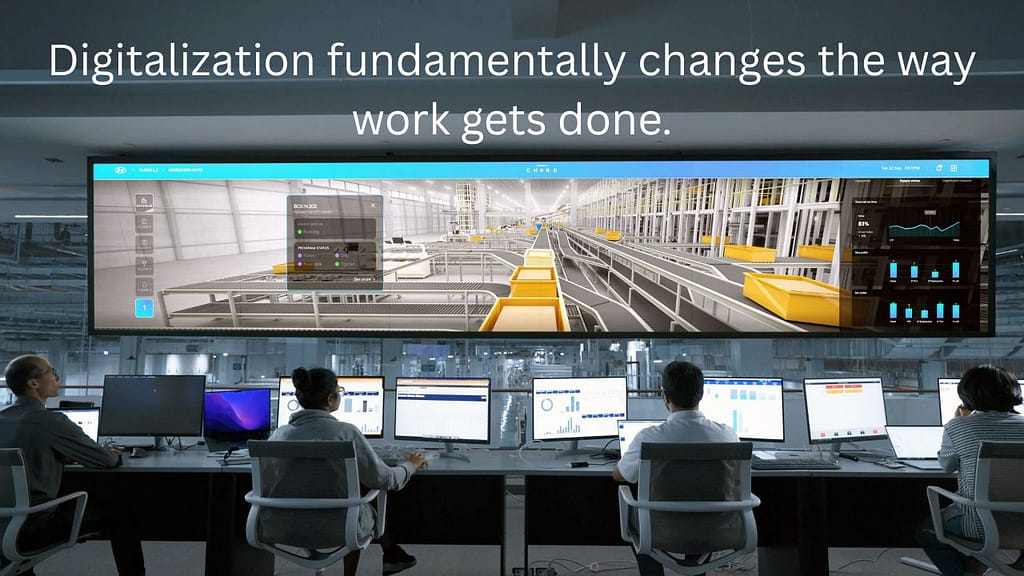
Manufacturing is one of the sectors where AI’s impact is most tangible. You can see it on the factory floor, in the supply chain dashboard, and on the balance sheet.
The biggest immediate win is predictive maintenance. Traditionally, factories maintained equipment on fixed schedules or after equipment failed. Both approaches waste money. Fixed-schedule maintenance services equipment whether it needs it or not. Reactive maintenance means costly downtime. AI changes the equation entirely.
According to Accenture’s manufacturing AI research, AI-powered predictive maintenance cuts unplanned downtime by up to 50% and reduces maintenance costs by 25%. Sensors on machinery feed real-time data into AI models. Those models flag when a component is likely to fail, allowing maintenance crews to address the issue before the production line stops.
Quality control is another area being transformed. Computer vision AI systems inspect products at speeds and consistency levels no human team can match. A camera-based AI system can inspect thousands of units per hour, flagging defects at a microscopic level. Automotive manufacturers, electronics producers, and food processing companies are leading the adoption here.
Supply chain visibility has also been transformed. AI models now give manufacturers real-time insight into supplier risks, shipping delays, and demand fluctuations. During global disruptions, the manufacturers with AI-powered supply chain intelligence adapted faster and recovered quicker than those still working from spreadsheets and email chains.
Where the jobs are going in manufacturing:
The narrative about robots replacing factory workers is partially true but incomplete. Yes, repetitive manual tasks are being automated. But AI is also creating demand for robotics technicians, AI systems operators, data analysts, and supply chain strategists. The workers who are reskilling into these roles are finding that their experience gives them a significant edge over theoretical candidates.
Is AI in Education Changing How We Learn and Work?
AI is changing education in 2026 by enabling truly personalized learning at scale, giving students adaptive tutoring that responds to their pace and learning style. Research shows AI tutoring tools can improve learning outcomes by up to 30% compared to traditional classroom-only instruction, while simultaneously giving educators more time to focus on mentorship and critical thinking development.
The standard classroom model assumes all students learn at the same pace. Anyone who’s ever sat through a class that moved too fast, or too slowly, knows how limiting that assumption is. AI tutoring systems break that constraint.
According to research highlighted by Forbes on AI in education, AI tutoring tools improve student learning outcomes by up to 30% compared to traditional methods. These systems identify exactly where a student is struggling, adjust the difficulty and presentation of content in real time, and provide instant feedback without the wait time that classroom settings require.
For working professionals, the implications are even more direct. Corporate training programs powered by AI now deliver personalized skill-building paths based on an employee’s current skill gaps, learning history, and career goals. The generic three-day training seminar that covers material half the attendees already know is becoming obsolete.
What does this mean for teachers and educators? Their role is evolving rather than disappearing. AI handles the repetitive elements: drill practice, quiz grading, progress tracking, and basic concept explanation. This frees educators to focus on higher-order skills: critical thinking, creativity, collaboration, and mentorship. These are precisely the areas where human teachers provide value that no algorithm can replicate.
For self-directed learners and entrepreneurs, this shift is a genuine competitive advantage. The tools to acquire new skills faster than ever before are now accessible and affordable. In the AI economy, the ability to learn quickly is itself a form of capital.
Transportation and Logistics: Where AI Meets the Physical World
Transportation is where the abstract potential of AI gets concrete very quickly. You can talk about algorithms and data models all day. But when an autonomous vehicle navigates rush hour traffic, or an AI system optimizes delivery routes across a fleet of 10,000 trucks in real time, the impact is undeniable.
The most discussed application is autonomous vehicles. The technology has matured significantly, and according to the World Journal of Advanced Research and Reviews, AI-powered autonomous vehicles are projected to reduce traffic fatalities by 30% to 40% as deployment scales. Since human error is responsible for over 90% of traffic accidents, this isn’t a controversial projection. It’s a mathematical reality waiting on regulatory and infrastructure timelines.
But autonomous vehicles are only part of the transportation AI story. In logistics, AI is solving the last-mile delivery problem, which is the most expensive segment of the supply chain. AI route optimization tools reduce fuel costs, cut delivery times, and allow logistics companies to handle higher volume without proportionally increasing their fleet size.
Freight and shipping companies are using AI to predict port congestion, optimize load planning, and manage driver scheduling. Airlines are using AI to optimize fuel consumption, predict maintenance needs, and manage crew scheduling in ways that were operationally impossible even five years ago.
For businesses that rely on logistics, this matters directly. AI-powered supply chain tools are no longer enterprise-only. Mid-market companies now have access to platforms that bring real-time route optimization, demand forecasting, and carrier performance analysis into their operations. The cost of not using these tools is showing up in freight costs, delivery delays, and customer satisfaction scores.
The regulatory environment for autonomous transportation is still catching up with the technology. But smart logistics businesses aren’t waiting for full autonomy. They’re adopting AI-assisted tools now, building the operational experience and data advantage that will matter enormously when full autonomy arrives.
What Does AI Mean for Jobs Across Every Industry in 2026?
AI will not eliminate jobs in 2026 across the board. The accurate picture is more nuanced: AI will automate specific tasks within jobs, displace some roles entirely, and create entirely new categories of work. The workers who adapt by learning to work alongside AI will see their value increase. Those who ignore the shift face real risk.
This is probably the question most people are really asking when they search for how AI is changing industries. Let’s look at the actual data rather than the fear-driven headlines.
The World Economic Forum’s Future of Jobs Report 2025 estimates that automation may displace around 85 million jobs globally while creating approximately 97 million new roles. That net positive number matters, but so does the transition challenge. The new jobs often require different skills from the ones being displaced. That gap is where the real work needs to happen.

Goldman Sachs research estimates that AI could automate about 25% of current work tasks in the United States and Europe. Notice the word: tasks, not jobs. Most jobs contain a mix of tasks, some highly automatable and some not. The result for most workers isn’t replacement; it’s that their job changes composition.
The workers winning in the AI economy share a few traits. They’ve learned to use AI tools as force multipliers. They focus their energy on tasks that require human judgment, relationship-building, creativity, and complex problem-solving. They treat AI skills the same way a previous generation treated computer literacy: as a non-negotiable baseline.
Jobs at higher automation risk by 2026:
- Data entry and processing
- Basic customer service and support
- Routine financial analysis
- Standard content moderation
- Simple legal document review
Roles growing in demand because of AI:
- AI prompt engineers and model trainers
- AI implementation specialists
- Data scientists and ML engineers
- AI ethics and governance professionals
- Human-AI collaboration managers
- Cybersecurity analysts (AI threats require AI defense)
The honest message from Rejoice Winning is this: staying ahead in the AI economy isn’t about fearing the technology. It’s about making deliberate choices to build skills and business models that position you on the right side of this shift. Our content on staying ahead in the AI economy is designed exactly for this.
How to Build Competitive Advantage with AI in 2026
This is where we get to the most actionable part of the conversation. Understanding how AI is changing industries is valuable. Knowing what to do about it is what separates the businesses that win from the ones that watch.
IBM’s Institute for Business Value found that 77% of executives now say AI is critical to competitive differentiation in 2026. That’s not a marginal opinion. That’s near-consensus at the executive level. The question isn’t whether to adopt AI; it’s how to do it in a way that creates a genuine moat.
Here’s how I see it from watching businesses across sectors navigate this transition. There are three levels of AI adoption, and where a business sits on this ladder determines how durable their advantage is.
Level 1: AI Tool User. The business uses off-the-shelf AI tools. ChatGPT for content, an AI scheduling tool, a basic chatbot. This creates some efficiency gains, but it’s not a competitive moat. Every competitor can do the same with a monthly subscription.
Level 2: AI Integrator. The business integrates AI into core workflows in ways that are specific to their operation. Custom AI models trained on proprietary data. Automated pipelines that connect their CRM, marketing, inventory, and customer service. This takes more investment to build, but it creates real differentiation.
Level 3: AI Native. The business has been designed from the ground up with AI as a core component of the value proposition. These are the businesses that are hardest to compete with because AI is structural, not supplemental.
Most businesses reading this are at Level 1 and aspiring to Level 2. That’s a perfectly winnable position in 2026.
Here’s the practical path:
Step 1: Audit your highest-cost or highest-friction processes. Where does work get stuck? Where do you spend the most on labor for tasks that are fundamentally repetitive?
Step 2: Identify AI tools built for your industry. Vertical-specific AI tools (for healthcare, retail, finance, logistics) are now more capable and better integrated than general-purpose tools.
Step 3: Start with one workflow, prove the ROI, then scale. Businesses that try to implement AI everywhere simultaneously usually end up with none of it working well.
Step 4: Build your data assets. AI is only as smart as the data it learns from. Your proprietary customer data, operational data, and domain expertise are your raw material for AI advantage.
Step 5: Invest in AI literacy across your team. Technology is only part of the equation. People who know how to use it effectively are the multiplier.
Understanding AI’s role in business growth strategies has never been more directly connected to financial performance. The businesses taking this seriously now are building advantages that will be very difficult to replicate in two or three years.
Conclusion
AI is changing industries in 2026 in ways that are no longer theoretical. The data is clear, the business cases are real, and the competitive stakes have never been higher. Here are the three things to take away from this guide.
First, every major industry is being transformed, but the pace and nature of that transformation varies by sector. Healthcare and finance are seeing the deepest structural changes right now. Retail and manufacturing are not far behind. Transportation and education are on the steeper part of their adoption curve.
Second, the jobs narrative isn’t about mass elimination. It’s about task transformation. The workers who are building AI skills and positioning themselves as human-AI collaborators are increasing their value. Those who are waiting this out are taking on real career risk.
Third, competitive advantage in 2026 belongs to businesses that have moved beyond using AI as a gadget and started embedding it into core operations. That transition is available to businesses of all sizes right now.
If you’re serious about winning in the digital economy, the time to engage is now. Explore everything we’re building at Rejoice Winning to keep sharpening your edge on AI, business strategy, and wealth building. This is your moment to move.
Frequently Asked Questions
1. Which industry is being most disrupted by AI in 2026?
Healthcare and finance are currently experiencing the deepest disruption from AI. In healthcare, AI is actively changing diagnostic accuracy, drug discovery timelines, and patient care delivery. In finance, it’s reshaping fraud detection, credit underwriting, and investment management. Both sectors are seeing changes that affect not just efficiency, but the fundamental business models and regulatory frameworks that govern how they operate.
2. Will AI replace most jobs by 2026?
No. AI will not replace most jobs by 2026. The World Economic Forum’s Future of Jobs Report 2025 estimates that automation will create approximately 97 million new roles while displacing around 85 million. The more accurate picture is that AI automates specific tasks within jobs, changing the composition of work rather than eliminating roles wholesale. Workers who learn to collaborate with AI tools are increasing their value, not losing their positions.
3. How can small businesses use AI to compete with larger companies?
Small businesses can use AI to punch above their weight by adopting vertical-specific AI tools for customer service, marketing, inventory management, and financial forecasting. Many of these tools are now available as affordable monthly subscriptions. The advantage smaller businesses have is speed of implementation. A small business can test, adopt, and optimize an AI tool in weeks. A large enterprise often takes months. Focus on one high-friction process, prove the ROI, then expand from there.
4. What AI skills are most valuable in 2026?
The most in-demand AI skills in 2026 include prompt engineering, AI model fine-tuning, data analysis and interpretation, AI implementation strategy, and AI ethics. For non-technical professionals, the most valuable skill is knowing how to work alongside AI tools to increase your output in your existing field. Marketers who understand AI content tools, analysts who can work with AI data platforms, and managers who can oversee AI-augmented teams are all seeing strong demand across industries.
5. Is AI adoption mandatory for business survival in 2026?
Not mandatory in every case, but increasingly necessary for competitiveness. According to IBM’s Institute for Business Value, 77% of executives now consider AI critical to competitive differentiation. Businesses in highly competitive industries, such as retail, finance, logistics, and healthcare, face a meaningful disadvantage if they’re not actively integrating AI into core operations. Businesses in more localized or relationship-driven markets have more runway, but the efficiency and cost advantages of AI adoption are becoming difficult to ignore across the board.

Chalchisa Dadi is the founder of Rejoice Winning — a platform built for ambitious people who refuse to be left behind in the digital economy. With over a decade of hands-on experience analysing and implementing business plans for both private and public enterprises, Chalchisa brings a rare combination of strategic depth, real-world execution, and analytical precision to every piece of content published on this site.
Holding a verified certification in Data Analysis and Artificial Intelligence Fundamentals from Udacity, Chalchisa sits at the intersection of business strategy, financial intelligence, and emerging technology — the exact three pillars that power Rejoice Winning. Every insight shared here is grounded in years of working directly with organisations to turn ideas into measurable, sustainable results.
Chalchisa created Rejoice Winning with a single conviction: that winning in the digital economy is not reserved for the privileged few. It is a deliberate outcome available to anyone willing to learn strategically, move decisively, and build consistently. That mission drives every article, every guide, and every resource published on this platform.