
The Role of AI in Renewable Energy Management: Forecasting, Grid Stability, Storage, and Smarter Operations
AI is changing the role of AI in renewable energy management from “watch and react” to “predict and optimize.” In plain terms: AI helps energy teams forecast wind and solar output, balance supply and demand in real time, and run batteries and flexible loads more efficiently. That matters because renewables vary by the minute, and the grid must stay stable every second. When teams use AI well, they can reduce curtailment, cut operating costs, and connect more clean energy without lowering reliability.
The role of AI in renewable energy management (what it actually does)
If you strip away the hype, AI in renewable energy management does four jobs again and again:
- Forecast what will happen (generation, load, prices, outages)
- Decide what to do (optimal setpoints, dispatch, schedules)
- Control assets in real time (inverters, batteries, flexible demand)
- Learn from outcomes (update models, reduce errors, catch drift)
That cycle sounds simple. In real grids, it gets messy fast.
Why renewables are harder to manage than fossil generation
Traditional power plants behave like controllable engines. Operators tell them how much to produce, and they respond within limits.
Wind and solar behave more like weather-driven resources:
- Solar output drops when clouds pass.
- Wind output ramps up and down with wind speed, direction, and turbulence.
- Distributed resources (like rooftop solar) sit behind the meter, so operators may not “see” them clearly.
That creates a daily set of operational headaches:
- Forecast errors (especially during fast weather changes)
- Congestion on transmission and distribution lines
- Voltage and frequency challenges as the resource mix changes
- Curtailment, when renewables produce energy but the grid can’t use or move it
Grid operators and planners around the world point to these integration constraints—especially grid buildout and congestion—as major bottlenecks. The International Energy Agency discusses these grid challenges and the need for modernization in its work on electricity grids and secure energy transitions (Electricity Grids and Secure Energy Transitions – Analysis – IEA).
Where AI fits: forecast → decide → control → learn
AI doesn’t replace power system engineering. It strengthens it.
Here’s the simplest way I explain it to non-technical stakeholders:
- Forecast layer (ML models):
Predict solar/wind output, load, and equipment health. - Optimization layer (math + AI):
Choose the best actions under constraints (line limits, battery capacity, reserve requirements). - Control layer (automation):
Send setpoints to devices (inverters, batteries, flexible loads). - Monitoring layer (AI detection):
Spot anomalies, bad sensors, cyber issues, or unexpected behavior.
In projects I’ve worked on as a writer and strategist in this space, the best teams don’t start by asking, “Where can we use AI?” They start with:
“Where are we losing money, losing clean energy, or risking reliability—and do we have the data to fix it?”
That mindset keeps AI grounded.
The role of AI in renewable energy management for forecasting (wind + solar)
Forecasting is the fastest path to value for many renewable operators and grid teams. Better forecasts reduce reserve costs, improve dispatch, reduce curtailment risk, and improve market participation decisions.
You’ll hear a few forecast timeframes:
- Nowcasting: minutes to a few hours
- Short-term: hours to 1–2 days
- Day-ahead: next-day scheduling
- Long-term: weeks/months (planning and maintenance windows)
AI can support all of them, but it shines in nowcasting and short-term forecasts where patterns and real-time data matter most.
AI solar forecasting (clouds, irradiance, nowcasting)
Solar forecasting sounds easy until you watch a cloud bank roll in.
AI models can combine:
- Satellite imagery
- Sky cameras (for short-horizon cloud motion)
- Weather model outputs
- Historical plant output
- Temperature and irradiance sensors
Then they predict:
- PV power output at 5-minute, 15-minute, or hourly intervals
- Probability ranges (confidence bands), not just a single number
Why does that matter? Because grid operators and plant operators make better decisions with probabilistic forecasts. If the model says, “There’s a 25% chance output will drop sharply in 20 minutes,” that’s a different operational posture than “Output will be 120 MW.”
The U.S. Department of Energy’s Solar Futures Study outlines how much solar could scale and why grid operations and planning must keep up. As solar penetration grows, forecasting quality becomes less of a nice-to-have and more of a requirement.
AI wind forecasting (ramps, turbulence, day-ahead vs intra-hour)
Wind forecasting carries its own set of challenges:
- Wind ramps can be fast and large.
- Turbine output depends on hub-height wind, not ground measurements.
- Wake effects inside wind plants can change output by turbine position and direction.
AI can help by learning relationships between:
- Weather model outputs
- SCADA data (turbine-level)
- Terrain and seasonal patterns
The National Renewable Energy Laboratory (NREL) provides extensive wind research context, including operational and integration considerations, on its wind program pages (Wind | NLR). When you talk about AI wind forecasting in a credible way, it helps to anchor the discussion in the reality that wind forecasting is a well-studied, high-impact problem—not a trendy side quest.
How forecasting connects to dispatch, pricing, and reliability
Forecasting isn’t an academic exercise. It shows up in three very practical places:
- Dispatch and unit commitment:
Better renewable forecasts can reduce how much backup generation must stay online “just in case.” - Reserve planning:
Operators hold reserves to cover uncertainty. Shrink uncertainty, and you can often shrink reserve needs (within reliability rules). - Energy markets and bidding:
If a plant bids too high and under-delivers, it can face penalties or lost revenue depending on market design. Better forecasts reduce those misses.
One personal observation: teams sometimes overspend on fancy models and forget the basics—sensor calibration, timestamp alignment, missing data handling. In forecasting, boring data hygiene often beats clever modeling.
The role of AI in renewable energy management for smart grids and real-time balancing
A “smart grid” is not a single technology. It’s a grid that can sense, communicate, and control. AI strengthens the “sense and control” parts—especially as distributed energy resources (DERs) grow.
AI in control rooms: anomaly detection, situational awareness, congestion management
Control rooms run on visibility. Operators need to know what’s happening right now and what’s likely to happen next.
AI can help with:
- Anomaly detection: spot unusual frequency/voltage patterns or sensor failures
- Event classification: identify whether a disturbance looks like a line trip, generator trip, or load event
- Congestion awareness: predict when flows will approach limits
Congestion has become a major constraint in many regions. The IEA’s work on electricity grids and secure energy transitions frames grid constraints as a key challenge in scaling clean energy (Electricity Grids and Secure Energy Transitions – Analysis – IEA). AI doesn’t magically add transmission lines, but it can help operators use existing capacity more intelligently and plan upgrades with better evidence.
Coordinating DERs (rooftop solar, EVs, heat pumps) without chaos
DERs are great for decarbonization, but they complicate operations:
- Rooftop solar reduces net load midday, then drops at sunset.
- EV charging can spike evening load if unmanaged.
- Heat pumps can add winter peaks.
AI helps by forecasting and coordinating behind-the-meter behavior using:
- Aggregated smart meter data (where available and allowed)
- Feeder-level sensors
- Weather and calendar signals (weekday/weekend/holidays)
One caution: AI coordination must respect privacy and regulation. The most successful programs use aggregation and opt-in demand response rather than trying to “peek” into individual customer behavior.
Virtual power plants (VPPs): AI as the “conductor”
A virtual power plant aggregates many small devices—batteries, EV chargers, thermostats, rooftop solar—so they can act like a single resource.
AI can help a VPP:
- Predict available flexibility (who can reduce load, who can discharge)
- Dispatch resources to meet a target while respecting customer constraints
- Measure performance and settle programs fairly
This is where AI starts to feel less like a forecasting tool and more like a real operational brain.
To keep it credible, it helps to connect this to research platforms focused on integrated systems. NREL’s ARIES (Advanced Research on Integrated Energy Systems) supports testing and validation of complex, integrated energy approaches (ARIES: Advanced Research on Integrated Energy Systems | NLR). When you talk about AI running “many devices as one,” the hard part is proving it works under real conditions. That’s exactly the kind of thing ARIES exists to study and test.
The role of AI in renewable energy management for battery storage and flexibility
If wind and solar are the “supply story,” batteries and flexible demand are the “timing story.”
AI matters here because storage value depends on timing:
- Prices change hourly (sometimes every 5 minutes).
- Grid constraints change.
- Forecast errors change.
- Battery health depends on cycling patterns and temperature.
Battery dispatch optimization: when to charge/discharge
Battery operators make a set of linked decisions:
- Charge now or later?
- Discharge now or later?
- Keep reserves for reliability services?
- Avoid over-cycling that speeds degradation?
Rule-based control can work for simple cases (like “charge at noon, discharge at 7 pm”). But real operations include:
- Multiple market products (energy, reserves, frequency services)
- Changing price spreads
- Network constraints
- Interconnection limits
AI can support dispatch by producing:
- Price and load forecasts
- Scenario-based schedules
- Real-time adjustments when conditions change
I’ve seen teams get stuck here because they treat it like a pure ML problem. The best implementations combine:
- Forecasting ML + optimization (often classic math) + strong constraints and guardrails
Curtailment reduction and renewable shifting
Curtailment happens when renewables could generate but the grid can’t accept the energy.
Batteries can absorb excess energy and shift it to a time when the grid needs it more. AI helps by:
- Predicting curtailment risk windows
- Scheduling charging during those windows
- Coordinating discharge with peaks or congestion relief needs
As solar grows, the need for storage and operational solutions grows too. The DOE’s Solar Futures Study provides a grounded view of why storage, transmission, and grid operations must evolve with high solar deployment .
Forecast + price + constraints: why rule-based control often fails
Here’s a real-world example pattern (no invented numbers, just the logic):
- A rule says: “Discharge during the evening peak.”
- But a transmission constraint appears, and local prices spike earlier.
- Or clouds reduce solar output unexpectedly midday, creating a new net load peak.
- Or the battery must hold reserve due to a reliability alert.
A rigid rule can’t adapt. AI-enhanced dispatch can.
Still, guardrails matter. In power systems, “optimal” is meaningless if it violates constraints or creates risk. That’s why integrated testing environments are important. NREL’s ARIES work provides context for why integrated, validated control approaches matter when you coordinate multiple assets (ARIES: Advanced Research on Integrated Energy Systems | NLR).
The role of AI in renewable energy management for operations and maintenance (O&M)
O&M is where renewable projects win or lose long-term economics.
Even small improvements matter because:
- A few extra days of downtime in peak season can hurt revenue.
- A lingering fault (like underperforming PV strings) can quietly reduce output for months.
- Maintenance crews and parts logistics cost real money.
AI helps by moving from “fix it when it breaks” to “fix it before it fails.”
Predictive maintenance for wind turbines
Wind turbines generate a ton of data:
- Vibration
- Temperature
- Rotational speed
- Power output
- Pitch and yaw behavior
- SCADA alarms
AI can learn normal operating patterns and flag early signs of:
- Bearing wear
- Gearbox issues
- Generator anomalies
- Blade imbalance
It can also improve how teams prioritize work:
- Which turbine has the highest failure risk?
- Which site should the crew visit first?
- Which parts should be staged?
NREL’s wind research hub (Wind | NLR) is a good anchor when discussing wind operations because it reflects the reality that wind performance, forecasting, and reliability all interact.
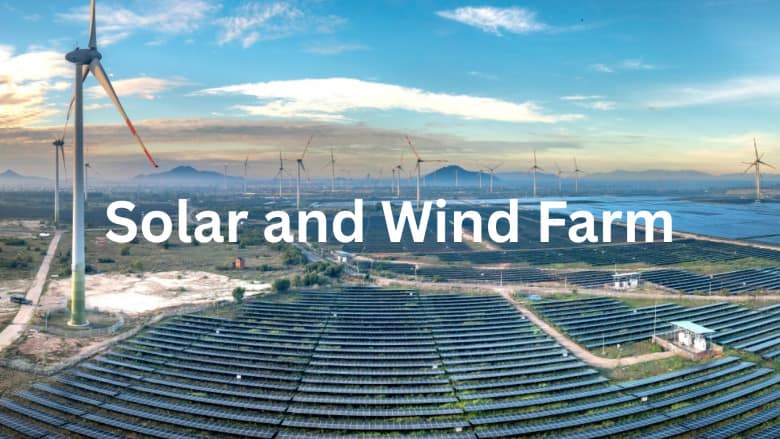
Solar farm fault detection and performance analytics
On the solar side, common issues include:
- Inverter faults
- Soiling
- Shading changes (vegetation growth, new construction)
- Degraded modules
- Connector failures
- Mismatched strings
AI can detect these by comparing expected vs actual output using:
- Weather data
- Irradiance sensors
- Inverter telemetry
- String-level monitoring (where installed)
One of the simplest, most effective patterns is:
- Build a baseline performance model for “normal”
- Alert when deviations persist beyond a threshold
- Triage likely causes (weather vs equipment vs soiling)
Drones/computer vision for inspections (what’s real vs hype)
Computer vision gets attention, and some of it is deserved—especially for:
- Blade inspection imagery
- Thermal imagery for PV hot spots
- Vegetation and right-of-way inspections
But the value depends on execution:
- You need consistent image capture.
- You need ground truth labels for training.
- You need a workflow for turning detections into work orders.
In my experience, this is where teams overestimate “AI” and underestimate operations. A model that flags 500 possible issues is useless if the maintenance team can only fix 20 this week and has no prioritization logic.
Digital innovation context (why this is a global trend)
If you want a broader, internationally grounded view of digital innovation pathways that include AI, IRENA’s publication library (Publications) is a credible place to cite innovation landscapes and system-level needs. In the article, I’ll use it to support the point that AI is part of a bigger toolset—digitalization, automation, flexibility solutions—rather than a standalone cure.
The role of AI in renewable energy management for planning and investment (longer-term)
Operations get most of the attention, but planning is where you lock in long-term success or long-term pain.
AI can support planning by helping teams evaluate:
- Where to build new renewables
- How to size and place storage
- Which grid upgrades pay off
- What the system looks like under many future scenarios
Siting and interconnection screening
Developers care about:
- Resource quality (sun/wind)
- Land constraints and permitting
- Proximity to transmission
- Interconnection queue risk
- Curtailment risk
AI can help by screening large datasets faster. But it must rely on trustworthy inputs: grid hosting capacity data, constraint history, and realistic production estimates. If the input data is weak, AI just produces fast, confident-looking mistakes.
Grid expansion planning with high renewables
Grid expansion planning is a huge topic, and it’s also where the “AI will fix it” narrative breaks down.
You still need:
- Lines
- Transformers
- Substations
- Permitting and construction timelines
AI helps planners make better choices by:
- Identifying congestion patterns
- Running many scenarios quickly
- Stress-testing plans under uncertainty
The IEA’s grid-focused work highlights how grid buildout and modernization are central to enabling clean energy growth (Electricity Grids and Secure Energy Transitions – Analysis – IEA). AI supports decision quality, but it doesn’t replace infrastructure.
Scenario modeling and risk
Scenario planning matters because:
- Load growth may change with EV adoption and electrification.
- Extreme weather risks can rise in certain regions.
- Market rules may evolve.
AI can help generate and analyze scenarios faster. Still, the best planning teams combine AI outputs with transparent assumptions so stakeholders can challenge them.
Risks and limits of AI in renewable energy management (and how to manage them)
This section matters for trust. AI helps, but it also introduces real risks. You can manage them, but you can’t ignore them.
Data quality: “garbage in, garbage out” is painfully real
Most AI failures in energy come from data issues like:
- Missing timestamps
- Sensor drift
- Different sampling intervals
- Unlabeled downtime vs curtailment
- Weather data misalignment (wrong location, wrong elevation)
How to manage it:
- Create a data dictionary (what each field means, units, frequency)
- Validate timestamps and time zones
- Track data completeness as a KPI
- Use automated tests (range checks, missingness checks)
If you only take one lesson from this article: treat data like an asset. It pays off across forecasting, O&M, storage dispatch, and planning.
Explainability and operator trust (human-in-the-loop)
Power system operators need to trust tools, especially during events.
If an AI system says “discharge the battery now,” operators want to know:
- Why?
- Under what assumptions?
- What constraints did it consider?
- What happens if we do nothing?
Practical patterns that work:
- Show the top drivers (weather change, congestion risk, forecast error)
- Show confidence levels and alternatives
- Keep manual override
- Start with “recommendations,” then graduate to automation
Cybersecurity and model attacks
More connectivity increases risk.
AI systems can be attacked through:
- Data tampering (poisoned inputs)
- Model theft
- Adversarial patterns that trigger wrong behavior
Mitigations include:
- Network segmentation for OT environments
- Strong identity and access controls
- Monitoring for unusual data patterns
- Regular model audits and version control
(If you want, I can add a lightweight checklist tailored to utilities vs IPPs vs C&I operators.)
Regulatory and market risks
AI-driven decisions can create compliance questions:
- Are you following market rules?
- Can you justify dispatch choices?
- How do you audit outcomes?
Best practice:
- Keep logs of recommendations and actions
- Maintain model documentation
- Validate performance routinely and after major system changes
A practical roadmap: adopting AI in renewable energy management (step-by-step)
If you’re a utility, IPP, developer, or energy manager, this is the part you can actually use.
Start with one high-ROI use case
Pick one use case that meets all three conditions:
- Clear business value (money saved, MWh captured, downtime reduced)
- Available data (or a realistic plan to get it)
- Operational owner (someone who will use it weekly)
High-ROI starting points often include:
- Solar or wind short-term forecasting improvements
- PV fault detection analytics
- Battery dispatch advisory (recommendations first)
- Crew scheduling support for wind maintenance
Data pipeline, governance, and KPIs
Before modeling, define:
- Who owns each dataset?
- How often does it update?
- What’s “good data” vs “bad data”?
- What KPI proves success?
Good KPIs (examples, not fake numbers):
- Forecast error metrics (MAE/RMSE) tracked over time
- Availability and downtime by cause
- Curtailment MWh (and why curtailed)
- Battery cycle counts vs revenue (if market participation applies)
Pilot → validate → scale (don’t skip validation)
A clean rollout usually looks like:
- Pilot in shadow mode
The AI makes recommendations, but humans don’t act on them yet. - Backtesting and event review
Compare what AI suggested vs what happened. - Limited automation
Automate low-risk actions with clear rollback. - Scale with monitoring
Watch model drift and performance over seasons.
Table: common AI use cases in renewable energy management
| AI use case (renewable energy management) | Typical data needed | What it improves | Common pitfalls |
| Wind/solar short-term forecasting | Weather + plant telemetry | Dispatch accuracy, lower reserve needs | Misaligned timestamps, poor weather inputs |
| PV fault detection | Inverter/string data + irradiance | Faster issue detection, higher yield | Too many false alarms, weak labeling |
| Wind predictive maintenance | SCADA + condition monitoring | Less downtime, better crew planning | Not enough failure history, inconsistent sensors |
| Battery dispatch advisory | Forecasts + constraints + prices | Better timing, less curtailment | Ignoring constraints, overfitting to old price patterns |
| DER/VPP coordination | Aggregated device data + feeder info | Flexible capacity, peak reduction | Customer comfort ignored, privacy/regulatory missteps |
Where I’d add “expert mode” (what experienced teams do differently)
After a decade of working around technical content and SEO in energy, I’ve noticed something: the teams that succeed treat AI as a product, not a project.
They:
- assign an owner,
- maintain documentation,
- create feedback loops from operators,
- and budget for ongoing monitoring.
They don’t launch a model and walk away.
FAQs: Role of AI in renewable energy management
1. What is the role of AI in renewable energy management, in one sentence?
The role of AI in renewable energy management is to predict renewable output and grid conditions, then optimize control of generation, storage, and demand to improve reliability and reduce cost.
2. How does AI improve renewable energy forecasting?
AI combines weather data, historical generation, and real-time sensors to reduce forecast errors—especially for short-term “nowcasting” where conditions change quickly.
3. What is the role of AI in smart grids?
AI supports real-time awareness, anomaly detection, congestion prediction, and coordination of distributed energy resources so the grid can handle more variable generation.
4. How does AI optimize battery storage?
AI helps choose when to charge or discharge based on forecasts, constraints, and system needs, often improving the value of storage and reducing renewable curtailment.
5. What are the biggest risks of AI in renewable energy?
The biggest risks include bad data, lack of explainability, cybersecurity threats, and compliance issues. Strong governance, testing, and human oversight reduce these risks.
Conclusion: what AI changes (and what it doesn’t)
AI changes renewable energy management by making it more predictive, more adaptive, and more efficient—especially in forecasting, grid operations support, storage dispatch, and O&M. It helps teams capture more clean energy and run assets with fewer surprises. But AI doesn’t replace grid infrastructure, and it doesn’t remove the need for engineering constraints, validation, and human judgment. If you treat AI as a tool that strengthens good operations—and you back it with solid data and governance—you can scale renewables faster with fewer headaches.
About The Author