Top 10 Best Skills to Learn for the Future (2026 and Beyond)
TL;DR: The job market is shifting faster than most people realize. AI is automating routine work, and the skills that earn well in 2026 look very different from what people got hired a decade ago. This post covers the top 10 best skills to learn for the future, why each one matters in the digital economy, and exactly how to start building them. If you’re serious about staying relevant and growing your income, this is your roadmap.
There’s a quiet career crisis happening right now. Most people feel it but can’t name it.
The top 10 best skills to learn for the future are not what most career guides are telling you. Coding is not a magic ticket anymore. A college degree alone won’t protect your income. And the soft skills your parents told you to develop? Some of them matter more than ever, while others are quietly becoming obsolete.
Here’s the reality: the World Economic Forum’s 2025 Future of Jobs Report projects that 85 million jobs may be displaced by automation in the coming years, while 97 million new roles will emerge requiring entirely different skill sets. That’s not a threat, it’s an opportunity. But only for people who act now.
I’ve spent years watching this shift unfold. The people who come out ahead aren’t the ones who panic or ignore the change. They’re the ones who get strategic about what they learn and why. This post is built for those people. You’ll get a clear, practical breakdown of the 10 skills that actually matter in 2026 and beyond, with real data, honest context, and a path to get started today.
Let’s get into it.
What Makes a Skill “Future-Proof” in the Age of AI?
A future-proof skill is one that grows in value as technology advances, commands a measurable income premium, transfers across industries, and requires uniquely human judgment that AI cannot fully replicate. Not every popular skill qualifies. Many things that look valuable today will be automated within five years.
That definition matters because the internet is full of skill lists that recycle the same ideas. “Learn to code.” “Be a good communicator.” That advice isn’t wrong, but it’s not complete either.
Before we get to the list, here’s the framework I used to evaluate every skill on this page. A truly future-proof skill must check at least three of these four boxes:
- AI-resistant: It requires creativity, ethical judgment, emotional nuance, or complex human context that AI handles poorly.
- Income premium: Labor market data shows workers with this skill earn measurably more than those without it.
- Transferable: It works across industries, not just one sector or job title.
- Demand growth: Employer job postings and hiring data show demand rising, not declining.
According to Deloitte Insights (2024), 90% of all jobs will require some form of digital skills within the next decade. That means even roles that seem safe today are changing. The skills below are your best hedge.
The Top 10 Best Skills to Learn for the Future (2026 and Beyond)
The top 10 best skills to learn for the future are: AI literacy and prompt engineering, data literacy and analysis, critical thinking and complex problem-solving, digital marketing and content strategy, financial intelligence, coding and software development, emotional intelligence, cybersecurity awareness, entrepreneurship and business development, and adaptability with lifelong learning. Each one is backed by labor market demand, income data, and real-world application.
Here’s the full breakdown.
1. AI Literacy and Prompt Engineering
This is the skill of the moment, and it’s only getting more important. According to LinkedIn’s 2024 Workplace Learning Report, AI literacy is the single fastest-growing skill on LinkedIn globally. And Coursera’s 2025 Industry Skills Report found that 77% of business leaders now say generative AI skills are a hiring priority.
But here’s the nuance most people miss: AI literacy isn’t just about knowing how to use ChatGPT. It’s about understanding how AI tools work, where they fail, how to direct them effectively, and how to integrate them into real workflows. Prompt engineering, the practice of crafting precise inputs to get high-quality AI outputs, has already appeared on Forbes and Lightcast’s list of top emerging skills for 2024.
You don’t need to be an engineer to develop this skill. You need curiosity and practice. Start with tools like ChatGPT, Claude, and Gemini. Learn the basics of prompt structure. Experiment daily.
If you want to go deeper on AI tools and strategies, we’ve covered that territory extensively at Rejoice Winning. It’s worth your time.
2. Data Literacy and Analysis
Data is the currency of the digital economy. Every company, from a solo e-commerce brand to a Fortune 500, runs on data. The people who can read, interpret, and act on that data are invaluable.
Lightcast’s 2024 Labor Market Research shows that data literacy skills carry a 40% salary premium across industries. That’s not a rounding error. That’s a career-defining gap between people who have this skill and those who don’t.
Data literacy doesn’t mean you need a statistics degree. It means you can:
- Read a chart and pull the right insight from it
- Work with spreadsheets and basic analysis tools like Excel, Google Sheets, or Python basics
- Understand what the numbers are actually telling you versus what someone wants them to say
- Make decisions based on evidence rather than gut feeling alone
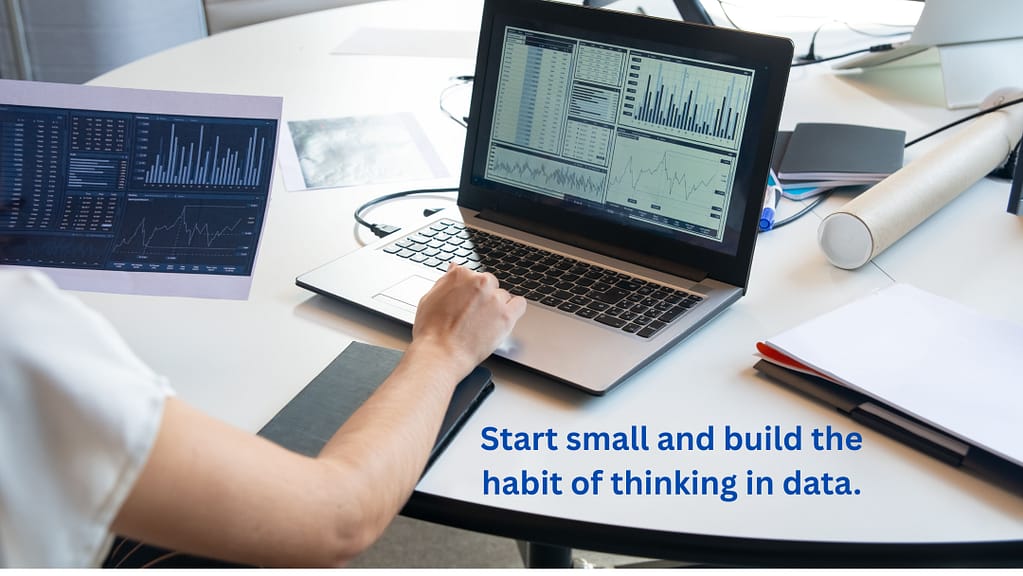
Tools like Google Data Studio, Tableau Public, and SQL are all learnable without a formal degree. Many free resources exist. The key is to start small and build the habit of thinking in data.
3. Critical Thinking and Complex Problem-Solving
Why Is Critical Thinking One of the Most Valuable Future Skills?
Critical thinking is the ability to analyze information objectively, identify flaws in reasoning, and arrive at well-supported conclusions. It’s one of the most future-proof skills because it’s foundational to every high-value role and increasingly rare in a world flooded with AI-generated content, misinformation, and surface-level analysis.
The World Economic Forum’s 2025 Future of Jobs Report lists critical thinking and analytical skills as the number one capability employers want by 2027. That should tell you everything.
AI can generate answers fast. It cannot reliably judge whether those answers are correct, ethical, or strategically sound in a given context. That’s the human edge. Complex problem-solving, the kind that requires holding multiple variables, considering second-order effects, and making judgment calls, is something machines are still very bad at.
How do you build this skill? Deliberately. Read widely across disciplines. Argue both sides of an issue before forming your opinion. Practice asking “Why?” one level deeper than feels comfortable. Study logic, rhetoric, and decision-making frameworks. The goal isn’t to be skeptical of everything. It’s to be rigorous about what you accept as true.
4. Digital Marketing and Content Strategy
The internet runs on attention. And the people who understand how to earn, hold, and convert that attention are in enormous demand. Digital marketing is no longer a specialist skill. It’s a baseline competency for anyone building a brand, a business, or a professional reputation online.
Content strategy, the practice of planning and creating content that serves specific business goals, sits at the intersection of psychology, communication, and technology. It’s one of the few skills that applies equally whether you’re a freelancer, a startup founder, or a marketing executive at a large company.
Key sub-skills to focus on:
- SEO (Search Engine Optimization): Understanding how search engines rank content and how to create pages that rank.
- Social media strategy: Not just posting, but building community and driving outcomes.
- Email marketing: Still one of the highest-ROI channels in digital business.
- Analytics and performance tracking: Knowing what’s working and why.
- Content creation across formats: Writing, short-form video, podcasting basics.
These skills compound. A person who can write well, understand SEO, and read analytics is worth significantly more than someone who can only do one of those things.
5. Financial Intelligence and Wealth-Building Skills
Why Is Financial Intelligence a Core Future-Proof Skill?
Financial intelligence is the ability to understand how money works, make informed decisions about income, savings, investment, and debt, and build systems that grow wealth over time. In an era where traditional employment is less stable and more people are building independent income streams, financial literacy is no longer optional. It’s survival.
This is one of the most underrated skills on any future-skills list, and that gap is expensive for the people who ignore it. Understanding compound interest, tax strategy, investment vehicles, cash flow management, and how to evaluate financial risk gives you real leverage over your financial future regardless of your income level.
For anyone building a business in the digital economy, financial intelligence is the difference between growing an asset and running a treadmill. You can work hard your entire life and still end up broke if you don’t understand how money moves.
We cover financial intelligence and wealth building in depth at Rejoice Winning because we believe it’s one of the most overlooked high-impact skills in the personal development space. Start with the basics: budgeting, investing fundamentals, and understanding how debt works for and against you.
6. Coding and Software Development
Coding remains one of the most direct paths to high income. The U.S. Bureau of Labor Statistics (2024) reports that software developers earn a median salary of $132,270 per year, with demand projected to grow 25% through 2032. That’s nearly five times faster than the average for all occupations.
But here’s what’s changed: you don’t need to be a full-stack developer to benefit from knowing how to code. Even basic coding knowledge, being able to write Python scripts, understand APIs, or build simple automations, makes you dramatically more capable in almost any role.
The most accessible entry points right now:
- Python: Versatile, beginner-friendly, and used heavily in AI, data analysis, and automation.
- JavaScript: Essential for web development and front-end work.
- SQL: The language of databases, used in every industry that has data (which is every industry).
- No-code/Low-code tools: Platforms like Bubble, Webflow, and Zapier let you build functional products without deep coding knowledge.

Even if you never become a professional developer, understanding how software works makes you a better thinker, collaborator, and problem-solver in any tech-adjacent role.
7. Emotional Intelligence and Human-Centered Leadership
What Role Does Emotional Intelligence Play in a Future Dominated by AI?
Emotional intelligence (EQ) is the ability to recognize, understand, manage, and effectively use your own emotions and the emotions of others. As AI automates more cognitive tasks, EQ becomes one of the clearest competitive advantages humans hold. Machines can process language, but they cannot feel the room, read between the lines, or lead people through uncertainty with genuine empathy.
Harvard Business Review (2024) has documented that emotional intelligence is increasingly rare and increasingly valuable precisely because AI is handling more of the analytical work that used to differentiate employees. The leaders, managers, and collaborators who thrive in the next decade will be the ones who can motivate teams, resolve conflict, build trust, and communicate with clarity and compassion.
EQ breaks into five core areas: self-awareness, self-regulation, motivation, empathy, and social skills. Each one is learnable. The practice is mostly uncomfortable: it requires honest self-reflection, seeking feedback, and deliberately choosing thoughtful responses over reactive ones.
If you’re building a team, managing clients, or leading anything, EQ is not a nice-to-have. It’s a primary job skill.
8. Cybersecurity Awareness
Every business, freelancer, and professional who operates online carries cybersecurity risk. Data breaches, phishing attacks, ransomware, and identity theft are not abstract threats. They are daily occurrences that cost individuals and companies real money.
The demand for cybersecurity professionals is growing faster than the talent pipeline can fill. But you don’t need to be a security engineer to make this skill valuable. At the foundational level, cybersecurity awareness means:
- Understanding common attack vectors (phishing, social engineering, weak passwords)
- Knowing how to protect sensitive data and client information
- Using two-factor authentication, VPNs, and secure password management
- Recognizing when something looks suspicious before you click
At the professional level, certifications like CompTIA Security+, Certified Ethical Hacker (CEH), and Google’s Cybersecurity Certificate open doors to one of the fastest-growing, highest-paying fields in tech.
Even if you pursue this only at the awareness level, the protection it provides to your business and your clients is worth every hour of learning.
9. Entrepreneurship and Business Development
The concept of a single employer providing lifelong stability is fading. The future belongs to people who understand how to create value, identify opportunities, build systems, and grow revenue, whether they work for themselves or inside an organization.
Entrepreneurship as a skill set includes:
- Opportunity identification: Spotting needs in the market before others do
- Sales and persuasion: The ability to communicate value and close deals
- Systems thinking: Building processes that scale beyond your personal hours
- Financial management: Understanding revenue, margins, and cash flow
- Resilience and iteration: Treating failure as data rather than defeat
You don’t need to start a company to develop entrepreneurial skills. You can practice them inside your current job, in a side project, or by studying how successful businesses were built.
For anyone interested in winning in the digital economy, the entrepreneurial mindset is foundational. It changes how you see problems, how you create solutions, and how you build leverage over time.
10. Adaptability and Lifelong Learning
Is Adaptability Really a Skill, or Just a Personality Trait?
Adaptability is absolutely a learnable skill, not just a fixed personality trait. It’s the capacity to respond effectively to change, update your beliefs when new evidence arrives, and continuously acquire new knowledge as conditions shift. The OECD AI and Skills 2026 identifies adaptability and lifelong learning as the meta-skills defining career success in the AI era.
Here’s why this matters more than ever: the half-life of a technical skill is shrinking. What was cutting-edge five years ago is now a commodity. The World Economic Forum estimates that 1 billion people will need reskilling by 2030. The people who build the habit of learning, not just the content of any one skill, will be the ones who stay relevant decade after decade.
Adaptability in practice means:
- Setting aside consistent time each week for deliberate learning
- Building a personal learning system (what you read, who you follow, what you practice)
- Staying curious about fields adjacent to your expertise
- Being willing to let go of outdated assumptions when the evidence changes
PwC’s Workforce of the Future report (2024) found that 74% of workers say they are ready to learn new skills to stay employable. Readiness is good. But consistency is what actually delivers results.
Which Future Skills Pay the Most in 2026?
The highest-paying future skills in 2026 are software development (median $132,270/year), AI and machine learning engineering, and cybersecurity (both exceeding $120,000 in median pay), followed by data analysis and digital strategy roles that increasingly command six-figure salaries as companies compete for talent.
Here’s a practical comparison based on available labor market data:
| Skill | Median Salary Range (US) | Demand Growth | AI-Resistance |
| Software Development | $132,270/yr | +25% through 2032 | Medium |
| AI/ML Engineering | $130,000-$160,000/yr | Very High | Medium |
| Cybersecurity | $120,000-$150,000/yr | Very High | High |
| Data Analysis | $100,000-$130,000/yr | High | Medium |
| Digital Marketing | $70,000-$110,000/yr | High | Medium-High |
| Financial Intelligence | Variable (income multiplier) | Evergreen | Very High |
| Emotional Intelligence/Leadership | $90,000-$160,000/yr (management roles) | High | Very High |
One critical insight from McKinsey’s research: workers who upskill in tech-adjacent capabilities earn 20-50% more than peers who don’t. The income gap between the skilled and unskilled is not shrinking. It’s widening.
The highest ROI moves? Combining skills. Someone who understands AI tools, can analyze data, and communicates with emotional intelligence is not competing with anyone on a list. They’re in a category of their own.
How to Start Building Future-Proof Skills (Even With a Busy Schedule)
Here’s the honest truth I’ve seen play out repeatedly: people don’t fail to develop skills because they lack access. They fail because they don’t build the systems and habits that make learning consistent.
You don’t need to quit your job, enroll in a $50,000 program, or dedicate 40 hours a week to become genuinely skilled in something valuable. You need a manageable, sustainable approach that compounds over time.
A practical framework for busy people:
Step 1: Choose one primary skill and one supporting skill.
Don’t learn everything at once. Pick the skill most relevant to your current career or income goals. Add one supporting skill that complements it (for example: data analysis + Python, or digital marketing + AI tools).
Step 2: Commit to 30-60 minutes per day.
That’s it. Thirty minutes of focused, deliberate practice every day compounds dramatically over 6-12 months. The key word is deliberate, not passive. Reading articles is not the same as applying what you learn.
Step 3: Use credible platforms.
- Coursera (courses from Google, IBM, top universities)
- LinkedIn Learning (professional skills, strong catalog)
- freeCodeCamp and The Odin Project (coding, free)
- YouTube (surprisingly deep content for free if you know where to look)
- edX and MIT OpenCourseWare (rigorous, often free)
Step 4: Build in public or in practice.
The fastest way to learn is to use the skill. Start a project, take on a freelance job, apply what you’re learning to your current role, or share your progress online. Application beats passive consumption every time.
Step 5: Audit your progress every 90 days.
Are you actually better at this skill than you were three months ago? Can you point to something you built, solved, or improved? If not, adjust your approach.
For readers who want to go further in staying ahead in the AI era, the resources and perspective we share at Rejoice Winning are built for exactly this kind of focused, strategic growth.
The Skills AI Will Never Fully Replace
There are specific human capabilities that AI consistently struggles with and is unlikely to master in any meaningful timeframe. These include emotional attunement, ethical reasoning in ambiguous situations, deep creative originality, and leadership in high-stakes human contexts. They aren’t magic. But they require things AI fundamentally lacks: lived experience, genuine stakes, and the ability to truly understand another person.
Let’s be specific about what’s on this list.
1. Genuine emotional connection.
AI can simulate empathy in text. It cannot actually feel what another person feels, recognize unspoken need, or hold space for someone going through something real. Harvard Business Review’s reporting on EI and AI (2024) makes clear that human emotional attunement remains irreplaceable in coaching, leadership, therapy, sales, and caregiving.
2. Ethical judgment in novel situations.
AI applies patterns from training data. When a situation is genuinely new, ethically complex, or involves competing values with no clear precedent, human judgment is what you need. Organizations navigating AI governance, legal gray areas, and cultural sensitivity require human moral reasoning.
3. Deep creative originality.
AI is excellent at remixing and optimizing existing patterns. It is not capable of the kind of original creative leap that comes from a fully human life experience, a lived perspective, and genuine stakes. The best creative work in any field still comes from people.
4. Adaptive leadership under pressure.
Leading people through crisis, change, or conflict requires reading a room, adjusting in real time, and making decisions with incomplete information in ways that account for human complexity. The OECD AI and Skills 2026 identifies this kind of adaptive human judgment as one of the skills most resistant to automation.
If you’re building your future-proof skill stack, lean into these. They don’t just protect your career. They define it.
Common Mistakes People Make When Trying to Future-Proof Their Careers
I’ve watched a predictable pattern emerge over and over. Someone reads that a certain skill is hot, spends a few weeks dabbling in it, doesn’t see immediate results, and moves on to the next shiny thing. Then they repeat the cycle. This is the most expensive mistake in skill-building: breadth without depth.
Here are the most common mistakes, and how to avoid them
Chasing trends without a strategy.
Not every trending skill is relevant to your situation. The right skill for you depends on your current role, your income goals, your existing strengths, and where the market is actually heading in your field. Do the analysis before you invest the time.
Learning without applying.
Consuming courses and content without application gives you the feeling of progress without the substance of it. Real skills are built through practice, feedback, and iteration. If you can’t point to something you’ve built or solved with a skill, you don’t really have it yet.
Ignoring financial skills.
This is the one I see most often. People invest in technical and creative skills but skip the financial literacy that lets them actually benefit from those skills. Earning more doesn’t automatically create wealth. Knowing what to do with what you earn does.
Treating soft skills as secondary.
Emotional intelligence, communication, and leadership are not consolation prizes for people who can’t code. They are primary differentiators in any high-value role. As AI handles more analytical work, these skills become more important, not less.
Going too fast.
Skill-building is a long game. The people who come out ahead are those who commit to consistent, focused effort over 12-24 months, not the ones who sprint for three weeks and burn out.
The World Economic Forum’s Reskilling Revolution data shows that 1 billion people need reskilling by 2030. Most won’t do it effectively. The ones who do will have options that the rest simply won’t.
Conclusion
Here’s what it comes down to. The future belongs to people who invest in themselves before they need to.
The top 10 best skills to learn for the future are not secrets. They’re not locked behind expensive programs or elite institutions. What separates the people who develop them from those who don’t is one thing: intentional, consistent action over time.
Three takeaways to leave you with:
- Start with one skill. Pick the one most relevant to where you want to go, not just what sounds impressive. Go deep before you go wide.
- Combine skills for maximum value. The highest earners and the most resilient careers belong to people who can bring multiple skills together. AI literacy plus data plus communication is a formidable combination.
- Make learning a system, not an event. Thirty focused minutes per day, applied consistently, will outperform a weekend binge every single time.
At Rejoice Winning, we’re built for people who are serious about winning in the digital economy. That means bridging the gap between knowledge and action, between the trends everyone talks about and the practical steps that actually move the needle.
The future is being written by the people who are learning right now. Make sure you’re one of them.
Frequently Asked Questions
1. What is the most important skill to learn for the future?
If you can only pick one, AI literacy and prompt engineering offer the broadest immediate impact across virtually every field. According to LinkedIn’s 2024 Workplace Learning Report, it’s already the fastest-growing skill globally. That said, pairing it with critical thinking or data literacy significantly multiplies its value in any career context.
2. Will AI replace the need to learn new skills?
No. AI is actually increasing the need for human skill development. The World Economic Forum (2025) projects that while automation will displace some roles, 97 million new roles requiring new skills will emerge. AI handles routine tasks well, but it consistently underperforms in areas requiring emotional intelligence, ethical judgment, creativity, and complex human leadership.
3. How long does it take to become job-ready in a future-proof skill?
It depends on the skill and your starting point, but most people can reach a job-competitive level in 6-12 months of consistent, focused learning. For technical skills like data analysis or coding, structured programs on platforms like Coursera or freeCodeCamp can accelerate this timeline. The key is daily practice combined with real-world application, not just passive consumption of course content.
4. Can I learn future-proof skills for free?
Yes, many of the most valuable resources are free or low-cost. Platforms like freeCodeCamp, MIT OpenCourseWare, Google’s Career Certificates, and YouTube offer serious depth at no cost. Paid platforms like Coursera and LinkedIn Learning offer financial aid options. PwC’s 2024 workforce research found that 74% of workers are ready to reskill. Access is not the main barrier. Consistency is.
5. Which skills are best for someone who wants to build a business?
For aspiring entrepreneurs, the highest-priority skill combination is financial intelligence, digital marketing, and entrepreneurship fundamentals, with AI literacy as a force multiplier across all three. Understanding how money works, how to acquire customers online, and how to build scalable systems gives you the foundation for any business model in the digital economy. These skills also work together: better marketing drives revenue, financial intelligence protects it, and AI tools multiply your output.

Chalchisa Dadi is the founder of Rejoice Winning — a platform built for ambitious people who refuse to be left behind in the digital economy. With over a decade of hands-on experience analysing and implementing business plans for both private and public enterprises, Chalchisa brings a rare combination of strategic depth, real-world execution, and analytical precision to every piece of content published on this site.
Holding a verified certification in Data Analysis and Artificial Intelligence Fundamentals from Udacity, Chalchisa sits at the intersection of business strategy, financial intelligence, and emerging technology — the exact three pillars that power Rejoice Winning. Every insight shared here is grounded in years of working directly with organisations to turn ideas into measurable, sustainable results.
Chalchisa created Rejoice Winning with a single conviction: that winning in the digital economy is not reserved for the privileged few. It is a deliberate outcome available to anyone willing to learn strategically, move decisively, and build consistently. That mission drives every article, every guide, and every resource published on this platform.