How to Check My Heart Health at Home: A Step-by-Step Self-Assessment Guide (With Tools, Numbers & Warning Signs)
TL;DR: You can check your heart health at home by measuring five key indicators: resting heart rate, blood pressure, oxygen saturation, waist circumference, and recovery heart rate. You need a validated blood pressure cuff, a pulse oximeter, and a tape measure to get started. This step-by-step guide walks you through each check, explains what your numbers mean, flags critical warning signs, and tells you exactly when to stop self-monitoring and call a doctor.
Heart disease kills one American every 33 seconds, according to the Centers for Disease Control and Prevention (CDC). That’s not a statistic you can afford to ignore. Yet most people have no idea what their heart is doing between annual checkups. They wait, hope for the best, and only pay attention when something goes wrong.
Here’s the thing: you don’t have to wait. Learning how to check your heart health at home gives you a real-time window into one of your body’s most critical systems. You don’t need a medical degree. You don’t need expensive equipment. But you need the right tools, the right numbers, and a clear process to follow.
This guide gives you all three. You’ll learn which metrics matter, how to measure them accurately, what your results mean clinically, and which warning signs should send you straight to a doctor or an emergency room. Think of it as your personal heart health checkpoint, available any time you need it.
Why Checking Your Heart Health at Home Actually Matters
At-home heart health monitoring matters because a single annual checkup gives your doctor a one-second snapshot of a 365-day story. Consistent home monitoring catches trends, detects early warning signs, and gives you data that makes every doctor’s visit more productive.
Most cardiovascular problems don’t announce themselves dramatically. High blood pressure, for example, is called “the silent killer” precisely because it causes no obvious symptoms in most people until serious damage has already occurred. A study published in the Journal of the American Heart Association found that patients who monitored their blood pressure at home had significantly better blood pressure control than those who relied on clinic measurements alone. The researchers concluded that home monitoring leads to more timely treatment adjustments and better long-term cardiovascular outcomes.
The case for home monitoring goes beyond blood pressure. Your resting heart rate, oxygen levels, and physical recovery capacity are all measurable at home, and each one tells a meaningful story about your cardiovascular system’s efficiency. A consistent reading of 85 beats per minute at rest, for instance, looks very different from a consistent reading of 62 beats per minute, even though both technically fall within the “normal” range.
The case for home monitoring goes beyond blood pressure. Your resting heart rate, oxygen levels, and physical recovery capacity are all measurable at home, and each one tells a meaningful story about your cardiovascular system’s efficiency. A consistent reading of 85 beats per minute at rest, for instance, looks very different from a consistent reading of 62 beats per minute, even though both technically fall within the “normal” range.
There’s another practical reason this matters. Many people skip or delay doctor appointments because of cost, scheduling challenges, or simple inertia. According to the CDC, nearly 30% of adults in the United States don’t have a regular primary care provider. For those individuals, home monitoring isn’t just helpful. It may be the only cardiovascular data they have. Even for people with regular medical care, home readings provide context that a clinical setting can’t replicate, because white-coat hypertension (elevated BP caused by the stress of being in a medical environment) affects an estimated 15 to 30% of patients.
The bottom line is simple. Consistent, informed self-monitoring doesn’t replace medical care. But it makes you a far more active and informed participant in your own health, and that participation saves lives.
If you’re also curious about how professional healthcare has evolved to support home-based care, our guide on how telemedicine works for patients explains how virtual visits can complement your at-home monitoring routine.
What Tools Do You Need to Check Your Heart Health at Home?
To check your heart health at home effectively, you need three core tools: a validated upper-arm blood pressure monitor, a fingertip pulse oximeter, and a flexible tape measure. A smartwatch with heart rate monitoring is a useful optional addition. Total cost for the essentials ranges from $30 to $80.
Here’s a breakdown of each tool, what it measures, and what to look for when buying:
Core Tools
| Tool | What It Measures | What to Look For | Approximate Cost |
| Upper-arm blood pressure monitor | Systolic and diastolic BP, pulse rate | FDA-cleared, validated by AHA or Dabl Educational Trust | $30 to $60 |
| Fingertip pulse oximeter | Blood oxygen saturation (SpO2), heart rate | FDA-cleared, accuracy within ±2% | $15 to $35 |
| Flexible tape measure | Waist circumference | Standard measuring tape works fine | Under $5 |
| Fitness tracker or smartwatch (optional) | Continuous heart rate, ECG (on some models) | Look for clinically validated ECG feature | $50 to $400+ |
A critical note on blood pressure monitors: Not every device sold online or in pharmacies is clinically validated. The FDA regulates blood pressure monitors as medical devices, but validation accuracy varies widely between brands and models. The American Heart Association recommends using a device that has been validated through an independent protocol. The Dabl Educational Trust maintains a publicly available list of validated devices. Always choose an upper-arm cuff over a wrist cuff when possible, as wrist monitors are significantly more sensitive to positioning errors.
On pulse oximeters: The FDA has noted that pulse oximeters can produce less accurate readings in people with darker skin tones. A 2022 study in JAMA Internal Medicine confirmed that pulse oximeters overestimated oxygen saturation in patients with darker skin pigmentation compared to lighter-skinned patients. This doesn’t mean you shouldn’t use one. It means you should interpret borderline readings with extra care and discuss this with your healthcare provider.
On smartwatch ECGs: A 2022 study published in BMJ Open found that smartwatch ECG features showed reasonable accuracy in detecting atrial fibrillation compared to clinical ECGs, but they are not equivalent to a 12-lead hospital ECG and should not be used for diagnosis. Think of them as a useful screening flag, not a definitive test.
For a deeper look at the best wearable monitoring options for older adults specifically, check out our review of smart health devices for older people in 2026.
How Do You Check Your Resting Heart Rate at Home?
Your resting heart rate (RHR) is the number of times your heart beats per minute while you’re completely at rest. A normal RHR for adults is 60 to 100 beats per minute (bpm), but research consistently shows that a lower resting rate within that range indicates a stronger, more efficient heart.
How to Measure It Manually
- Sit quietly for five minutes before measuring. Don’t check your RHR right after waking up, exercising, or drinking caffeine.
- Place your index and middle fingers on the inside of your wrist, just below the base of your thumb (radial pulse), or gently on the side of your neck (carotid pulse).
- Count the beats for 60 full seconds. Don’t count for 15 seconds and multiply by four. A full minute gives you a more accurate reading, especially if your rhythm is slightly irregular.
- Record the number. Repeat on three separate mornings and calculate the average.
What Your Numbers Mean
| Resting Heart Rate | What It Generally Indicates |
| Below 60 bpm | May indicate high fitness level (athletes) or, rarely, bradycardia (consult a doctor if symptomatic) |
| 60 to 70 bpm | Excellent cardiovascular efficiency for most adults |
| 71 to 80 bpm | Good, within healthy range |
| 81 to 100 bpm | Acceptable but warrants attention if consistently at the higher end |
| Above 100 bpm at rest | Tachycardia; medical evaluation recommended |
The clinical concern with a chronically elevated resting heart rate is well-documented. A large-scale study published in Circulation, the flagship journal of the American Heart Association, found that a resting heart rate above 80 bpm was independently associated with significantly higher cardiovascular mortality risk, even after adjusting for other risk factors like blood pressure and cholesterol.
Think of your resting heart rate as a measure of how hard your heart has to work just to keep you alive at rest. A well-conditioned heart pumps more blood per beat, so it doesn’t need to beat as often. Highly trained endurance athletes often have resting heart rates in the 40s or low 50s. This is normal for them. For someone who is sedentary, a rate in the low 60s is an excellent target to work toward through regular aerobic exercise.
One pattern worth watching for is a sudden unexplained increase in your resting heart rate over several days. If your usual RHR is 65 bpm and it jumps to 80 bpm without an obvious explanation like illness, stress, or dehydration, that change deserves attention.
How Do You Measure Blood Pressure at Home the Right Way?
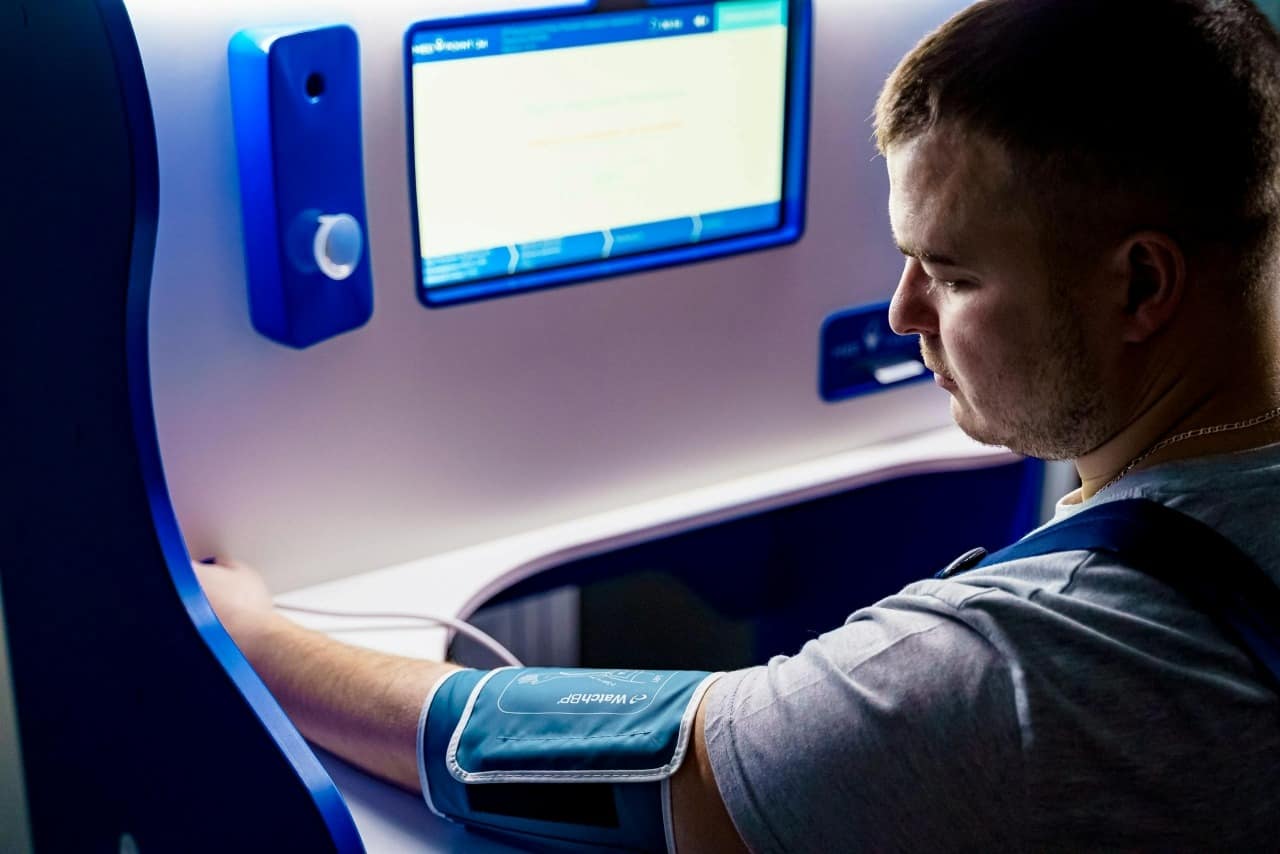
Blood pressure should be measured after five minutes of quiet sitting, with your back supported, feet flat on the floor, and the cuff placed on a bare upper arm at heart level. Normal blood pressure is below 120 mmHg systolic and below 80 mmHg diastolic, written as 120/80 mmHg.
Blood pressure is the single most important home cardiovascular measurement you can take. Getting it wrong is surprisingly easy, which is why technique matters as much as equipment.
Step-by-Step Protocol (Based on Mayo Clinic and AHA Guidelines)
- Avoid these for 30 minutes before measuring: Caffeine, exercise, smoking, and large meals.
- Sit quietly for five full minutes. Don’t scroll your phone or watch something stressful.
- Position your body correctly. Sit in a chair with back support. Keep your feet flat on the floor (don’t cross your legs). Rest your arm on a flat surface so the cuff sits at heart level.
- Apply the cuff to a bare upper arm. The cuff should sit about one inch above the bend of your elbow. Cuff should be snug but you should be able to slip two fingers underneath it.
- Stay silent during the measurement. Talking can raise your systolic reading by up to 17 mmHg, according to research cited by the American Heart Association.
- Take two or three readings, one minute apart. Record all of them and use the average.
- Measure at the same time each day (morning before medication, or evening before dinner works well for consistency).
Understanding Your Blood Pressure Numbers
The AHA and ACC hypertension guidelines classify blood pressure into these categories:
| Category | Systolic (mmHg) | Diastolic (mmHg) | What to Do |
| Normal | Less than 120 | Less than 80 | Maintain healthy habits |
| Elevated | 120 to 129 | Less than 80 | Lifestyle changes recommended |
| Stage 1 Hypertension | 130 to 139 | 80 to 89 | Lifestyle changes; possible medication |
| Stage 2 Hypertension | 140 or higher | 90 or higher | Medical treatment required |
| Hypertensive Crisis | Higher than 180 | Higher than 120 | Seek emergency care immediately |
Common measurement errors that skew results:
- Using a cuff that’s too small: causes artificially high readings
- Measuring over clothing: adds 10 to 50 mmHg of error
- Talking or moving during the measurement: raises systolic BP
- Full bladder: can raise BP by 10 to 15 mmHg
- Cold room temperature: can cause temporary BP elevation
If your readings are consistently in the Stage 1 or Stage 2 range, don’t panic, but don’t ignore it either. Bring your home log to your next appointment. Many doctors now treat home readings as clinically valuable data, particularly because home monitoring eliminates the white-coat effect described earlier.
Understanding the broader landscape of preventive care, including when screenings like blood pressure checks are covered, is worth exploring in our overview of what preventive care services include.
Four More Heart Health Checks You Can Do at Home
Beyond heart rate and blood pressure, four additional assessments give you a more complete picture of your cardiovascular health. Each one requires minimal equipment and takes under five minutes.
1. Oxygen Saturation (SpO2)
Clip a pulse oximeter onto your fingertip after sitting quietly for a few minutes. A normal oxygen saturation reading is 95% to 100%. Readings between 92% and 94% are borderline and worth monitoring. Readings below 92% consistently may indicate a problem with how your lungs or heart are delivering oxygen to your blood, and warrant prompt medical evaluation.
The American Lung Association notes that a reading below 95% at rest in a healthy adult is considered below normal. For context, healthy adults at sea level typically read 97% to 99%. If you live at high altitude, your baseline may naturally be slightly lower.
What it tells you about heart health: The heart and lungs work together to oxygenate your blood. A consistently low SpO2 can indicate heart failure, pulmonary hypertension, or chronic obstructive pulmonary disease (COPD), all of which put significant strain on the cardiovascular system.
2. Waist Circumference
Waist circumference is a more clinically useful measure of cardiovascular risk than body weight alone, because abdominal fat (visceral fat stored around internal organs) is independently linked to heart disease, insulin resistance, and inflammation.
How to measure it correctly:
- Stand upright and breathe out normally (don’t suck in)
- Place a flexible tape measure around your bare waist, at the level of your navel
- The tape should be snug but not compressing skin
- Record the measurement
Risk thresholds, according to Johns Hopkins Medicine:
| Sex | Increased Risk | High Risk |
| Men | Above 37 inches (94 cm) | Above 40 inches (102 cm) |
| Women | Above 31.5 inches (80 cm) | Above 35 inches (88 cm) |
These thresholds come from large-scale population studies and are used in clinical practice as a screening tool for metabolic syndrome, a cluster of conditions that sharply raises heart disease and stroke risk.
3. Recovery Heart Rate
Recovery heart rate measures how quickly your heart rate drops in the first minute after moderate exercise. It’s one of the most reliable and underused at-home indicators of cardiovascular fitness.
How to do it:
- Walk briskly, jog, or climb stairs for two to three minutes at a pace that elevates your heart rate noticeably
- Stop and immediately check your heart rate (use your smartwatch or take a manual pulse for 60 seconds)
- Sit down and rest for exactly one minute
- Check your heart rate again
What the number means: A drop of 12 bpm or more in the first minute is considered normal. Harvard Health Publishing notes that a drop of fewer than 12 bpm suggests poor cardiovascular fitness and has been associated with increased cardiovascular mortality risk in clinical studies. Elite athletes typically see drops of 25 to 35 bpm or more in the first minute.
This check is particularly valuable because it reflects the efficiency of your autonomic nervous system, the system that regulates heart function. A heart that recovers quickly is a heart that’s well-conditioned.
4. At-Home Cholesterol Testing
Over-the-counter cholesterol test kits are available at most pharmacies and provide a basic lipid profile from a fingerstick blood sample. These kits typically measure total cholesterol and, in more comprehensive versions, HDL, LDL, and triglycerides.
According to the National Heart, Lung, and Blood Institute (NHLBI), here are the target numbers for adults:
| Measurement | Desirable Level |
| Total cholesterol | Below 200 mg/dL |
| LDL (“bad”) cholesterol | Below 100 mg/dL (below 70 mg/dL for high-risk individuals) |
| HDL (“good”) cholesterol | 60 mg/dL or higher |
| Triglycerides | Below 150 mg/dL |
The Cleveland Clinic notes that at-home cholesterol tests can provide a useful general screening result, but they’re not a substitute for a full fasting lipid panel done in a clinical lab. Results can vary based on whether you’ve eaten recently, how you handle the fingerstick, and the quality of the test strip. Use home results as a prompt to discuss with your doctor, not as a standalone diagnosis.
What Warning Signs Should You Never Ignore During a Home Check?
Certain symptoms require immediate medical attention, regardless of what your home measurements show. If you experience any of the following during or after a self-assessment, stop the check and seek care immediately.
Call 911 Right Now If You Have:
- Chest pain, pressure, or tightness that lasts more than a few minutes or radiates to your jaw, left arm, shoulder, or back
- Sudden shortness of breath at rest or with minimal activity
- Sudden severe dizziness or fainting, especially combined with chest discomfort
- A heart rate above 150 bpm at rest that doesn’t resolve within a few minutes
- Blood pressure above 180/120 mmHg, with symptoms like severe headache, vision changes, nausea, or chest pain (this is a hypertensive crisis)
- Sudden numbness or weakness on one side of the face, arm, or leg (possible stroke sign)
The American Heart Association is explicit: when in doubt, call emergency services. Time is muscle. Every minute of delayed treatment during a cardiac event results in more irreversible heart muscle damage.
Call Your Doctor Soon (Within 24 to 48 Hours) If You Notice:
- Resting heart rate consistently above 100 bpm over several days without an obvious cause
- Blood pressure consistently in the Stage 2 range (140/90 or above) over multiple readings
- SpO2 readings consistently below 94% at rest
- A new, irregular heartbeat pattern that you can feel during a pulse check
- Unexplained swelling in your ankles or feet (can be a sign of heart failure)
- Persistent fatigue or shortness of breath with light activity that is new or worsening
One important clinical note: Symptoms don’t always accompany dangerous readings. A blood pressure of 160/100 may cause no symptoms at all. This is precisely why home monitoring is so valuable. It catches the numbers even when your body isn’t sending obvious distress signals.
If you’ve been wondering how modern healthcare systems handle cardiac risk screening and early intervention, our deep dive into health and wellness insights covers how preventive thinking is reshaping clinical care.
How to Track Your Heart Health Over Time (And When to See a Doctor)
A single reading tells you very little. A pattern of readings tells you almost everything. The real power of home heart health monitoring comes from consistency, not perfection.
Building a Simple Home Monitoring Log
You don’t need a special app (though apps are available and useful). A basic spreadsheet or notebook works just as well. Record the following each time you take a measurement:
- Date and time
- Resting heart rate
- Blood pressure (both readings if you take two)
- SpO2 (if you have a pulse oximeter)
- Any symptoms or notes (poor sleep, stress, new medication, illness)
The AHA recommends checking blood pressure at least twice daily when first starting home monitoring, morning and evening, for the first week. After that, once daily or a few times per week is sufficient for most people.
How Often Should You Run Each Check?
| Check | Recommended Frequency |
| Resting heart rate | Daily (best done before getting out of bed) |
| Blood pressure | Daily during first month; 3 to 4 times per week after that |
| SpO2 | Weekly, or any time you feel short of breath |
| Waist circumference | Monthly |
| Recovery heart rate | Weekly, as part of a fitness routine |
| Cholesterol (at-home kit) | Every 3 to 6 months if you’re managing lipid levels |
The Sleep Connection
One area that’s easy to overlook is sleep. Obstructive sleep apnea, a condition in which breathing repeatedly stops during sleep, is a significant and underdiagnosed driver of cardiovascular disease. According to the Sleep Foundation, people with untreated sleep apnea have a dramatically higher risk of hypertension, atrial fibrillation, heart attack, and stroke.
If your blood pressure readings are consistently elevated despite a healthy lifestyle, and you snore heavily, wake frequently, or feel unrefreshed after a full night of sleep, discuss a sleep study with your doctor. It’s a critical part of the cardiovascular picture that home monitoring can flag but can’t diagnose on its own.
When to Move From Home Monitoring to Clinical Care
Home monitoring is a starting point and a maintenance tool. It is not a diagnostic tool. Here’s a clear decision framework:
- Two or more readings above 130/80 mmHg over two weeks: Schedule a doctor’s appointment
- Resting HR consistently above 90 bpm for more than a week: Request a clinical evaluation
- SpO2 consistently below 95%: Seek evaluation promptly
- Any new irregular pulse pattern: Request an ECG
- Any symptom from the warning signs list above: Don’t wait; act immediately
The integration of telemedicine has made this easier than ever. You can now share your home monitoring log directly with a virtual clinician who can interpret the trends and order follow-up tests without you ever leaving your home. If you haven’t explored that option yet, our guide on how telemedicine works for patients walks through exactly how that process works.
Conclusion
Checking your heart health at home doesn’t have to feel overwhelming. Start with what you have. A basic pulse check costs nothing and takes 60 seconds. Add a validated blood pressure cuff, and you’ve covered the two most important cardiovascular indicators in your daily routine.
Here are the three things to take away from this guide:
- The five core checks are resting heart rate, blood pressure, oxygen saturation, waist circumference, and recovery heart rate. Each one is measurable at home with affordable, widely available tools.
- Numbers only matter in context. A single reading is a data point. A week of consistent readings is a trend. A month of readings is a story your doctor can actually use.
- Know your warning signs. Home monitoring is empowering, but it works best when paired with clear knowledge of when to escalate to professional care.
Your heart works every single second of every day. Giving it even five minutes of your attention each morning is one of the highest-return health habits you can build. Start today, track consistently, and let the data guide your next conversation with your healthcare provider.
For more practical health guidance built around real-world habits, explore the full library of healthcare resources on Rejoice Winning.
Frequently Asked Questions
1. Can I really check my heart health at home without any medical training?
Yes, you can perform meaningful heart health checks at home without medical training. Measuring resting heart rate, blood pressure, and oxygen saturation requires only basic technique that anyone can learn in minutes. The key is consistency and using clinically validated devices. Home monitoring is not diagnostic, meaning it can’t tell you definitively whether you have a heart condition, but it gives you reliable data to share with a healthcare provider, which makes clinical conversations far more productive.
2. What is a dangerously high heart rate at rest?
A resting heart rate above 100 beats per minute is classified as tachycardia and warrants medical evaluation, according to the American Heart Association. A rate above 150 bpm at rest with no obvious cause such as fever or extreme anxiety should be treated as a medical emergency. Context matters: a heart rate of 110 bpm during illness may be expected, while the same reading in a resting, healthy adult with no recent exertion or fever is a clinical red flag.
3. How accurate are home blood pressure monitors?
Clinically validated upper-arm blood pressure monitors are accurate within 5 mmHg of a mercury sphygmomanometer reading when used correctly, according to validation standards reviewed by the Dabl Educational Trust. Accuracy degrades significantly with improper technique: wrong cuff size, measuring over clothing, or moving and talking during measurement can introduce errors of 10 to 25 mmHg. Wrist monitors are more sensitive to positioning errors than upper-arm devices and are generally considered less reliable for routine home monitoring.
4. How often should I check my heart health at home?
For most healthy adults, checking resting heart rate daily and blood pressure three to four times per week after an initial baseline period of daily measurements provides sufficient data. The American Heart Association recommends taking readings at the same time each day, morning before medication and evening before dinner, for consistency. People managing diagnosed hypertension or another cardiovascular condition may need to monitor more frequently under their doctor’s guidance.
5. Can a smartwatch replace a doctor’s heart health evaluation?
No. A smartwatch is a screening and tracking tool, not a diagnostic device. Smartwatch ECG features have shown reasonable accuracy in detecting atrial fibrillation in some studies, including a 2022 review in BMJ Open, but they cannot replicate a clinical 12-lead ECG, which examines electrical activity from 12 different angles of the heart. Smartwatches also cannot measure blood pressure, cholesterol, or structural cardiac abnormalities. They are best used to flag potential issues that prompt a clinical evaluation, not to replace one.
About The Author